
Wheelchair Travel That Works in Real Life
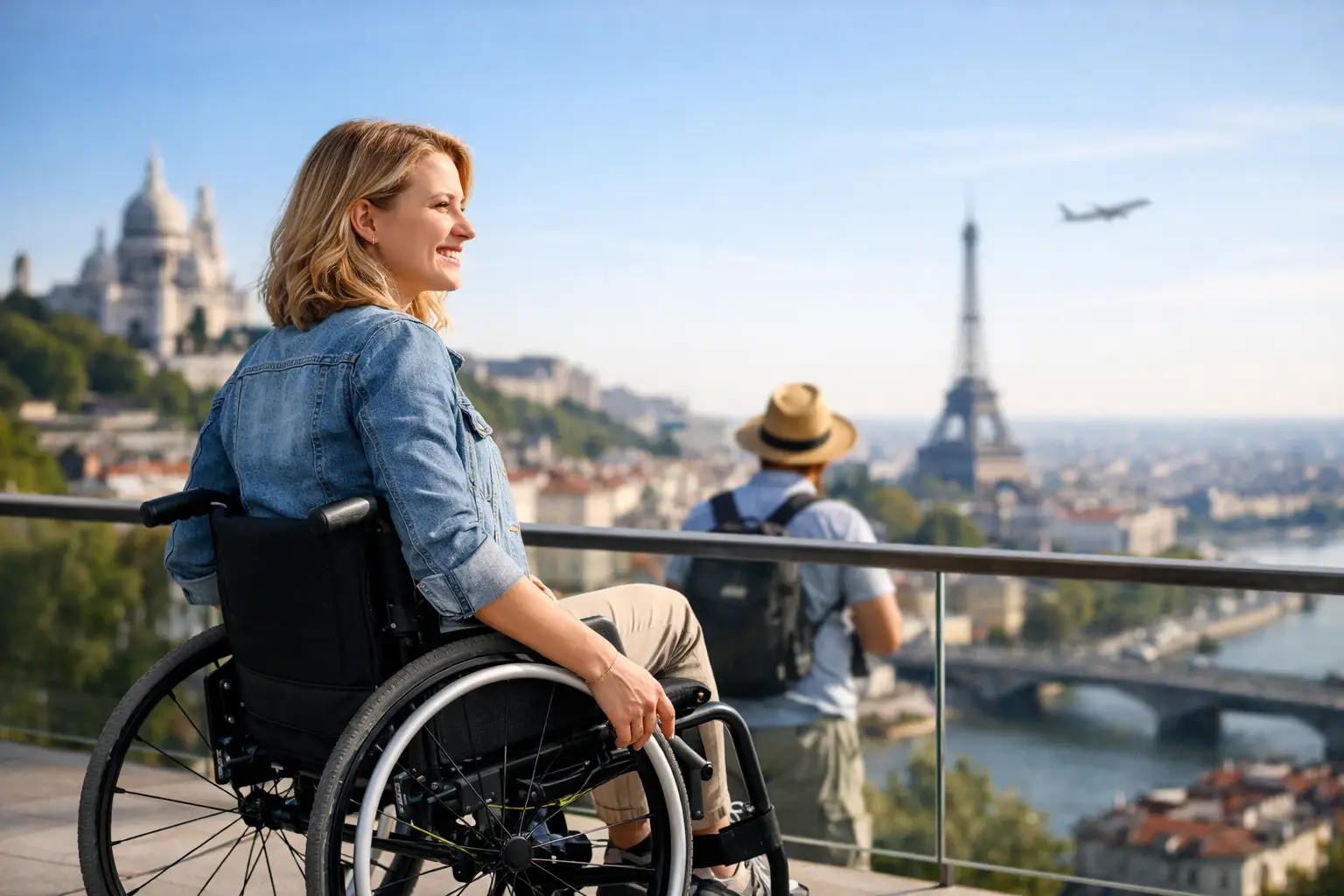
The gap between a good trip and a stressful one usually comes down to one thing - details. That is especially true with wheelchair travel. A hotel can call itself accessible and still have a heavy front door, a tiny lift or a bathroom that only works if you can stand and pivot. A destination can look flat on a brochure and turn out to be full of steep kerbs, loose paving and awkward routes. If you want to travel with confidence, you need better information than the standard marketing promises.
Why wheelchair travel needs proper planning
This is not about being negative. It is about protecting your independence. The more accurate your planning, the less likely you are to waste money, lose time or find yourself relying on strangers for basic access.
A lot of travel websites still treat accessibility as a tick-box. You get one vague sentence about step-free access and nothing about ramp gradients, accessible taxis, dropped kerbs, beach matting or whether a so-called adapted room actually lets you turn properly. For wheelchair users, those missing details are not minor. They decide whether a place is usable or not.
That is why good wheelchair travel planning starts with a simple mindset shift. Do not ask whether a destination is accessible. Ask which parts are accessible, for whom, and under what conditions. A powerchair user, a manual wheelchair user and somebody travelling with a mobility scooter may all have completely different experiences in the same place.
Start with the journey, not the destination
People often begin with the hotel or attraction, but the journey itself can be where problems start. If the transport does not work, the rest of the trip becomes harder very quickly.
When travelling by train in the UK, check how assistance is booked, how much notice is needed and whether your arrival station has step-free access at every platform you might use. Some stations are technically accessible but only if staff are available with a ramp or if a lift is working. That may be manageable on a quiet midweek journey and far less reliable during disruption.
Air travel has its own trade-offs. Airports can be better than many people expect because they are used to handling assistance, but the weak point is often what happens at either end. You need to know how your wheelchair will be handled, whether your battery type has any airline restrictions, and how you will get from the airport to your accommodation without being stranded. An accessible transfer that has not been pre-booked properly is not really accessible.
Cruises, coaches and ferries can all work well, but each has limits. Accessible cabins are usually few in number. Coach travel may suit some users and be impossible for others. Ferries can be straightforward in calm weather and more awkward when boarding arrangements change. The point is not to avoid these options. It is to pin down the operational detail before you commit.
Choosing accommodation for wheelchair travel
Accommodation is where glossy wording causes the most trouble. Terms like accessible room, adapted bathroom and step-free access are used far too loosely. You need facts.
Ask for measurements if they are not shown clearly. Door widths, bed height, space beside the bed, bathroom layout and shower access all matter. If you use a hoist, say so directly. If you need space to charge a powerchair or scooter, check plug socket locations and where the chair can be stored safely without blocking exits.
Photos are often more useful than descriptions. A single image of the bathroom can tell you more than ten lines of sales copy. Look for roll-in showers rather than raised trays, grab rail placement, under-sink clearance and whether there is actually room to turn. If the property cannot answer basic access questions clearly, treat that as a warning.
Location matters just as much as the room itself. An accessible hotel on top of a steep hill, far from usable transport, may leave you more restricted than a simpler property in a better area. For wheelchair travel, the route outside the front door is part of the accommodation decision.
Street-level access is where trips are won or lost
A destination can have accessible headline attractions and still be exhausting to get around. This is where lived experience matters far more than official labels.
Look beyond major landmarks and think about the route between them. Are pavements wide enough? Are dropped kerbs consistent or patchy? Is the surface smooth, or will cobbles and cracked paving turn a short outing into hard work? In some cities, one neighbourhood can be manageable while the next becomes a slog because of gradients or poor maintenance.
Weather also changes access. Rain can make steep ramps slippery. Heat can make longer pushes difficult. Snow and ice can turn decent routes into no-go areas. None of that means cancelling every ambitious trip, but it does mean building realistic daily plans. One major outing and a slower afternoon is often better than trying to cram in a full sightseeing schedule that leaves you shattered.
This is where practical accessible travel content earns its keep. Honest reports from somebody who has actually covered the route in a wheelchair or scooter tell you what maps and official guides leave out. That is one of the reasons brands like Andy Wright Travel have built trust - they focus on what the day really looks like, not what the brochure says.
Transport on the ground matters more than people think
Local transport can make a decent destination brilliant, or make a brilliant destination feel closed off. Before booking, find out how you will move around once you arrive.
In some places, buses are the best option because low-floor access is common and stops are frequent. In others, trains or trams are easier. Taxis are often the biggest uncertainty. A city might have accessible taxis available in theory, but if there are too few of them, long waits can wreck your plans. Pre-booking helps, though that only works if providers are reliable and understand your equipment.
If you are hiring an accessible vehicle, confirm loading arrangements, tie-down systems and battery charging plans. If you are bringing your own adapted vehicle, check parking near your accommodation and attractions. Blue Badge concessions vary, and assumptions can catch people out.
There is also the issue of distance. A place can look compact on a map but involve long station corridors, ramps, bridges and detours to accessible entrances. Always allow more time than a non-disabled traveller would.
The truth about attractions and accessible claims
Many attractions have improved. Plenty now offer step-free entry, accessible toilets and decent internal routes. The problem is consistency.
The accessible entrance may be at the back of the building. The lift may bypass one key area. An old historic site may be honest about limits, which is actually more helpful than pretending everything is solved. A modern museum may be excellent indoors but awkward from the nearest station. That is why it helps to separate the attraction itself from the whole visit.
When checking attractions, ask how you enter, what floors you can reach, whether there are accessible toilets on every level, and whether any exhibits are blocked by steps or narrow routes. If you are heading to beaches, country parks or heritage areas, ask about surfaced paths, beach wheelchairs, accessible changing facilities and where the nearest parking is.
Sometimes the answer will be that access is partial. That does not automatically rule a place out. Partial access can still be worthwhile if you know the limits in advance and decide the trip is still right for you.
Build a plan that can cope with things going wrong
Even well-planned wheelchair travel can be disrupted by broken lifts, staff errors, weather or a vehicle that turns up unsuitable. The aim is not perfection. It is resilience.
Keep key booking details easy to hand. Save confirmation emails, assistance references and direct phone numbers. If a hotel has agreed specific access features, have that in writing. If a railway station has arranged help, know exactly what was booked. Clear records make it easier to sort problems quickly.
It also helps to have a back-up option for the parts of the trip that matter most. That might mean knowing an alternative accessible taxi firm, identifying a nearby accessible loo before a long day out, or choosing a hotel close to enough facilities that one failed plan does not ruin everything.
Most importantly, be realistic without talking yourself out of travel. Some places are easier than others. Some trips need more energy, more money or more compromise. But difficult does not mean impossible, and accessible does not have to mean dull.
The best wheelchair travel is not about lowering your expectations. It is about replacing guesswork with proper information, so you can decide what works for you and travel on your own terms. That is where confidence comes from, and confidence opens far more doors than a vague accessibility badge ever will.
0 Comments
Leave a Comment