
Wheelchair Theatre Review: What Really Matters
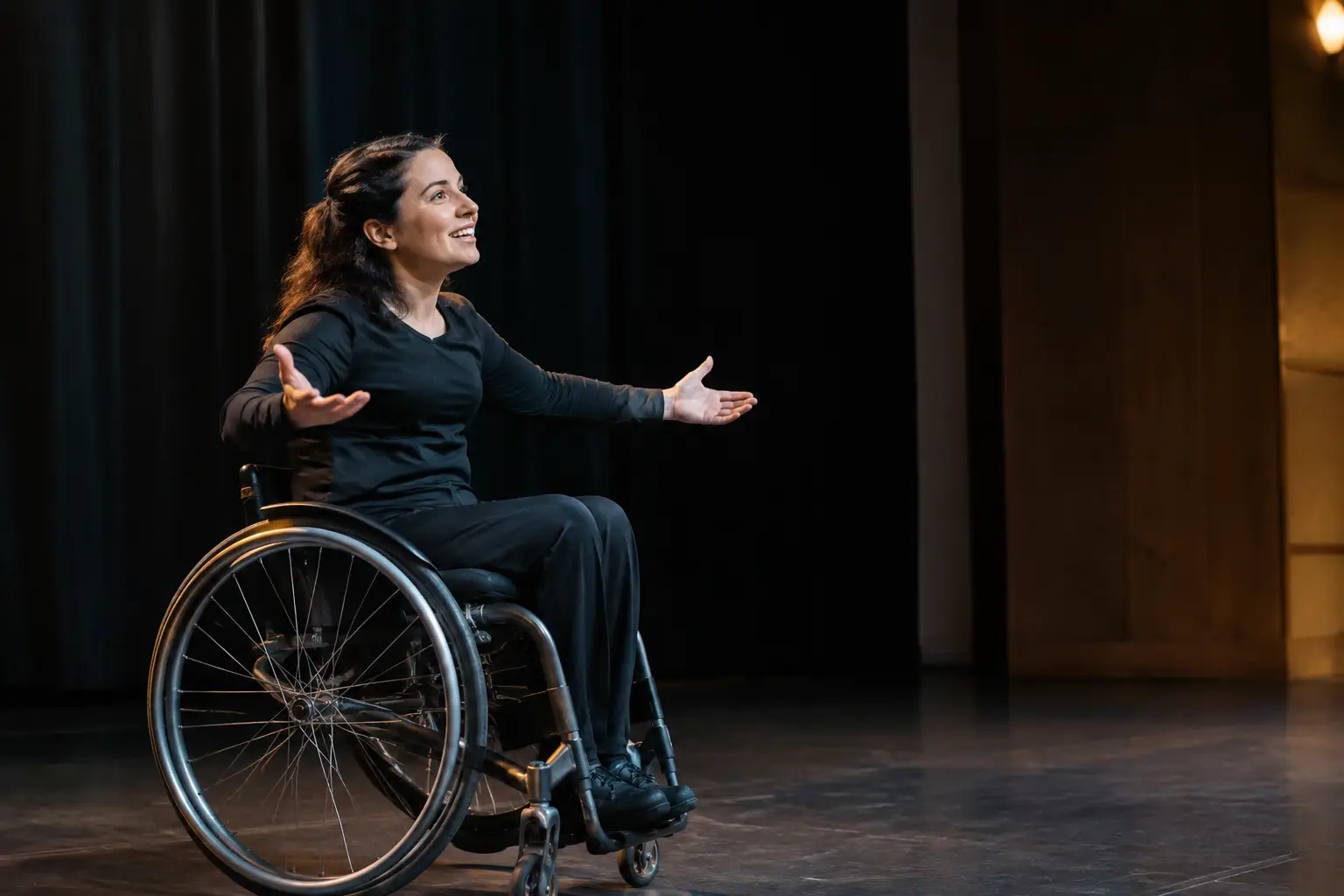
A good wheelchair theatre review should tell you far more than whether there is a ramp at the front door. A brilliant show can quickly lose its shine if the wheelchair space is tucked behind a pillar, the accessible toilet is used as a store cupboard, or you have to arrive an hour early because nobody can explain how you get into the building. For wheelchair and mobility scooter users, a theatre visit works only when the whole journey works.
Theatre websites often use the word “accessible” as if it settles the matter. It does not. Accessibility is not a tick-box. It is the difference between being able to book with confidence and spending an evening wondering whether you will be able to get to your seat, use the loo or leave safely at the end.
What a wheelchair theatre review should cover
The most useful review starts before the curtain rises: with booking. Can wheelchair spaces be booked online, or must you phone a premium-rate number during office hours? Are the spaces clearly marked on the seating plan? Is a companion ticket available, and is the process straightforward rather than intrusive?
This matters because disabled theatregoers are too often treated as an exception to the normal booking process. If everyone else can choose a seat in two minutes online but a wheelchair user has to make a call, explain their needs and wait for confirmation, that is not equal access. A review should say exactly how booking worked, including whether staff understood the venue and whether the information given proved accurate on arrival.
It should also be clear about ticket location. “Stalls wheelchair space” can mean an excellent, level position with a clear view of the stage. It can also mean being placed at the very back, off to one side, with other audience members walking in front of you all evening. The same description can produce completely different experiences in different theatres.
Sightlines are not a luxury
A wheelchair space is not automatically a good seat. Sightlines are one of the biggest details missing from generic access guides.
A proper review should explain whether the view is centred, side-on, raised or level with the people in front. Can you see the whole stage, including action at floor level? Are there railings, sound desks, safety barriers or heads blocking your view? If you use a powerchair or a scooter and sit higher than a standard wheelchair, does that improve the view or make the position feel exposed?
For musicals and large productions, the action often fills the entire stage. A position at one extreme side might mean missing entrances, choreography or projected screens. At a smaller venue, being close to the front could be ideal - unless the stage is high enough that you spend two hours looking upwards.
There is no single best wheelchair position. Some people want the front for proximity; others need a central view, easy access to an aisle or a place near an accessible toilet. The value of an honest review is that it lets people make that choice for themselves.
Getting from pavement to auditorium
A theatre can have excellent spaces inside and still be difficult to reach. The route from the nearest accessible parking bay, taxi drop-off or public transport stop deserves as much attention as the auditorium itself.
Look for practical information: whether there is dropped kerb access, whether paving is uneven, whether the entrance is on a slope, and whether there are cobbles or a busy road to cross. Older theatres, particularly in town and city centres, can be beautiful buildings with awkward approaches. That does not always make them impossible, but people need the facts before committing to tickets.
At the entrance, note whether doors are automatic, heavy, narrow or attended. If there are steps, is the alternative entrance nearby and clearly signposted? A side-door entrance is not necessarily a problem, but it should not involve waiting outside in the rain trying to get somebody’s attention.
Once inside, a review needs to follow the real route: foyer, ticket check, lift or ramp, bar, auditorium and toilet. Mention gradients as well as steps. A steep ramp may technically provide access, but it can be uncomfortable or unsafe to manage independently, especially in wet weather or when a manual wheelchair user is travelling alone.
Lifts, platforms and old buildings
Many historic theatres rely on lifts or platform lifts to reach accessible seating. Ask whether the lift was working, whether staff needed to operate it and whether there was a delay at busy times. It is also worth saying how large it is. Some lifts take a standard wheelchair comfortably but are tight for longer mobility scooters or larger powerchairs.
If you use a mobility scooter, never assume you can take it into the auditorium simply because a venue says it welcomes wheelchair users. Some theatres require scooters to be parked elsewhere and may offer a manual wheelchair for transfer. That arrangement can work for some people and be completely unsuitable for others. A useful review states the policy, the parking location and whether it was genuinely practical.
Toilets, bars and the bits venues forget
Accessible toilets are a basic requirement, not a bonus feature. Yet the difference between an accessible toilet on the same level and one reached through several corridors can decide whether a night out is manageable.
A wheelchair theatre review should say where the toilet is, whether it was open and clean, and whether there was enough turning room. Was the emergency cord reachable and hanging to the floor? Were grab rails usable? Was the space being used to store cleaning equipment, highchairs or boxes? These details may sound small, but they are often the details that determine whether a person can attend with dignity.
The interval matters too. Can you reach the bar without negotiating a crowd? Is there a low counter, table service or staff willing to help? If the only accessible toilet is near the foyer, is there enough time to get there, queue and return before the second half starts?
Crowds are not always avoidable in a popular theatre, but good venues manage them. Clear routes, staff awareness and a sensible policy for leaving the auditorium can make a packed interval feel manageable rather than stressful.
Staff make or break the experience
The best access features in the world are weakened by staff who do not know where they are or how they work. On the other hand, a knowledgeable front-of-house team can make an older, more challenging building far easier to use.
Reviews should be fair but specific. Did staff offer help without being patronising? Did they speak directly to the wheelchair user rather than only to a companion? Did they know where the accessible toilet and lift were? Were they ready when the show ended, or were you left waiting after the auditorium had emptied?
Evacuation is another question worth raising. You do not need a dramatic incident to ask how the venue would support disabled guests in an emergency. If staff can explain the procedure clearly and respectfully, that builds confidence. If nobody knows, that is useful information too.
Accessible performances are separate from physical access
Captioned, audio-described, relaxed and British Sign Language interpreted performances are valuable, but they do not replace step-free access or suitable wheelchair seating. A venue may offer one relaxed performance a year while still making everyday attendance difficult for wheelchair users.
If you attend an accessible performance, say how it was arranged. Were wheelchair spaces available for the relevant date? Could you see the captioning screen from the allocated position? Was the audio-description receiver easy to collect and use? These services need to work alongside physical access, not in a separate corner of the conversation.
How to make your review useful to the next person
The strongest reviews are written soon after the visit, while the practical details are fresh. Include the date where possible, because access arrangements can change after refurbishments, staff training or a temporary lift fault. Be honest about your own equipment too: a compact manual chair, a large powerchair and a mobility scooter can have very different experiences in the same building.
Avoid simply saying “fully accessible” or “not accessible”. Explain why. A venue might be excellent for a standard wheelchair user who can transfer, but unsuitable for a larger scooter or someone who needs a toilet close by. That is not being negative. It is giving fellow travellers the information they need to decide.
Theatre should be a proper night out, not a military operation. When venues get access right, you can focus on the performance, the people you are with and the simple pleasure of being in the room when the lights go down. And when they get it wrong, an honest, detailed review helps push standards in the right direction while giving the next wheelchair user a far clearer idea of what to expect.
0 Comments
Leave a Comment