
8 Wheelchair Friendly National Trust Places
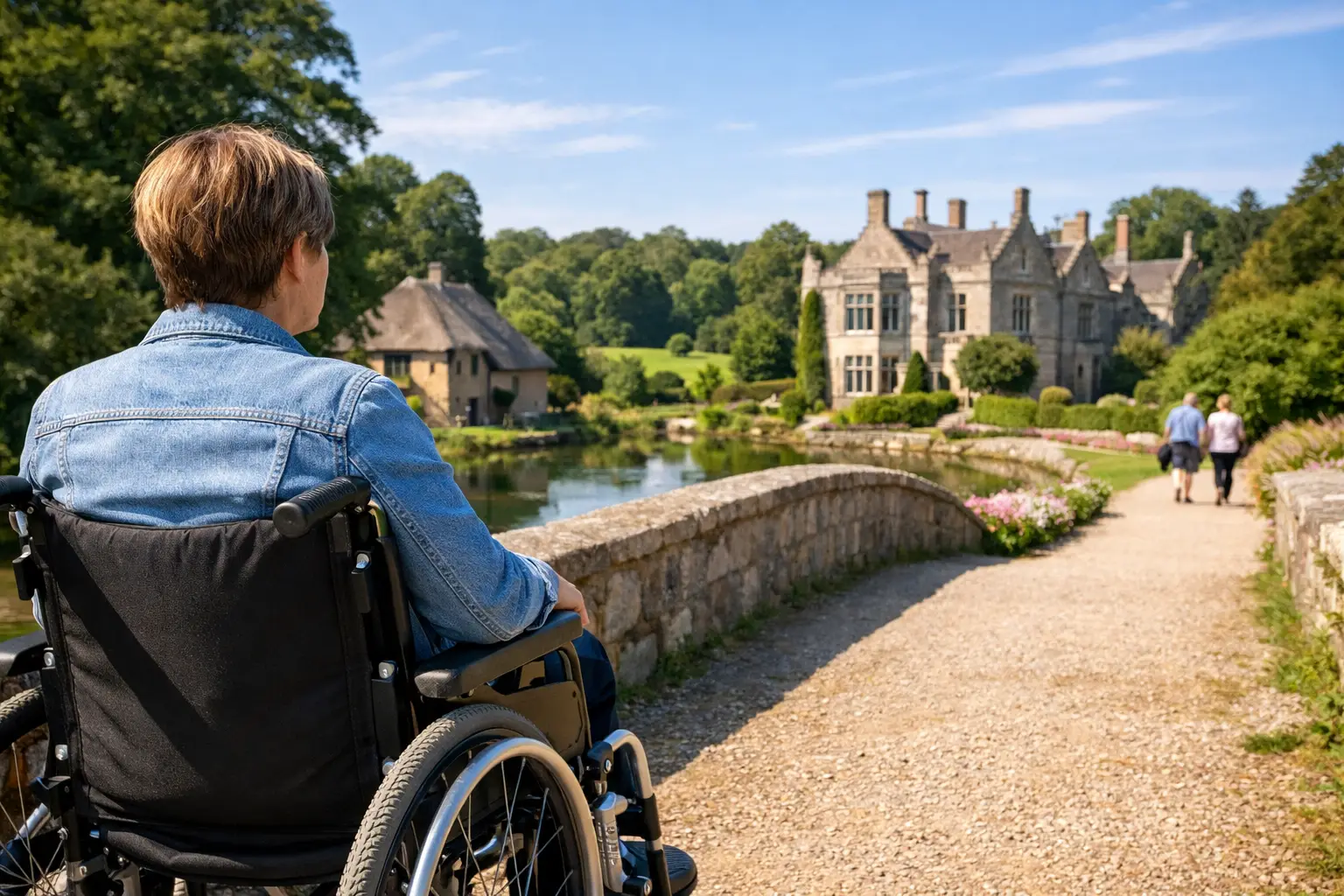
Some National Trust days out are genuinely relaxing in a wheelchair or mobility scooter. Others sound accessible on paper, then fall apart at the car park, the path surface or the distance between key areas. If you are looking for wheelchair friendly National Trust places, the difference usually comes down to the practical details - gradient, terrain, toilets, parking and whether the route works in real life, not just in a brochure.
That is why it helps to approach National Trust visits with the same mindset you would use for any other accessible trip. The headline matters less than the day-to-day reality. A property can have an accessible toilet and still be hard work if the route from the car park is steep, gravelled or spread across a large estate.
What makes National Trust places wheelchair friendly?
For most disabled visitors, access is never just about whether there is a ramp at the front door. It is about the full journey. Can you park close enough? Is the route compact enough to enjoy without turning it into an endurance test? Are the main features reachable without battling rough ground all day?
The best wheelchair friendly National Trust places tend to have a few things in common. They offer step-free routes to the highlights, decent accessible parking, toilets you can rely on, staff who understand practical access questions, and enough honest information to let you plan properly before setting off.
That does not mean every part of a site will be perfect. Many National Trust properties are historic buildings, landscaped gardens or countryside estates, and those come with obvious limitations. Cobbles, narrow internal doorways, slopes and older layouts are part of the territory. What matters is whether you can still have a worthwhile visit without feeling shut out.
8 wheelchair friendly National Trust places worth considering
These are the sort of places that tend to work better for wheelchair users, mobility scooter users and anyone who needs a more manageable day out. As always, access can change with weather, maintenance work and seasonal route changes, so check the latest details before travelling.
Cliveden, Buckinghamshire
Cliveden is one of the stronger options if you want a National Trust property with a sense of occasion but without needing to tackle a full countryside expedition. The formal gardens are a major part of the appeal, and several areas are more manageable than you might expect.
The big advantage here is that you can still enjoy a lot of the site through the main garden spaces rather than needing to cover the whole estate. That matters if your energy is limited or if you are using a heavier powered chair or scooter. Some routes are sloping, and not every path will suit every user, but Cliveden can still provide a satisfying visit without needing to reach every corner.
Waddesdon Manor, Buckinghamshire
Waddesdon is often a sensible choice for visitors who want a grand house and grounds but need a more structured access setup. The estate is large, so distance is the main factor rather than just steps.
That can cut both ways. If the transport assistance and accessible route arrangements are running well, the visit can feel much more straightforward. If you struggle with long distances and arrive on a busy day, planning becomes more important. It is the sort of place where knowing the transport options between arrival points and the main attraction can make or break the day.
Fountains Abbey and Studley Royal, North Yorkshire
Historic ruins and accessible travel do not always sit comfortably together, but Fountains Abbey is one of the better-known examples where many visitors can still enjoy the main setting. The drama of the site is the draw, and there are routes that allow you to take in the abbey and surrounding landscape without needing to scramble over uneven ground.
That said, this is still a large outdoor site, and the scale can catch people out. Weather makes a real difference. A route that is manageable in dry conditions can become tiring if surfaces soften or if you are dealing with cold wind and rain. It is worth treating this as a place to enjoy in sections, not a challenge to complete.
Hughenden, Buckinghamshire
Hughenden can work well if you want a more contained visit with house, gardens and estate elements that can be mixed depending on your mobility. For many people, that flexibility is useful. You do not have to do everything to feel the trip was worthwhile.
The practical point here is to focus on the most accessible parts first. Historic houses can have partial access rather than full access, and that is normal. If your priority is a good day out rather than ticking every room off a list, Hughenden is often easier to enjoy.
Attingham Park, Shropshire
Attingham Park is a good example of a place where the grounds can be the real win. Wide open parkland is not always ideal if surfaces are poor, but where routes are stable and key facilities are close enough together, it can make for a less stressful visit.
For wheelchair and scooter users, the value of Attingham is that you can often tailor the day to your comfort level. A shorter visit centred on the mansion and immediate grounds may suit some people better than a longer roam. That choice matters, especially if you are travelling with family who want space but you do not want to be dragged into miles of uneven paths.
Sheffield Park and Garden, East Sussex
Gardens are often the safest National Trust bet for accessible days out, and Sheffield Park is a good reason why. The main appeal is visual rather than architectural, which usually means fewer bottlenecks and less pressure to navigate older interior spaces.
Season matters here. In spring and autumn especially, the garden can be a brilliant option because you still get a strong experience without needing to cover every route. The key question is path surface after wet weather. A beautiful garden is only wheelchair friendly if you can move around it without a constant fight.
Kingston Lacy, Dorset
Kingston Lacy is often worth a look if you want a house and grounds combination in a setting that feels substantial but not overwhelming. Sites like this tend to work best for people who enjoy a balanced visit - some time indoors, some time outdoors, and enough facilities nearby to avoid logistical hassle.
As with many heritage properties, internal access may be more limited than garden access. That is not necessarily a deal-breaker. If the accessible parts are well presented and the grounds are easy enough to use, the overall day can still feel generous rather than compromised.
Stourhead, Wiltshire
Stourhead is one of the most famous National Trust landscapes in the country, but it is also a good reminder that fame does not equal easy access. Parts of it can be difficult because of gradients and the scale of the grounds.
Even so, it still deserves a place in this conversation because some visitors can enjoy selected areas without attempting the full circuit. That is an important distinction. A wheelchair friendly National Trust place does not always mean every route is accessible. Sometimes it means there is enough step-free, worthwhile access to make the journey worth it. Stourhead is best approached with clear expectations and a plan to do the bits that work, not the bits that do not.
How to choose the right place for your mobility needs
The biggest mistake is picking a destination based on pretty photos or broad accessibility claims. What you need is a match between the place and your actual day-to-day mobility.
If you use a manual wheelchair, think hard about gradients and surface resistance. A route described as accessible may still be exhausting if there is loose gravel or a long incline. If you use a mobility scooter, look at distance, charging considerations and whether access routes are wide enough and firm enough throughout the day. If you travel with assistance, consider whether the place offers enough seating, shelter and toilet access to make the outing comfortable for both of you.
It also helps to be honest about your priorities. Some people want full house access. Others are happy with gardens, café and a good view. There is no right answer. The better trip is the one that suits your energy, equipment and comfort, not the one that sounds most impressive.
Practical checks before you travel
Before setting off, check parking arrangements, route surfaces, accessible toilet availability and whether scooters or wheelchairs are available on site if you need a backup. Ask how far it is from the accessible car park to the main attraction. Ask whether the accessible route is the same route everyone uses, or a separate longer one. That detail matters more than many venues realise.
Weather should also be part of your planning. A dry compacted path can be manageable, while the same route after heavy rain can turn into hard work. Large estates often look simple on a map but become tiring if you need to backtrack long distances to reach toilets or refreshments.
This is where straightforward, experience-led travel advice makes such a difference. Brands like Andy Wright Travel exist because disabled travellers need more than vague promises. They need the sort of information that answers the real question: can I actually enjoy this place without spending the whole day negotiating barriers?
A good National Trust visit should feel doable
Accessible travel is not about lowering expectations. It is about getting accurate information so you can make smart choices and keep your independence. The right National Trust property can give you a brilliant day out, whether that means a stately home, a manageable garden route or simply a good café with a view and enough access to enjoy the setting properly.
If a place needs more planning, that does not always mean ruling it out. It just means going in with your eyes open, choosing the parts that work for you and ignoring the pressure to do it all. A day out should leave you with good memories, not a recovery period.
0 Comments
Leave a Comment