
Wheelchair Friendly Holidays That Work
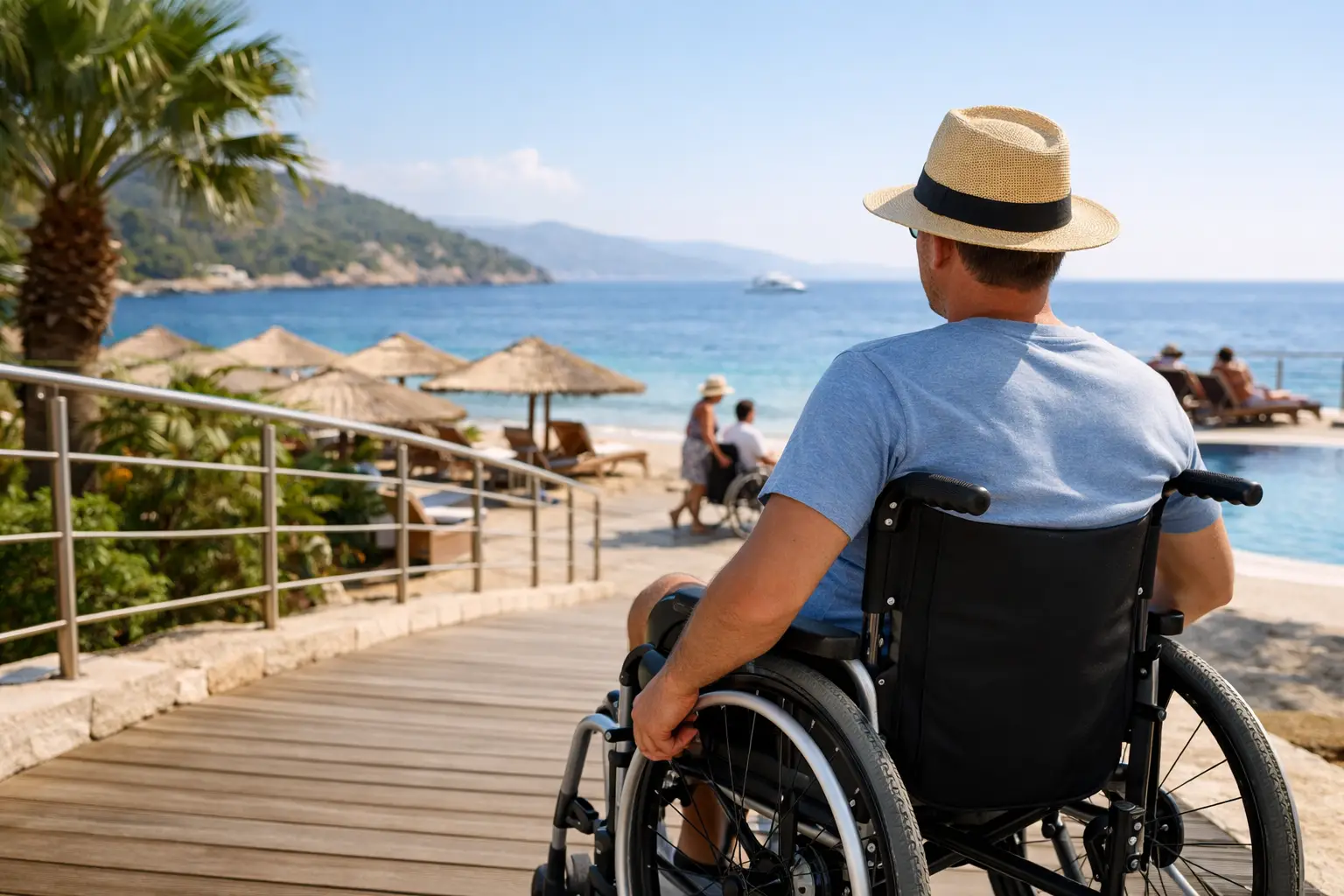
The difference between a good trip and a stressful one often comes down to a few small details nobody puts in the brochure. A hotel can call itself accessible, then have a step at the entrance, a heavy fire door to the lift, or a bathroom you cannot actually turn in. That is why wheelchair friendly holidays need proper checking before you book. Not glossy promises, but real access information that tells you whether you can move around comfortably and keep your independence.
For most disabled travellers, the holiday itself is only part of the job. The bigger task is working out whether the airport transfer can take your chair or scooter, whether the pavements outside the hotel are usable, and whether local attractions are genuinely possible without a fight. Once you start planning in that way, you stop looking for perfect destinations and start looking for workable ones. That is usually the smarter approach.
What makes wheelchair friendly holidays genuinely usable
The phrase gets thrown around far too easily. In practice, wheelchair friendly holidays are about the full chain of access, not one adapted room and a bit of good marketing. You need the journey, the accommodation and the destination itself to line up.
A hotel room might be excellent, but if the transfer drops you at a kerb with no ramped route, that is a problem. A resort might have step-free promenades, but if restaurant toilets are down a flight of stairs, your day becomes more restricted than expected. Real accessibility is cumulative. One weak link can change the whole experience.
The most useful way to judge a trip is to think in layers. Can you get there? Can you get into the building? Can you use the bathroom independently? Can you get out and about nearby without needing help every ten minutes? If the answer starts turning into maybes, keep asking questions.
Start with the destination, not the deal
Cheap prices can tempt anyone into booking too quickly, but for accessible travel that usually backfires. Begin with a destination that gives you the best chance of moving around with confidence.
Flat seafront towns, modern city centres and purpose-built resorts are often easier than places full of cobbles, steep gradients and historic buildings. That does not mean you should avoid older destinations altogether. It means you need to be realistic about what your days will look like. A beautiful old town can still be worth visiting if you know in advance that access will be patchy and you plan around it.
Beach holidays also need a closer look than most people expect. A hotel can be metres from the sea but still impossible to enjoy if there are steps onto the promenade or soft sand with no beach access matting. Some destinations do this brilliantly with boardwalks, accessible beach wheelchairs and flatter promenades. Others offer very little beyond the view.
City breaks can be easier than they seem if public transport, dropped kerbs and attraction access are reliable. Equally, they can be exhausting if pavements are cracked, taxis refuse larger mobility equipment or the nearest accessible loo is half a mile away. The point is not to rule places in or out too early. It is to match the destination to your actual mobility needs, not the holiday company description.
How to check a hotel properly
Accommodation is where most accessible trips are won or lost. Never rely on the word accessible on its own. It tells you almost nothing.
Ask for specific measurements and recent photos. Door widths, bed height, shower access, space beside the toilet and turning room all matter. If you use a mobility scooter, check storage and charging arrangements too. Some properties are fine with a folded wheelchair but become awkward if you need space for a larger powerchair or scooter.
Bathrooms deserve particular attention. A roll-in shower is not much use if there is a lip at the entrance, no shower chair, or no room to position yourself safely. Grab rails also vary wildly. Some are well placed and solid. Others are token additions that do not help in practice.
It is also worth asking about the route through the hotel, not just the room itself. Are there steps from reception to the lift? Is the breakfast room on the same level? Is there level access to the pool area, bar and outdoor spaces? If you end up stuck in your room while everyone else uses the hotel properly, that is not an accessible stay.
Transport can make or break the trip
Even a well-chosen destination can become hard work if transport is badly handled. This is especially true when travelling with a powered wheelchair or mobility scooter.
Flights need planning beyond the ticket. You may need to declare battery type, dimensions and weight in advance. At the airport, assistance can vary from excellent to rushed and confused, so allow time and carry key information with you. If your chair is your independence, treat every stage of the process seriously.
Transfers are another common weak spot. Never assume an airport transfer can take your equipment just because the operator says it is accessible. Ask whether it has a ramp or lift, what size chair it can accommodate and whether you can remain seated in your wheelchair if needed. A standard minibus is not the same thing.
On the ground, local transport matters just as much. Accessible buses, usable railway stations and reliable taxi options can turn a limited trip into a flexible one. If those are poor, your holiday may depend almost entirely on where your hotel is located. That can still work, but you need to know that before booking.
Why street-level access matters more than people think
This is the bit many travel websites ignore, yet it often decides how independent you feel. You can have an accessible hotel and still struggle outside if the streets are badly maintained, crossings are awkward or dropped kerbs are missing.
Look at the immediate area around your accommodation. Is there a flat route to shops, restaurants and the seafront? Are the pavements wide enough? Are there steep cambers that make self-propelling hard or make a scooter feel unstable? These practical details shape every day of the trip.
This is where lived experience matters. Generic destination guides tend to stop at major attractions, but disabled travellers need the in-between information. How easy is it to get from the hotel to the nearest accessible loo? Is the promenade smooth or broken up by steps? Can you actually enjoy an evening out without needing military-level planning? That sort of honesty is far more useful than tourism copy.
The best way to research wheelchair friendly holidays
You need a mix of official information and real-world evidence. Hotel websites and tourist boards can give you a starting point, but they rarely tell the full story. Photos, videos and first-hand reviews from disabled travellers are often far more revealing.
Look for content that shows routes, entrances, bathrooms and transport in use. A written claim that somewhere is step-free is one thing. Seeing the actual slope, doorway and turning space is another. That is why brands like Andy Wright Travel are useful to so many people - they focus on whether a place works in practice, not whether it sounds good on paper.
When possible, contact the property directly and ask clear, plain questions. Keep them specific. Instead of asking, “Is the room wheelchair accessible?”, ask, “Is there level access from the entrance to the room, and can you send photos of the shower and toilet area?” You are more likely to get an answer you can actually use.
Be honest about trade-offs
Not every trip will tick every box. Sometimes a destination offers brilliant scenery and a few awkward access points. Sometimes a hotel has a strong accessible room but a less convenient location. Sometimes the transport is excellent but the older parts of town are hard work.
That does not mean the holiday is a bad idea. It means you should know where the compromises are before you go. The problem is rarely imperfection. The problem is being misled.
Many wheelchair users and scooter users are happy to work around a few limitations if the main parts of the trip are solid. You might accept a slightly smaller bathroom for a perfect seafront location, or choose a simpler resort because local access is much easier. There is no universal right answer. The best holiday is the one that fits your needs, energy levels and confidence.
Plan for independence, not just access
Accessible travel is not only about getting through the door. It is about how much of the trip you can do on your own terms. That means checking practical things other people barely think about, from charging a scooter overnight to finding a restaurant with enough room between tables.
Build your planning around the parts of a holiday that matter most to you. If you want beach time, check beach access first. If you care more about sightseeing, prioritise transport and attraction access. If you want a restful break, focus on the hotel, nearby facilities and how easy it is to get around the immediate area.
Wheelchair friendly holidays are absolutely possible, but they work best when you plan with clear eyes. Ask the awkward questions, expect vague answers until you push further, and trust practical evidence over sales language. A holiday should give you more freedom, not more hassle. The closer your planning gets to real life, the more likely you are to come back thinking about the places you enjoyed rather than the barriers you had to battle through.
0 Comments
Leave a Comment