
Wheelchair Airport Review: What to Check First
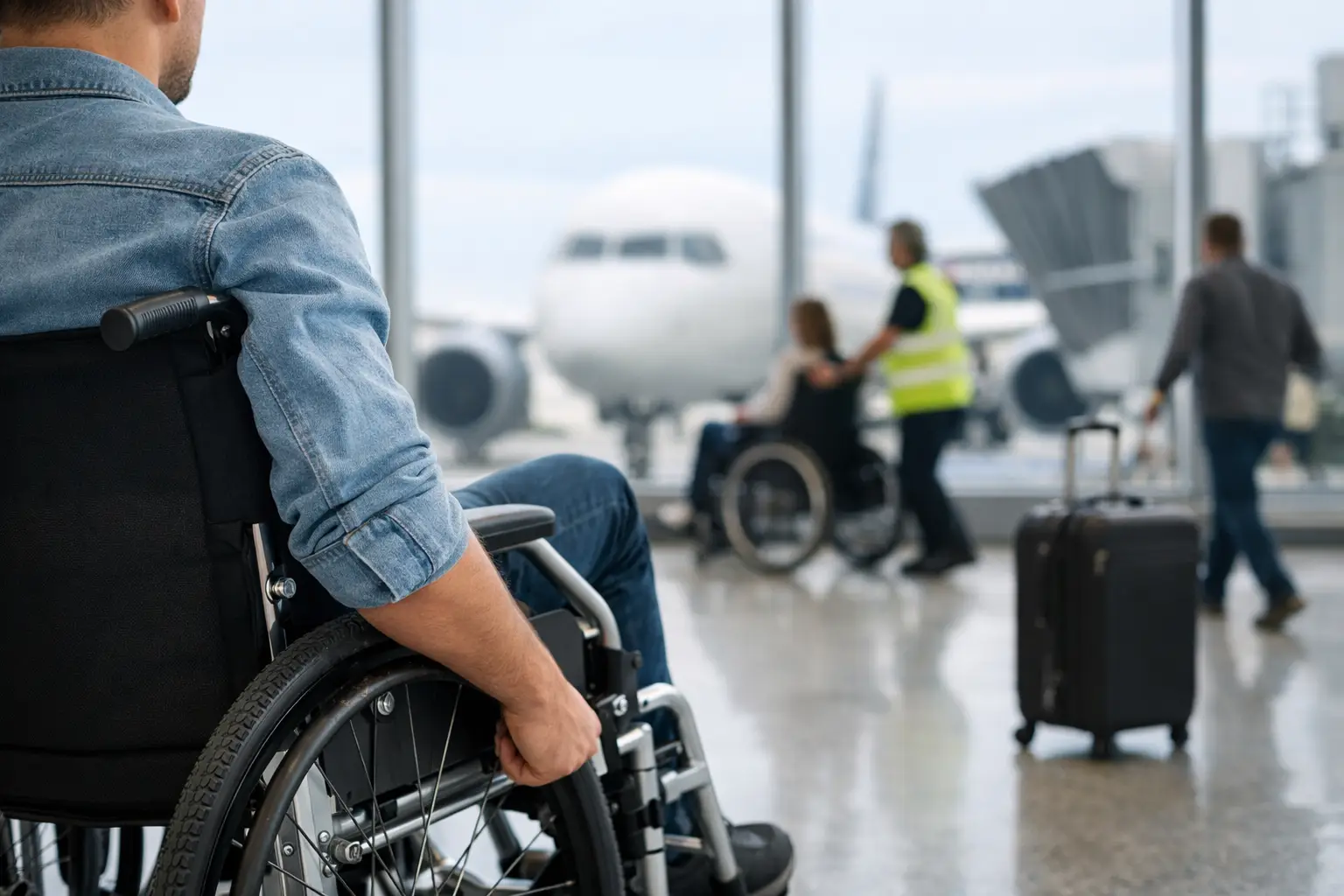
A useful wheelchair airport review is not about whether the terminal looks modern or has a blue badge parking bay. It is about the points where your independence is handed over to somebody else: getting from the car park to check-in, keeping your wheelchair or scooter with you, reaching an accessible toilet, and being transferred onto the aircraft. Those are the details that decide whether flying feels manageable or exhausting.
Airports often describe themselves as accessible because assistance is available. That is only half the story. Assistance can be excellent, but an accessible journey also depends on distances, seating, signage, equipment, staff communication and how your own mobility equipment is handled. A glossy accessibility page cannot tell you all of that.
What a wheelchair airport review should cover
The best reviews follow the journey in the order you will actually experience it. Start outside the terminal, not at the departure gate. If accessible parking is far from the entrance, if the drop-off area is chaotic, or if there is a steep kerb with no clear crossing, that matters before your holiday has even begun.
Look for practical detail on whether there is level access from parking and public transport, where assistance meeting points are, and whether the route involves a long walk or push through a multi-storey car park. If you use a powerchair or mobility scooter, check whether there is room to wait without blocking a busy doorway. This sounds minor until you are trying to manage luggage, a chair and a travel companion in the rain.
Inside, a good review should say how easy it is to find the assistance desk, check-in area and security lanes. Some airports have clear signs and staff close by. Others expect you to report to a desk tucked at one end of a large terminal. Distances can be significant, particularly at airports built around long shopping concourses.
Do not take the phrase “step-free” as a full answer. Ask whether lifts are reliable, wide enough for a larger powered chair, and positioned where you need them. A route may technically be step-free yet add twenty minutes and several awkward turns.
Security and the wait after it
Security is one of the least predictable parts of an airport journey. Wheelchair users may receive a pat-down and swab of their chair, while powered equipment can require extra checks. That does not automatically mean a bad experience, but it should be handled privately, respectfully and without making you feel like a problem to be processed.
A worthwhile review explains whether staff gave clear instructions, whether there was a choice of private screening, and whether the process allowed the traveller to remain in their own chair where possible. It should also mention what happens next. Being taken through security quickly is no help if you are then left in an overcrowded area with no suitable seating, charging point or accessible toilet nearby.
For many people, the most valuable information is simple: can you stay in your own wheelchair until the gate? Airport-provided wheelchairs are not a substitute for a chair fitted to your posture, pressure needs and independence. If a review does not make this clear, it has missed a crucial point.
The boarding handover is the real test
The boarding gate is where airport accessibility either holds up or falls apart. Most wheelchair users will need an aisle chair to reach their aircraft seat unless the aircraft has a suitable boarding arrangement. That transfer can be dignified and well organised, or rushed and uncomfortable.
A detailed wheelchair airport review should say whether the gate had enough space to wait, whether staff introduced themselves and explained the transfer, and whether the aisle chair was brought out only when boarding was ready. Being moved out of your own chair too early can mean a long wait without your normal support or pressure relief.
It should also cover how staff deal with personal equipment. Before flying, photograph your wheelchair or scooter from every angle, including controls, footplates, headrest and any removable parts. Label detachable cushions or controllers if they must travel separately. Tell the ground team clearly how the chair should be lifted, pushed, switched off and secured. A printed handling note can help, particularly if your equipment is not obvious to someone seeing it for the first time.
There is a trade-off here. Early boarding usually gives staff more time and reduces pressure at the gate, but it can also mean sitting on the aircraft for longer. If you have pain, fatigue, pressure-area concerns or need the toilet shortly before departure, discuss timing with the assistance team rather than accepting a one-size-fits-all process.
Mobility scooters need extra preparation
A mobility scooter needs more planning than a manual wheelchair because airlines have rules around batteries, dimensions and weight. Contact the airline well before travel and provide the make, model, weight, folded or fixed dimensions, battery type and battery rating where applicable. Do not rely on a booking note alone. Ask for confirmation that the scooter has been accepted for carriage.
At the airport, the key question is usually whether you can ride your scooter to the aircraft door. This is often possible, but it depends on the airport, gate position and aircraft operation. If it must be handed over earlier, ask exactly where that will happen and how you will get to the gate.
A review should never promise that a scooter will be returned at the aircraft door. That can vary by airport, aircraft stand and local handling arrangements. Instead, it should explain what happened on that journey and flag the question you need to ask for your own flight.
Toilets, food and quiet places are not optional extras
Accessible toilets are a basic requirement, yet their quality varies wildly. A door with a wheelchair symbol does not prove that the room has space to turn, a usable transfer area, an alarm cord that reaches the floor, or a basin you can approach. Reviews are most helpful when they state where the toilets are in relation to security, gates and baggage reclaim.
If you need a Changing Places toilet, hoist or adult changing bench, confirm availability directly with the airport before you travel. Do not assume an accessible loo will meet more complex needs. The same applies to airside seating. Some terminals have plenty of open space but few places where a wheelchair user can sit with family at a table, charge a device or rest away from the crowds.
Food outlets deserve a quick mention too. Counter height, narrow queues and inaccessible seating can turn a straightforward meal into a nuisance. You may not need a full restaurant guide, but knowing whether there are accessible tables near your gate is genuinely useful on a delayed flight.
How to research an airport before booking
Start with the airport’s accessibility information, but treat it as the beginning rather than the final answer. Check the airline’s rules separately, especially for a powerchair or scooter. The airport provides the building and ground assistance; the airline controls carriage of mobility equipment and many aspects of boarding.
When you book, request special assistance at least 48 hours before departure. In the UK, airport assistance is free, but advance notice gives the team the information needed to plan your journey. Include anything that changes how you can travel safely, such as an inability to walk stairs, a need to remain in your own chair until the aircraft door, or a powered chair requiring specific handling.
Then make a short list of questions that relate to you, not to an imaginary average passenger. For example: Where do I report on arrival? Can I keep my powerchair to the gate? Is an ambulift used for remote stands? Where is the nearest accessible toilet after security? Will my chair be returned at the aircraft door or baggage reclaim?
If you are travelling with someone, agree who will watch luggage and who will stay focused on the chair, medication and handover instructions. Airport staff may be busy and well intentioned, but you remain the expert on your own equipment.
Judge the airport by what it enables
A fair review acknowledges good staff and practical barriers alike. A small regional airport may have older facilities but short distances and a team that communicates brilliantly. A major international hub may offer excellent lifts and toilets yet involve long waits, confusing assistance handovers and miles between gates. Bigger is not automatically better.
The most useful verdict is not simply “accessible” or “inaccessible”. It is whether the airport lets you travel with dignity, information and as much control as possible. Share the details you wish you had known before setting off. That is how the next wheelchair or scooter user gets to the gate better prepared, and with one less barrier to fight.
0 Comments
Leave a Comment