
10 Wheelchair Accessible Day Trips UK
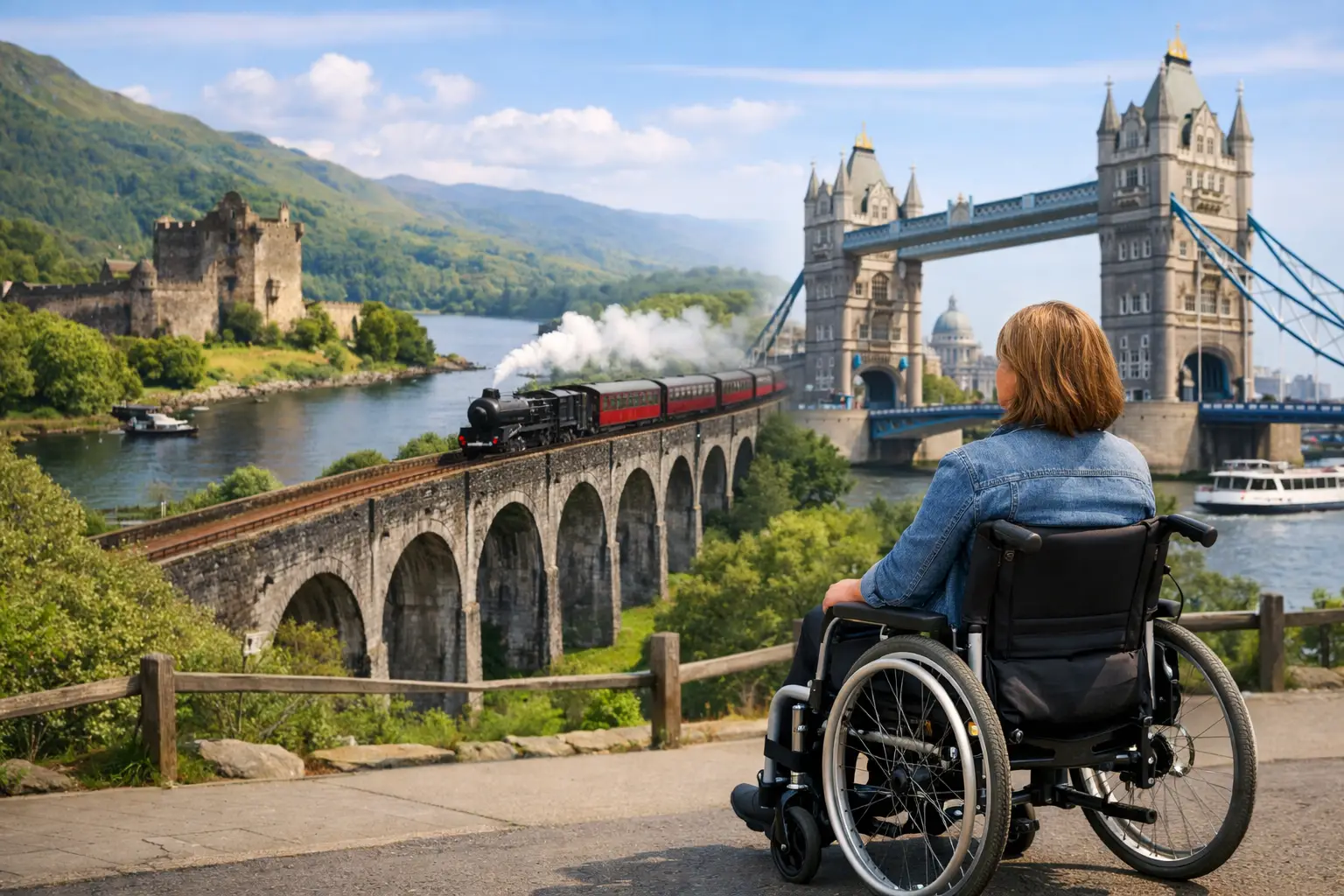
A good day out can fall apart before you even leave home if the access details are vague. That is why planning wheelchair accessible day trips UK style means looking past glossy visitor photos and checking the things that really matter - parking, gradients, surface quality, toilets, transport, and whether a mobility scooter can actually get around without a battle.
The good news is that there are plenty of places across the UK where a day trip is realistic, enjoyable and not built around compromise. The less helpful truth is that accessibility is rarely perfect, and one venue’s idea of “fully accessible” can still mean steep paths, awkward doors or a long push across gravel. The best approach is to choose places that give you room to enjoy the day without constant problem-solving.
What makes wheelchair accessible day trips UK travellers can trust?
For most wheelchair users and mobility scooter users, access is not one single feature. A venue might have a ramp at the entrance but poor paths once you are inside. Another place might have excellent adapted toilets but leave you with a long route from parking to the main attraction. That is why the best day trips are the ones where the whole journey works reasonably well.
When you are choosing somewhere to visit, focus on five basics. First, can you arrive without stress, whether by car, train or accessible taxi? Second, can you get from the entrance to the main parts of the attraction on firm, manageable surfaces? Third, are there accessible toilets in sensible locations? Fourth, is there enough seating or rest space for anyone who cannot stay upright for long? And fifth, if something goes wrong, are staff likely to be useful rather than confused?
Those are not glamorous questions, but they are the difference between freedom and frustration.
10 day trip ideas that are often workable
Seaside piers and promenade towns
Places such as Bournemouth, Blackpool and parts of Brighton can make solid day trips because promenades are usually flatter and easier to navigate than older town centres. If your main goal is sea air, a decent café and a straightforward roll along the front, this kind of trip often works better than trying to tackle cobbled heritage streets.
The trade-off is that seafront access can change quickly. Some promenades are excellent, while access to the beach itself may be limited to seasonal matting or a small number of beach wheelchairs. Wind, crowds and steep slipways can also make a supposedly easy outing much harder.
National Trust and heritage properties with adapted routes
Some larger estates and country houses now offer accessible parking, step-free cafés, adapted toilets and route maps showing gradients and surfaces. This can make them one of the better options for a full but manageable day, especially if you want gardens, open views and somewhere to stop for lunch.
What matters here is realism. Historic houses were not built with wheelchair users in mind, so access is often partial rather than complete. You may get the grounds, shop and café with ease, while only parts of the house are step-free. For many people, that is still a good day out - as long as you know it before you arrive.
Accessible city museums
Big city museums are often among the safest choices because they tend to have lifts, wide circulation spaces, accessible toilets and trained staff. London, Manchester, Liverpool, Birmingham and Glasgow all have strong options for this kind of trip.
This is often a smart choice in bad weather or if you are travelling with mixed mobility needs. The main drawback is transport and crowd levels. Even an accessible museum becomes tiring if the nearest station has a broken lift or the entrance queue stretches across uneven paving.
Botanic gardens and formal parks
If you want space without the unpredictability of rough countryside, botanic gardens and formal landscaped parks can be ideal. They often have smoother paths than rural attractions, and you can set your own pace instead of following a fixed route.
Still, “garden access” varies a lot. One area may be smooth tarmac while another turns into compacted gravel or steeper inclines. Check route maps if they exist, and do not assume the whole site is equal just because the visitor centre is accessible.
Canal-side day trips
Towpaths can be excellent for a gentle outing, especially around regenerated urban waterways where paths have been resurfaced and cafés are nearby. Places in Birmingham, London and parts of the North West can work well if you want a quieter day than a city centre attraction.
This is one of those trips where local detail matters more than the headline destination. Some canal sections are smooth and level. Others are narrow, broken or awkward at bridge points. If you can find current local information before setting off, do it.
Accessible beaches and coastal reserves
A beach day is not off limits, but it needs proper planning. Some coastal destinations now offer accessible parking near the front, boardwalks, Changing Places toilets or beach wheelchair hire. When it works, it can be one of the most rewarding day trips going.
When it does not work, it becomes a long journey for a view from the car park. Check whether beach access is year-round or seasonal, whether you need to pre-book equipment, and how far the accessible toilet is from the shoreline. That distance matters more than tourism websites admit.
Steam railways and scenic trains
A railway day trip can be a brilliant option if you want the experience of travelling as part of the outing rather than just the route to get there. Some heritage railways have accessible carriages, ramps and step-free stations at one or both ends.
The warning here is simple: heritage charm often comes with heritage limitations. Platform gaps, manual ramps and older station layouts can be manageable, but only if staff are prepared and you know what to expect. Ringing ahead is not over-cautious - it is sensible.
Zoos and wildlife parks
Zoos can work well because they usually combine adapted toilets, catering and a full day’s worth of things to see. For families and mixed groups, they are often easier than a scattered town centre where everyone ends up splitting off.
But size is the issue. A zoo may be accessible and still be exhausting, especially if routes are hilly or spread over a large site. Mobility scooter users may find this easier than manual wheelchair users, but battery range and charging options still matter.
Accessible boat trips and river cruises
Short river cruises, harbour tours and lake boats can make very good day trips if boarding is straightforward. They are especially useful if walking distance is limited but you still want a proper sense of place.
Always check boarding conditions. Water levels, tides and temporary gangways can change how accessible a boat really is on the day. A company may honestly describe itself as accessible while still having conditions that only suit some wheelchair users.
Large shopping and leisure complexes
This might not sound exciting, but on difficult weather days or when energy is low, a well-designed shopping and leisure complex can be a practical win. Step-free routes, accessible loos, covered spaces and plenty of places to sit can make the difference between staying home and having a decent day out.
For some people, independence matters more than ticking off famous sights. If a retail and leisure destination gives you easy parking, a meal out and a cinema without access stress, that is a valid trip.
How to plan a better accessible day out
The best wheelchair accessible day trips UK travellers take are usually the ones planned around weak points, not just highlights. Start with the journey there. If you are using rail, check station lift status on the day as well as when booking. If you are driving, find out where the accessible bays are and whether they are actually near the entrance or just marked on a distant overflow car park.
Then look at surfaces and slopes. This is where many access claims fall apart. “Accessible path” can mean smooth and easy, or it can mean a long gravel route that is technically step-free but a nuisance in practice. Photos, route maps and recent visitor reports are often more useful than a one-line accessibility statement.
Toilet access should be checked early, not as an afterthought. Standard accessible toilets may be fine for some travellers and completely unsuitable for others. If you need a hoist or extra space, that changes where a realistic day trip can be.
It also helps to be honest about stamina. A place can be accessible but still too large, too busy or too exposed to weather. There is no prize for pushing through a difficult day just because the venue looked good online. Practical beats ambitious when the goal is actually enjoying yourself.
At Andy Wright Travel, that is really the point of accessible travel advice - not selling a fantasy, but helping people get out more often with fewer nasty surprises.
A final word on expectations
Accessible travel in the UK is getting better, but it is still patchy. The strongest day trips are usually the ones with one clear purpose: a museum with good facilities, a seafront with sensible parking, a garden with reliable paths. Build around what you most want from the day, check the details that can derail it, and give yourself permission to choose ease over effort. A day trip should leave you feeling more independent, not worn down by proving a point.
0 Comments
Leave a Comment