
Wheelchair Accessible Airport Navigation Guide
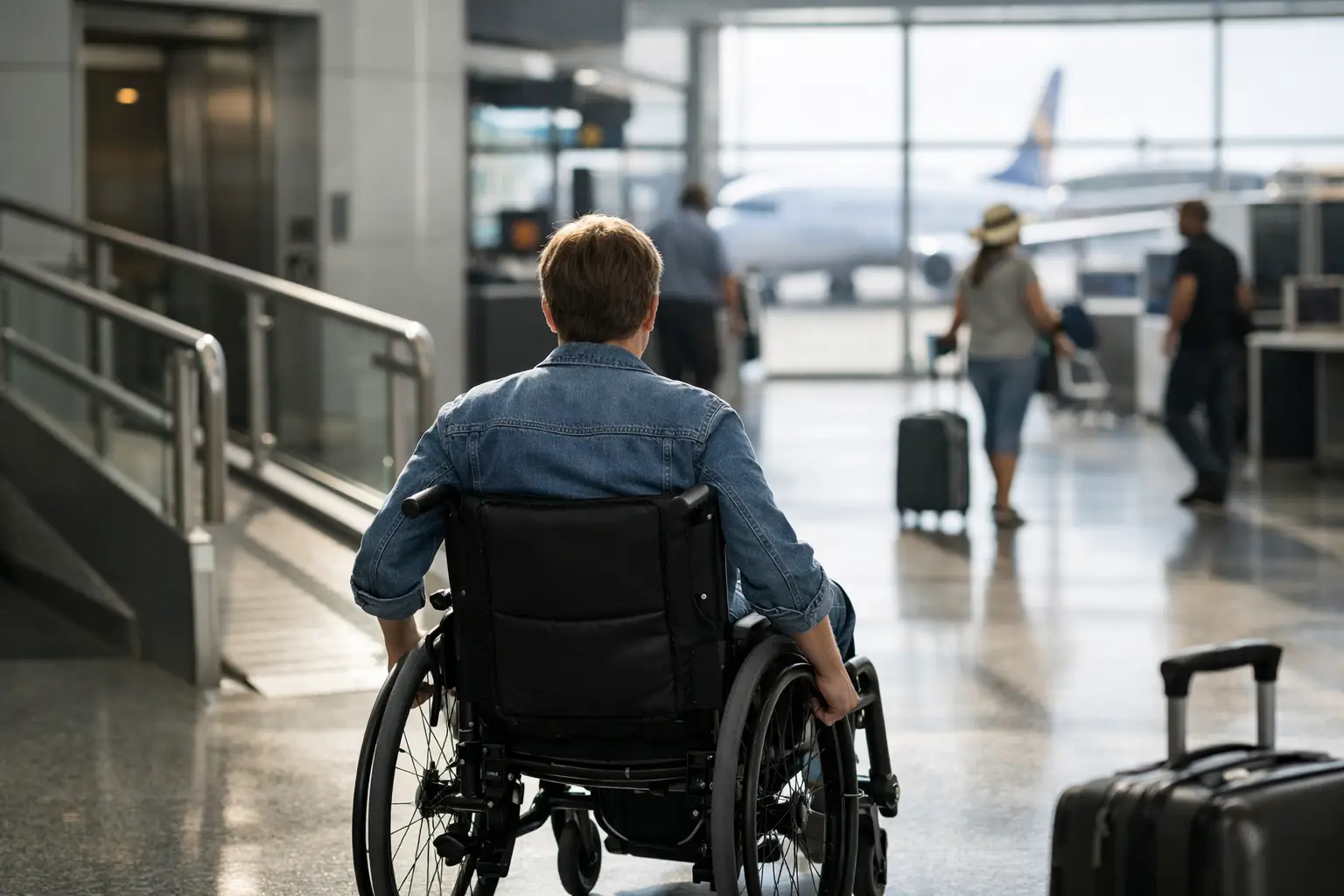
Airports can go wrong before you even reach the gate. A missing aisle chair, a lift hidden behind a staff door, a security lane that is technically accessible but badly managed - these are the details that matter. This wheelchair accessible airport navigation guide is built around those real pinch points, so you can plan the journey with fewer nasty surprises and keep more control on the day.
For wheelchair users, mobility scooter users and anyone travelling with reduced mobility, the hardest part is often not the flight itself. It is the chain of small decisions between the car park, check-in, security, the departure lounge, boarding and baggage reclaim. If one link fails, the whole airport experience becomes stressful very quickly. Good preparation does not remove every problem, but it does give you more options when something is unclear or badly handled.
Before you travel: set the airport up properly
The biggest mistake is assuming that booking assistance means every part of the airport journey will automatically be covered. It often is not. Airlines, airports and ground handling companies all play a part, and that split responsibility is exactly where confusion starts.
When you book, request special assistance straight away and be specific. Do not just say you need help. Explain whether you are travelling in your own manual wheelchair, a powered wheelchair or a mobility scooter, whether you can transfer independently, whether you can walk a few steps, and whether you need an aisle chair for boarding. If you need help from the drop-off point rather than from check-in, say that as well.
It is worth checking the airport’s own accessibility page, but treat it as a starting point rather than the full picture. Airport websites tend to tell you what should happen. Lived experience tells you what often does happen. If possible, confirm practical details a few days before departure, especially where the assistance reception point is, how early they want you there, and whether there are size or battery rules for your wheelchair or scooter.
Battery information matters more than many people realise. If you use a powered wheelchair or scooter, have the make, model, weight, dimensions and battery type written down and easy to show. Some staff know this process well. Others do not. Having it ready can save a lot of time at check-in.
A wheelchair accessible airport navigation guide for arrival and check-in
How you arrive at the airport affects everything that follows. If you are being dropped off, find out exactly which entrance is closest to the assistance point. Not every terminal has level access from every drop-off zone, and a short distance on a map can be awkward in real life if kerbs, slopes or heavy doors are involved.
If you are driving, check Blue Badge parking, transfer buses and the route from the car park to the terminal. Some airport parking is technically accessible but still leaves you with a long, tiring roll before you even get inside. In those cases, paying more for a closer option can be worth it.
Once in the terminal, go to the assistance desk or designated help point rather than assuming a member of staff will spot you. This is one area where being direct helps. Confirm your name, flight, destination and what support you need at each stage. If something sounds vague, ask again. You are not being difficult. You are making sure nobody makes the wrong assumption.
Check-in desks can be hit and miss. Some have lowered sections and enough space to approach comfortably. Others do not. If you are carrying paperwork, passports and medication, keep them where you can reach them without unpacking half your bag at the counter.
Security: usually manageable, rarely quick
Security can feel like the point where your independence disappears for ten minutes. In reality, it depends heavily on the airport team on duty. Some are calm, respectful and efficient. Others are clearly less confident when dealing with wheelchairs, scooters or mobility aids.
Expect extra time here. You may be taken to the side for a manual search, swabbing of your chair, or separate screening of medical items. If you cannot stand, tell staff clearly from the start. If you can stand briefly but not walk through a standard scanner without support, say that too. Precision helps.
This is also where airport design starts to matter. Wide lanes and clear turning space make a huge difference. So do nearby seats if you need to wait while your chair is checked. If you carry medication, cushions, tools or spare parts linked to your mobility equipment, keep them organised and easy to explain. Security is far easier when you can show what something is without rummaging under pressure.
There is a dignity issue here as well. If you need a private search or want a companion present, ask for it. You should not be rushed into accepting a process that leaves you uncomfortable or exposed.
Getting through the terminal without exhausting yourself
A lot of airport guides stop at security, but the airside side of the terminal can be just as awkward. Distances can be long, seating can be poor, accessible toilets may be tucked away in odd corners, and lifts sometimes seem designed as an afterthought.
If you are travelling independently in your own wheelchair or scooter, this part is about pacing. Do not burn energy wandering through shops or hunting for food if your gate could be a fifteen-minute roll away. Check the gate as soon as it appears and judge the route realistically. Some airports have level, simple layouts. Others involve multiple lifts, travelators and bottlenecks that slow everything down.
If you are using airport assistance, ask whether they will stay with you, return at a set time or meet you later at the gate. Different airports handle this differently. That matters if you need help reaching an accessible toilet, buying food or changing terminals.
It is worth locating the nearest accessible toilet well before boarding starts. Do not assume there will be one at the gate area itself. The same goes for quiet seating if pain or fatigue is an issue. Sometimes the smartest move is to stay near a reliable toilet and only move to the gate when necessary.
Boarding is where details matter most
Boarding is often the stage disabled travellers worry about most, and with good reason. It is the point where airport assistance, airline procedures and aircraft layout all have to line up. When they do, it works. When they do not, you can be left waiting on the jet bridge while staff sort themselves out.
This part of the wheelchair accessible airport navigation guide comes down to one rule: confirm the plan before boarding starts. Ask whether you will pre-board, whether an aisle chair is needed, and when your wheelchair or scooter will be taken from you. If you have removable parts, cushions or a joystick that should go in the cabin or be separately protected, sort that before staff are rushing.
If you use a manual wheelchair, there is sometimes the option to keep it to the aircraft door. For powered wheelchairs and scooters, handover usually happens earlier, and that can be the moment your independence drops sharply. Keep anything essential for the flight on your person or in hand luggage, including medication, chargers, pressure relief items and documents.
If staff say your chair must be handled a certain way, but you know from experience that this risks damage, speak up clearly. Explain what needs removing, what should not be forced, and where freewheel levers or battery isolators are. A short, calm instruction at the right moment can prevent major problems later.
Arrivals, baggage reclaim and getting out of the airport
Landing does not mean the hard part is over. Arrivals can be painfully slow if your wheelchair is late coming back, if assistance staff are busy, or if baggage reclaim is a long distance away.
If your chair was loaded into the hold, ask where it will be returned - aircraft door or baggage hall. Never assume. If it does not appear when promised, raise it immediately. Waiting politely for twenty minutes often just means nobody realises there is a problem.
At baggage reclaim, the challenge is usually space and reach. Carousels are not designed brilliantly for seated travellers, and assistance staff vary in how proactive they are. If you need help lifting bags or collecting oversized mobility equipment, say so directly.
After that, you still need a workable route to taxi ranks, railway stations, pick-up areas or hotel shuttles. This is where airport accessibility can fall apart again. A fully accessible terminal is not much use if the onward transport involves steps, a steep kerb or a badly signed lift. If you have booked an accessible transfer, keep the pickup instructions handy and do not rely on vague meeting-point descriptions.
When airport assistance is good - and when to take control yourself
Airport assistance can be excellent. It can also be slow, overstretched or too generic for what you actually need. That is the trade-off. Using assistance may reduce physical strain, but it can also mean more waiting and less freedom to move at your own pace.
For some travellers, especially scooter users who can navigate independently for long distances, the better option is to keep control for as much of the terminal journey as possible and only use assistance for boarding and disembarking. For others, especially where fatigue, pain or transfers are difficult, full assistance is the right call. It depends on your mobility, the airport layout and how much uncertainty you are prepared to absorb on the day.
That honesty matters. Accessible travel is not about pretending every airport works brilliantly. It is about knowing where the weak points are and planning around them.
If you approach airports with clear information, realistic timing and the confidence to ask direct questions, they become far more manageable. Not perfect, not effortless, but manageable enough to keep travelling on your own terms. That is often the difference between feeling processed and feeling in charge.
0 Comments
Leave a Comment