
What Makes a Hotel Wheelchair Friendly?
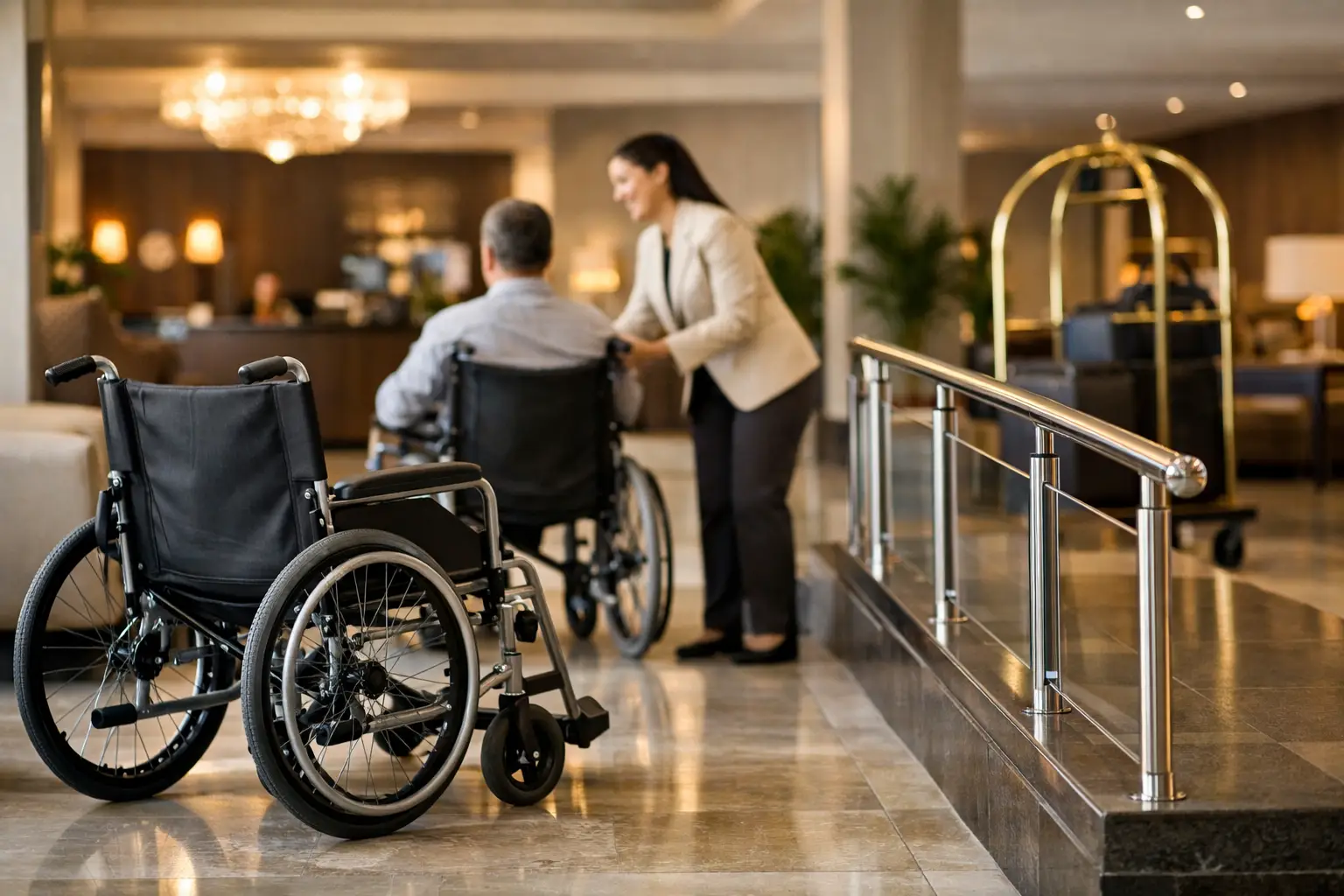
You can usually tell within five minutes of arriving whether a hotel understands accessibility or just says it does. A single photo of a wide doorway means very little when the route from reception includes a heavy fire door, the lift is tiny, and the bathroom leaves no room to turn. That is what makes a hotel wheelchair friendly such a practical question - and why the answer has to go far beyond a box ticked on a booking site.
For wheelchair users, mobility scooter users, and anyone travelling with reduced mobility, a genuinely accessible hotel supports independence from the moment you arrive. It lets you get in, move around, use the bathroom safely, sleep comfortably, and leave the room without needing help every time you hit a basic obstacle. That is the standard worth judging against.
What makes a hotel wheelchair friendly in real life
The short answer is simple. A wheelchair-friendly hotel is one that can be used safely, comfortably, and with dignity by a disabled guest. The longer answer is where hotels often fall down.
Accessibility is not one feature. It is a chain. If the entrance is step-free but the bedroom door is too narrow, the room is not truly accessible. If the bedroom works but the shower has a lip and no space for a shower chair, it is not fully usable. If there is an accessible room but the restaurant is reached by stairs, your stay still becomes harder than it needs to be.
That is why the best way to judge a hotel is to think in stages: arrival, movement through public areas, bedroom layout, bathroom design, dining access, and emergency arrangements. One weak link can change the whole experience.
Step-free access matters, but it is only the start
A hotel cannot really claim to be wheelchair friendly if getting through the front door is a struggle. Step-free access should begin at the point of arrival, whether that means the car park, taxi drop-off, or pavement outside. If there is a ramp, it needs to be usable rather than painfully steep. If there is a side entrance for disabled guests, it should be easy to find and available when you need it, not locked until staff come searching for a key.
Once inside, reception should also work in practice. That means enough space to approach the desk, room to turn, and ideally a lower section where a wheelchair user can check in properly. A glossy lobby with polished floors and designer furniture can look impressive but still be awkward if the route is cluttered or the seating blocks the way.
Lifts are another common weak spot. A hotel may have lifts, but that does not automatically mean good access. The lift needs to be large enough for a wheelchair or scooter, with doors that stay open long enough and buttons placed at a reachable height. In older buildings, this is often where the compromise appears. A charming hotel in a historic property may offer some access, but not full independence.
The bedroom has to work around the wheelchair, not fight it
When people ask what makes a hotel wheelchair friendly, the bedroom is usually where the answer becomes very clear. An accessible room should offer enough floor space to move around the bed, approach storage, and reach windows, switches, and sockets. If you can get through the door but then have to shuffle sideways between furniture, the room has not been designed properly.
Bed height matters more than many hotels realise. If the bed is too high, transfers can become unsafe. If it is too low, standing up can be difficult. There is no perfect height for everyone, which is why honest measurements are far more useful than vague claims. The same goes for clearance under the bed for mobile hoists. Some travellers need it, some do not, but if a hotel markets a room as accessible, that sort of detail should be available.
Furniture placement matters too. A chair shoved into the only turning space, a luggage rack in the wrong spot, or a minibar blocking access can make the room frustrating. These are small fixes from the hotel side, but they make a huge difference for the guest.
Door widths and turning space
This is one of the most overlooked details. Hotels often say a room is suitable for wheelchair users without giving exact widths. For a manual chair, a tight door may be inconvenient. For a powerchair or mobility scooter, it can be a complete barrier. Turning space in both the bedroom and bathroom is just as important. If you cannot position yourself properly, using the room becomes awkward and tiring.
Controls and practical reach
Light switches, curtains, air conditioning controls, kettles, wardrobes, and plug sockets should all be reachable from a seated position. This sounds basic, but many so-called accessible rooms still place the kettle on a high shelf or the wardrobe rail beyond comfortable reach. Good accessibility is often about these everyday details rather than dramatic adaptations.
The bathroom is where good and bad design really shows
A bathroom can make or break a hotel stay. Plenty of hotels advertise wet rooms or accessible bathrooms, but the layout is what counts. You need enough space to enter, position your chair, transfer safely, and use the toilet and shower without contorting yourself.
Grab rails should be positioned where they are actually useful. The toilet should have transfer space on at least one side, and ideally staff should be able to confirm which side if that matters to you. Roll-in showers are generally far more practical than over-bath showers or shower trays with a lip. A fold-down shower seat can help, but only if it is sturdy and the controls can be reached while seated.
Sinks are another test of whether a room has been designed with disabled guests in mind. If the basin has a bulky cabinet underneath, many wheelchair users cannot get close enough to use it properly. Mirrors, towels, soap dispensers, and hairdryers all need to be reachable too.
There is also a difference between technically accessible and genuinely comfortable. A bathroom may meet a minimum standard while still feeling cramped or awkward. That is why photos and measurements matter so much before booking.
Public areas should not turn the stay into an obstacle course
A hotel room is only part of the experience. If breakfast is served in a room reached by steps, or the bar tables are packed too tightly to navigate, access is still limited. A wheelchair-friendly hotel should let you use the same facilities as other guests without needing a workaround every time.
Restaurants need enough space between tables, and buffet layouts should be manageable from a seated height. Accessible toilets in public areas are useful as well, especially if you spend time outside your room. If the hotel has leisure facilities, meeting rooms, terraces, or gardens, it is worth checking those routes too. Hotels sometimes make the room accessible but forget the rest of the property.
This is particularly relevant in resorts and larger complexes. Long distances, sloping paths, gravel, and split-level layouts can all affect whether the hotel feels easy or exhausting.
Staff honesty is part of what makes a hotel wheelchair friendly
Good staff do not need to know everything instantly, but they do need to answer clearly and honestly. If you ask whether the shower is level access, whether there is space on both sides of the bed, or whether a scooter fits in the lift, vague reassurance is not enough.
The best hotels are the ones that understand the difference between disability marketing and practical accessibility. They will measure doorways, send current photos, explain any limitations, and tell you if the room might not suit your needs. That honesty saves wasted trips and bad experiences.
It also helps if staff understand that accessibility is not only about visible wheelchair use. Some guests can walk short distances but need a walk-in shower. Others use a scooter outside the room but transfer to a manual chair indoors. Needs vary, and a hotel that listens rather than assuming is usually easier to deal with.
One accessible room is not always enough
Some hotels treat accessibility as a token feature. They have one adapted room, often in the least desirable part of the building, and that is the end of the conversation. In reality, disabled travellers have different needs just like everyone else. Some need roll-in showers, some need twin beds, some need family rooms, and some need space for equipment or a carer.
A hotel does not need dozens of accessible rooms to be useful, but the more choice it offers, the better the chances of a comfortable stay. This matters even more in popular destinations where the single adapted room is booked months in advance.
How to judge a hotel before you book
The safest approach is to ignore broad claims and ask specific questions. Request actual measurements for doors, bed height, and bathroom layout. Ask for recent photographs, not stock images. Check whether step-free access covers the whole guest journey, not just the entrance. If you use a mobility scooter, ask about charging, storage, and lift size.
Reviews from disabled travellers are often far more valuable than a hotel's own accessibility page, because they tend to mention the details that affect real use. That is one reason specialist accessible travel sites such as Andy Wright Travel are useful - they focus on what the place is like on the ground, not what the brochure promises.
A final point worth remembering is that wheelchair friendly does not always mean perfect for every wheelchair user. Your chair, your transfer method, your balance, and whether you travel solo or with support all shape what works. The right hotel is the one that fits your needs, not the one with the best accessibility label.
A genuinely wheelchair-friendly hotel gives you something every traveller deserves - the freedom to get on with your trip instead of spending it negotiating avoidable barriers.
0 Comments
Leave a Comment