
What Makes a Hotel Room Accessible?
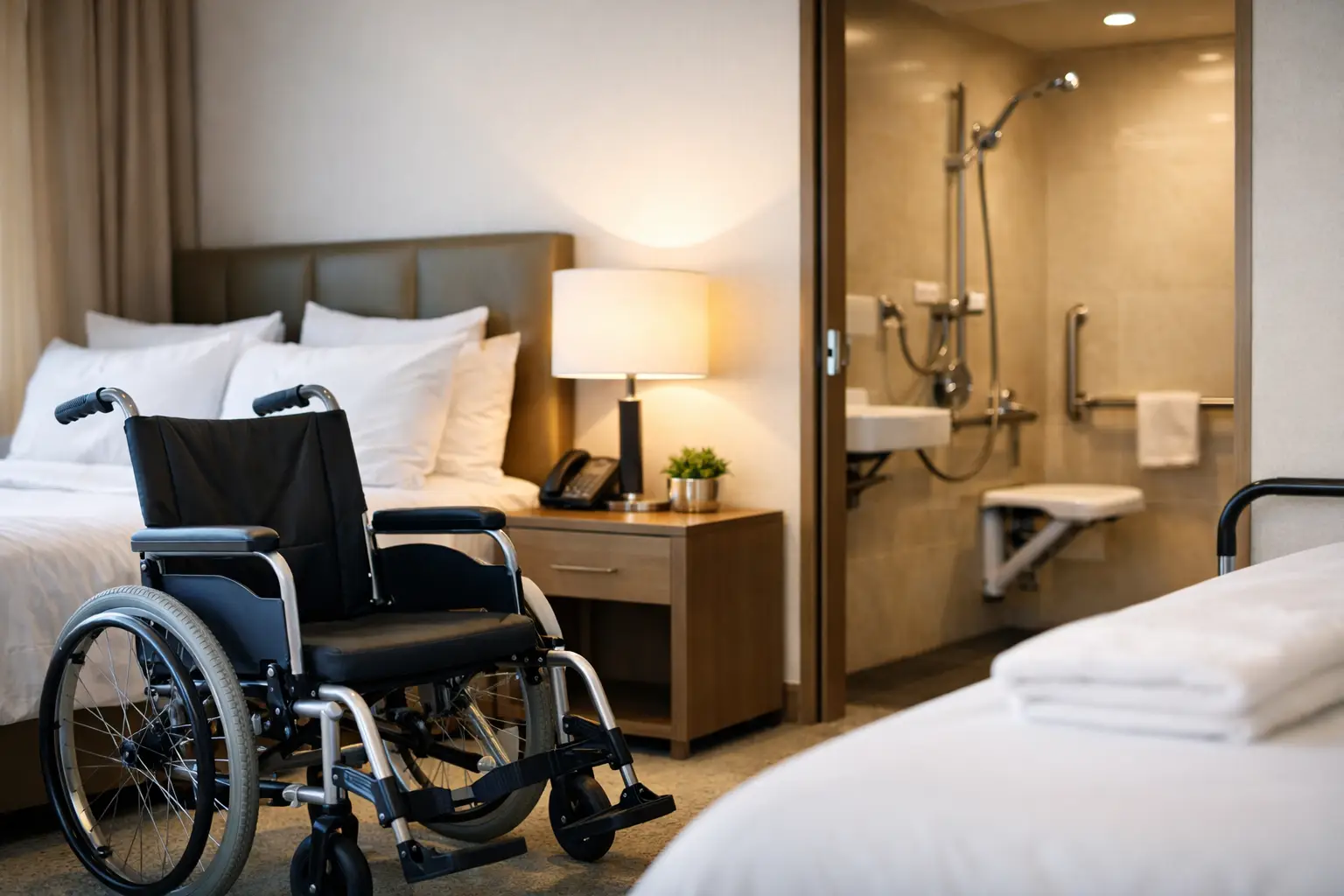
You can spot the problem in seconds when you roll into a so-called accessible room and the bathroom door is too narrow, the bed is too high, or there is nowhere to turn a scooter. That is why asking what makes hotel room accessible is not a box-ticking exercise. It is the difference between a stay that supports your independence and one that turns every basic task into hard work.
Hotels often use the word accessible very loosely. Sometimes they mean step-free entrance and not much else. Sometimes they mean a room with grab rails but no usable turning space. For wheelchair users, mobility scooter users, and anyone travelling with reduced mobility, the detail matters far more than the label.
What makes hotel room accessible in practice
A genuinely accessible hotel room works as a whole, not just in one or two areas. You need to be able to get into the building, reach the room, move around it, use the bathroom safely, and manage the basics without relying on staff for every little thing.
That means step-free access is only the starting point. The route from reception to the bedroom matters just as much. If there is a lift but it is too small for a larger powerchair or scooter, the room may still be unusable. If the corridor narrows near the room door, or the door closer is too heavy, that also becomes a barrier.
Inside the room, space is one of the biggest issues. Plenty of hotels add a grab rail and call it accessible, but if you cannot turn properly beside the bed or get to the window, wardrobe or desk, the room has not been designed with disabled guests in mind. Good access means enough clear floor space to manoeuvre without a wrestling match every time you move.
The room entrance and layout
The first thing I would want to know is the width of the door and whether there is a level threshold. Even a small lip can be awkward in a manual wheelchair and annoying in a mobility scooter. Automatic doors help, but many accessible rooms still have heavy manual doors that are difficult to manage alone.
Once inside, the layout needs to make sense. A room can be technically large enough and still be badly arranged. If a chair, coffee table or luggage rack blocks the route to the bed, you are forced to rearrange furniture just to settle in. That is not proper accessibility. There should be a clear route from the door to the bed, the bathroom, the window and any storage.
Bed height matters more than many hotels realise. If the bed is too low, transfers can be hard work. If it is too high, it may be unsafe. There is no perfect height for everyone, which is why honest measurements are so useful. The same goes for the space beside the bed. Some travellers need transfer space on one side, some on both, and some need room for a hoist.
Storage, switches and everyday usability
Accessibility is often won or lost in the small details. Can you reach the hanging rail? Are the light switches beside the bed at a usable height? Can you open the curtains independently? Is there somewhere practical to charge a powerchair or scooter without blocking the route through the room?
These points sound minor until you are actually staying there. A room can look accessible in glossy photos and still be frustrating from morning to night because the basics have not been thought through.
The bathroom is where claims often fall apart
If you want to know what makes hotel room accessible, the bathroom is usually where the truth comes out. This is the area where poor design becomes obvious very quickly.
A proper accessible bathroom should have enough space to enter, turn and position correctly for the toilet and shower. A roll-in shower is usually far more useful than a shower over the bath. Many hotels still advertise accessible rooms with a bath and grab rails, which may suit some guests with limited mobility, but not wheelchair users who need step-free shower access.
Grab rails need to be in the right place, not just fitted somewhere to satisfy a requirement. The toilet height matters. The sink should be usable from a seated position, with space underneath if needed. Mirrors, soap dispensers and shelves should not be placed at standing height only.
A fold-down shower seat can be helpful, but only if it is sturdy and positioned sensibly in relation to the controls and hand shower. If the controls are at the far end, you are left stretching dangerously or needing help. Anti-slip flooring is another feature that makes a real difference, especially when the floor gets wet.
Wet rooms are not always automatically better
A wet room sounds ideal, and often it is, but not every wet room is well designed. If the drain is poor and water floods across the whole bathroom, it can make the toilet area slippery and unpleasant to use. If the shower seat is tiny or badly fixed, that is another problem. Accessibility is about usability, not just a particular style of bathroom.
Access beyond the bedroom door
One of the biggest booking mistakes is focusing only on the room itself. A hotel room may be accessible on paper, but the overall stay may still be awkward if the rest of the hotel is not.
Think about parking, drop-off points and the route from outside to reception. Is there a step at the main entrance? Is there an alternative accessible entrance and, if so, is it actually open or do you need staff to unlock it? If breakfast is served in a room reached by steps, the accessible bedroom solves only part of the problem.
Lifts are another common weak point. You need to know whether there is a lift, how large it is, and whether your wheelchair or scooter will fit comfortably. A tiny lift can rule out an otherwise suitable hotel.
For longer stays, it also helps to check whether there is space to charge equipment safely and whether staff understand the practical needs of disabled guests. Good staff cannot fix bad design, but they do make a difference when something needs adjusting.
Why hotel descriptions are often not enough
The phrase accessible room covers too many different setups. One hotel may mean fully step-free with a roll-in shower and proper turning space. Another may mean wider door, bath, and not much else. That is why generic listings are not reliable enough on their own.
Photos help, but only if they show the right things. A nice picture of the bed tells you very little. What you really need are clear images of the bathroom, the route around the bed, the doorway, and any thresholds. Measurements are even better.
This is where lived experience matters. People who use wheelchairs and scooters tend to ask better questions because they already know where the trouble spots are. That practical detail is exactly why specialist accessible travel content, including work from Andy Wright Travel, is often more useful than standard hotel marketing.
Questions worth asking before you book
If the information online is vague, ring or email the hotel and ask direct questions. Ask for the door width, the bed height, whether the shower is roll-in, whether there are grab rails on both sides of the toilet, and whether there is turning space for your chair or scooter. If you use a larger mobility aid, ask about the lift size and the route from reception to the room.
It is also worth asking whether the accessible room is the same standard as the other rooms. Some hotels treat accessible rooms like an afterthought. Others get the balance right and provide proper access without making the room feel clinical.
The answers you get can tell you a lot. If staff know the room well and can give confident details, that is a good sign. If they simply repeat that it is fully accessible without specifics, be cautious.
Accessibility is not one-size-fits-all
This is where honesty matters. What makes a hotel room accessible for one traveller may not be enough for another. Someone who can walk a few steps and use grab rails may be fine with a bath and adapted bathroom. A powerchair user may need step-free access, wide turning space and a roll-in shower. A scooter user may also need secure storage or charging arrangements that another guest would never think to ask about.
So the better question is not just whether a room is accessible. It is whether it is accessible for you.
That shift in thinking makes booking far easier. Instead of trusting a label, you start matching the room to your own real needs, transfers, equipment, and level of independence. That is how you avoid nasty surprises and book with more confidence.
A good accessible hotel room should let you get on with your trip, not spend your stay negotiating around bad design. When a hotel gets it right, you notice because everything feels straightforward. And that, more than any badge or marketing claim, is the standard worth looking for.
0 Comments
Leave a Comment