
UK Castle Accessibility for Wheelchair Visits
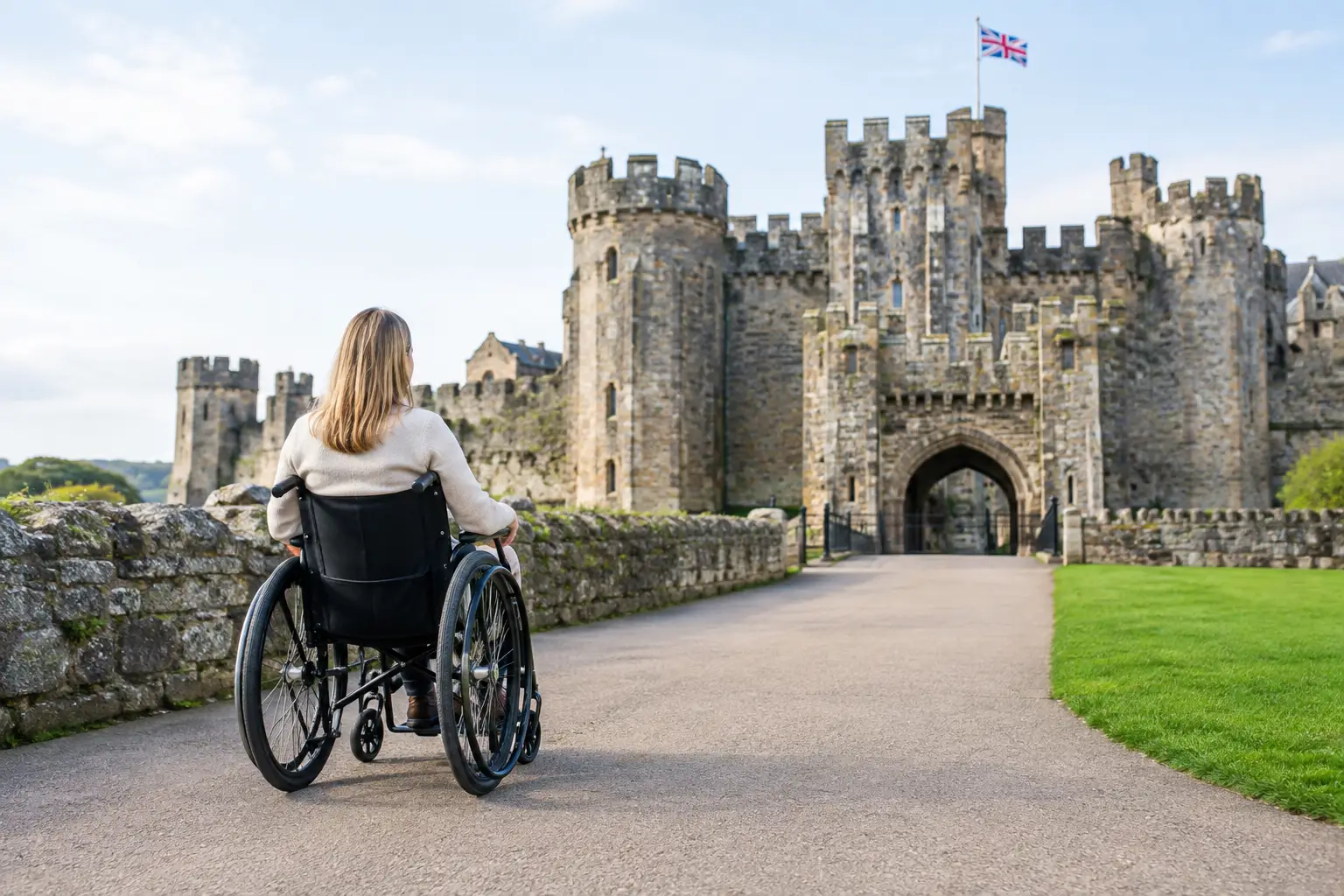
A castle can look perfect in the brochure and still become a frustrating day out at the gate. UK castle accessibility is rarely a simple yes or no. A site may have an accessible car park and toilet, yet the main route could be loose gravel, the entrance might involve a steep ramp, or the best views may only be reached by a narrow spiral staircase.
That does not mean castles are off the list for wheelchair and mobility scooter users. It means planning needs to be based on the route you will actually take, not a wheelchair symbol on a visitor leaflet. Many castles have made thoughtful improvements while working around protected historic fabric. The key is finding out where those improvements begin and end before you leave home.
Why castle access needs more checking
Castles were built for defence, not easy movement. Uneven cobbles, steep gradients, heavy doors, raised thresholds and tight passageways are part of the experience. They are also the things that can make a visit difficult, tiring or impossible on a scooter.
The phrase “accessible access” can cover a huge range. At one castle it may mean you can reach a visitor centre, café and ground-floor exhibition. At another, it may mean you can travel around the outer grounds but not enter the keep. Neither option is wrong if it is clearly explained. The problem is vague information that leaves you discovering the limits after paying, parking and making the effort to get there.
For many visitors, the grounds are the main event. A level path around a moat, wide views of the walls and a decent café can make a brilliant day out, even if upper floors are out of reach. But if seeing the Great Hall or climbing the battlements is central to your visit, you need an honest answer about what is possible.
Start with the journey from the car park
The first hundred metres can decide the whole day. Do not stop at “disabled parking available”. Ask where those bays are, whether they must be booked, and what surface lies between the bay and the entrance. A compacted path can be fine after dry weather but unpleasant or boggy after heavy rain. Gravel can be manageable for some powered chairs and a real struggle for smaller scooter wheels or manual wheelchairs.
Check the distance too. Some castle sites have parking well outside the walls, with a long approach road or a sharp incline to the ticket office. If there is a drop-off point nearer the entrance, find out whether it is available all day, how long you can stop, and whether a companion can then move the car without leaving you stranded.
If you are arriving by public transport, look beyond the nearest station. A “short walk” on a map can include steep hills, narrow pavements and roads with no dropped kerbs. Rural castles are particularly likely to require a taxi from the station, so confirm that a suitable vehicle can carry your wheelchair or folding scooter. Do not assume an ordinary taxi boot will take it.
The questions that reveal real UK castle accessibility
A quick call or email to the venue can save an expensive wasted journey. Be specific about your equipment. “I use a mobility scooter” is useful, but the staff member may need its width, length, weight and turning circle before giving a reliable answer.
Ask whether your scooter can enter the historic buildings, rather than whether the castle is accessible in general. Some venues allow scooters on external paths but restrict them inside because of floor loading, narrow doorways or evacuation arrangements. Others have a manual wheelchair available for indoor use. That can be helpful, but only if you are comfortable transferring and the chair is genuinely available when you arrive.
These are the details worth confirming:
- the width of the narrowest doorway on the accessible route, including any gates;
- the steepest slope and whether ramps are permanent, temporary or weather-dependent;
- whether there are cobbles, grass, loose gravel, cattle grids or uneven flagstones;
- which rooms, exhibitions, shops and cafés are accessible without steps;
- the location and size of the accessible toilet, including whether it is inside the ticketed area;
- whether staff can advise on emergency evacuation for wheelchair and scooter users.
It is also worth asking which entrance to use. The grand main gate is sometimes the least practical option, while a side entrance offers level access and avoids a queue on a slope. There is no prize for using the route everyone else uses. The best route is the one that gets you in safely and lets you enjoy the day.
Mobility scooters: think beyond step-free
A route can be technically step-free and still be a poor scooter route. Small historic bridges may have tight pinch points. Grass banks can look harmless until the ground is soft. A steep descent is not only about whether your scooter can climb back up, but whether its brakes, battery and stability are up to the job.
Battery range matters more than it does in a shopping centre. Large estates can involve several miles of paths, and charging points are not guaranteed. Start fully charged, take your charger if practical, and do not plan your day around finding a socket in a 700-year-old building. If you use a folding scooter, remember that repeated folding and lifting may not be realistic on a long day out.
Weather changes the calculation. Rain makes stone slippery and can turn grass routes into mud. High winds can make exposed ramparts and open courtyards uncomfortable, especially if you use a lightweight chair. In summer, a long queue on open paving can mean heat and fatigue with little shade. Build in time to stop rather than trying to match a walking visitor’s pace.
Make the most of what is accessible
It is easy to focus on the tower you cannot reach. Often, the accessible parts tell the stronger story. Ground-level halls, gatehouses, chapel ruins, gardens and wall walks can give you a real sense of the place without tackling every staircase.
Look for guided tours that can adapt the route, or ask whether staff can explain features that are inaccessible. A good guide can make a view from below feel meaningful by pointing out defensive details, historic rooms and areas beyond a barrier. Some sites also provide tactile models, audio interpretation or virtual displays. These do not replace physical access, but they can add context where the building itself has unavoidable limits.
If you are travelling with family or friends, agree on the plan before you enter. It may be reasonable for someone to take the stairs for ten minutes while you enjoy the courtyard, shop or exhibition. It is not reasonable to be repeatedly left alone outside a feature with no seating, shelter or information. Independence also means having a day that feels like your own, not waiting while everyone else does the interesting bits.
Be realistic without writing castles off
There are times when a castle will not suit your current mobility needs. If the only route involves a long, steep gravel climb and you know it will leave you exhausted or unsafe, choosing another attraction is sensible, not giving in. There are plenty of historic sites with flatter grounds, adapted visitor facilities and better access to the main story.
Equally, do not reject a castle because its access statement says some areas are inaccessible. Read what remains available. A site with a well-managed accessible route, staff who understand the terrain and a clear map can provide a far better visit than a supposedly step-free attraction with no practical support.
Keep a note of what worked after your visit: parking, surfaces, toilet location, staff attitude, indoor access and whether your scooter handled the route. Conditions and management can change, but practical feedback helps you plan your next trip with more confidence. At Andy Wright Travel, that kind of real-world detail is always more useful than a tick-box claim.
A castle visit should feel like a day out, not an obstacle course you have paid to enter. Ask direct questions, trust your knowledge of your own equipment, and choose the version of the visit that gives you freedom rather than a fight.
0 Comments
Leave a Comment