
A Scooter Friendly Cruise Review for Real Travellers
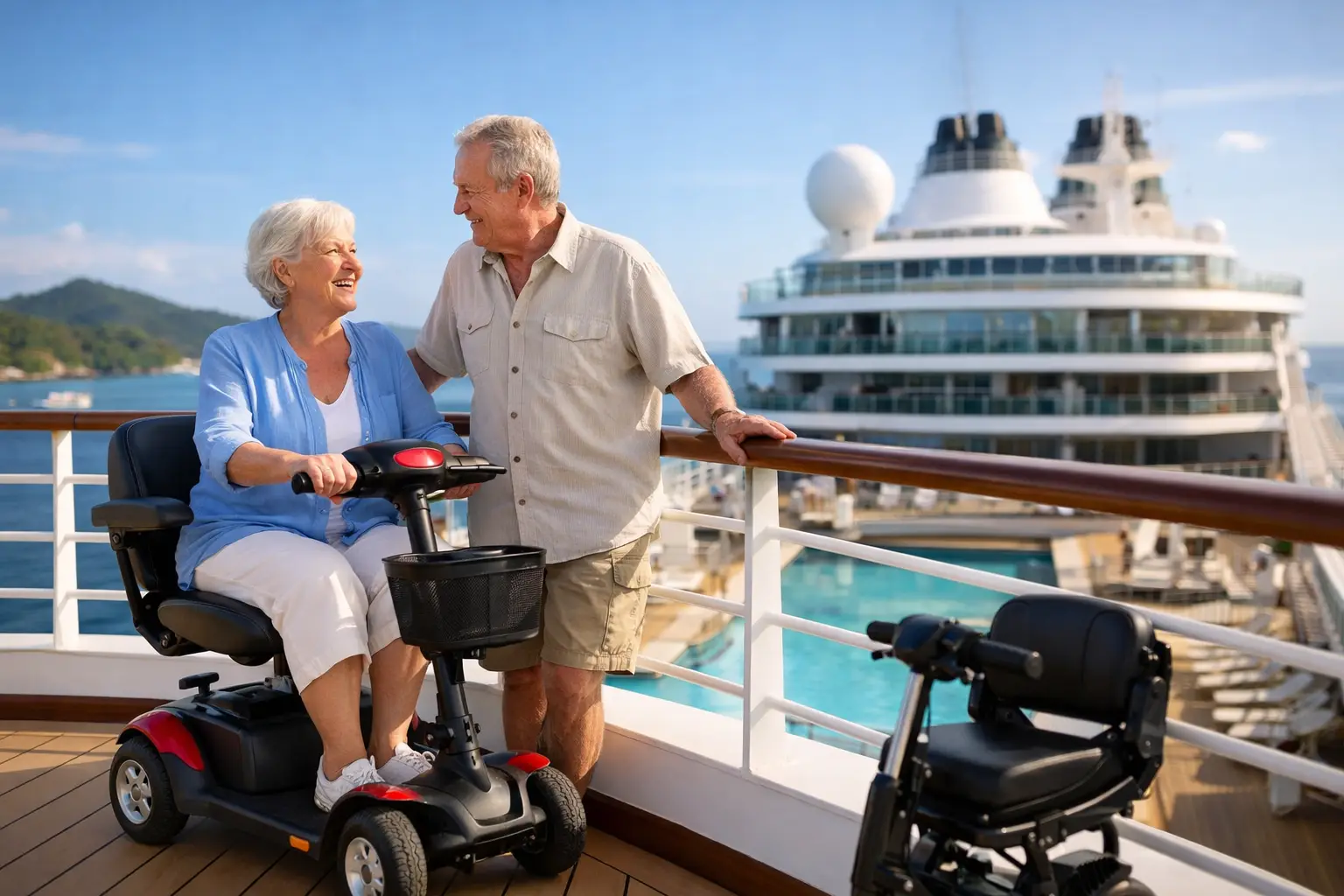
A proper scooter friendly cruise review is not a glossy photo of a wide gangway and a promise that the ship is accessible. It is about whether you can get from the terminal to your cabin without a struggle, charge your scooter safely overnight, reach the dining room when lifts are busy, and actually get ashore in the ports you have paid to see.
Cruising can be an excellent holiday choice for mobility scooter users. You unpack once, the accommodation travels with you, and much of the entertainment is within lift distance. But not every accessible cabin, itinerary or shore excursion works in real life. The details matter, and they are often the details missing from cruise brochures.
What a scooter friendly cruise review must cover
The first question is not simply, “Does the ship have accessible cabins?” Most modern cruise ships do. The useful question is whether the accessible cabin is suitable for your scooter, your transfer needs and the way you travel.
A cabin can have a level-entry shower and grab rails but still be awkward if there is not enough turning room beside the bed, the doorway is narrower than expected, or the charging point is positioned where you cannot safely reach it. Ask for the cabin’s door width, bed clearance and bathroom layout rather than relying on a generic accessibility statement. Cabin photographs can help, but measurements are better.
Scooter size is another common issue. Cruise lines may set limits on length, width, weight and battery type. These rules are not always there to make life difficult. Corridors need to remain clear for other passengers and, more importantly, emergency access. A compact pavement scooter may be accepted where a larger road-style model is not. Confirm the policy in writing before booking, including whether your scooter can stay in the cabin or must be stored elsewhere.
Embarkation: the first test of the holiday
The cruise terminal experience can be easy or exhausting depending on the port and the operator’s arrangements. A good accessible process should allow you to stay with your scooter through check-in, security and boarding. Staff may direct you to a different queue or arrange assistance where there is a long walk, ramps or a change of level.
Do not assume that priority boarding means you will be first on the ship. It may mean a calmer waiting area, a separate check-in desk or boarding when the gangway is less congested. That can be useful, particularly if you are travelling with a carer or need time to settle into the cabin before the main rush.
The gangway itself changes with tide, weather and berth position. At one port it may be nearly level; at another it can be steep. Ship staff normally assist if needed, but it is sensible to know your scooter’s hill-climbing ability and to avoid trying to power up a sharp incline before staff are ready. If your mobility allows, having a companion close by is reassuring, though you should not be expected to abandon your independence.
Lifts, decks and getting around onboard
Large ships usually have plenty of lifts, but they are busiest at meal times, after shows and when passengers return from shore. A scooter-friendly ship has lifts that are wide enough to enter and turn comfortably, with deck buttons you can reach from a seated position. In reality, the bigger challenge is often waiting for an empty lift rather than fitting inside one.
Plan around the ship’s rhythm. Arriving at the theatre ten minutes early or heading to breakfast before the rush can make a surprising difference. It also helps to check where your cabin sits in relation to the main restaurants, buffet, pool deck and accessible toilets. A cabin near a lift may be more practical than a quieter cabin at the far end of a long corridor.
Outdoor decks deserve a close look too. Cruise ships have thresholds, drainage channels, windbreaks and sometimes heavy doors. Pool areas can be crowded and uneven underfoot, while sun loungers often block clear routes. This does not mean you cannot enjoy the deck, but it is worth finding the easiest route early in the cruise rather than attempting it when the ship is at its busiest.
Dining, entertainment and the everyday bits
A good cruise experience is made up of ordinary moments: getting a drink, using the toilet, finding a table and returning to your cabin after an evening show. These are the areas where a ship either feels genuinely welcoming or merely technically accessible.
Most main dining rooms can accommodate a scooter, although table placement matters. Let the restaurant team know on the first evening if you need a space with room to park beside the table rather than blocking an aisle. Buffet restaurants can be more difficult because passengers stop suddenly, chairs move and people cluster around serving stations. Going at quieter times gives you more room and less stress.
Theatre seating may require advance booking for wheelchair or scooter spaces. Do not leave this until you board, especially on popular evening performances. Check whether you can remain on your scooter or need to transfer into a fixed seat. The answer may affect how comfortable the show is for you, particularly if standing or walking a short distance is not realistic.
Also check accessible toilets on the decks you are likely to use. One well-equipped toilet on a huge ship is not much use if it is three decks away when the lifts are busy. This is the sort of practical point that rarely appears in sales material but makes a major difference day to day.
Shore excursions are where the real trade-offs begin
A cruise may be accessible onboard but offer limited independence ashore. Tender ports are the clearest example. When a ship anchors offshore and passengers transfer to land in small boats, scooters are often not permitted. Conditions can change quickly with swell, wind and the height of the tender platform. Some cruise lines can assist manual wheelchair users in certain circumstances, but this is never something to assume.
If seeing each port matters to you, choose an itinerary with as many docked ports as possible. A ship alongside a quay is usually far easier than a tender operation, although the distance from the ship to the town centre can still be substantial. Port shuttles may be accessible, may have limited wheelchair spaces, or may not take scooters at all. Ask before you travel, not when everyone is waiting to disembark.
Cruise-line accessible excursions can be a sensible choice because the ship knows where you are and will not sail without you if the official tour is delayed. The trade-off is that accessible excursions may be more expensive, have limited availability and move at a pace that does not suit everyone. Independent accessible transport can offer more flexibility, but only if you have confirmed the vehicle, ramp, securement system and return time properly.
Be realistic about the destination as well. A ship can dock in an accessible terminal, yet the nearby streets may be cobbled, steep or busy with traffic. Historic ports are often brilliant to see but harder to navigate on a scooter. A shorter outing with one reliable accessible attraction is often better than an ambitious plan that leaves you stranded at the first kerb.
Questions worth asking before you pay
Before committing to a cruise, get answers to the points that affect your independence. Ask whether your exact scooter dimensions are accepted, where it may be charged, whether accessible cabins have a roll-in shower, and whether a hoist or shower chair can be provided if needed. Confirm the evacuation procedure for guests who cannot use stairs and ask how mobility equipment is handled during an emergency.
For the itinerary, ask which ports use tenders, whether accessible shuttle buses operate, and how the cruise line defines an accessible shore excursion. That last point is crucial. “Accessible” might mean a vehicle has a lift, but the venue itself could still have gravel paths, steps or inaccessible toilets.
If you have a medical condition, travel insurance and equipment cover need the same level of attention. A breakdown, flat tyre or damaged charger can turn a good plan into a difficult day. Carry your scooter manual, charger, key and any removable battery paperwork with you rather than placing them in checked luggage.
The honest verdict on accessible cruising
Cruising is not automatically effortless for scooter users, but it can remove many of the barriers that make a multi-stop holiday hard work. There is no repeated hotel check-in, no daily hunt for accessible taxis, and no need to pack and unpack every time you change destination. For many people, that is genuine freedom.
The best choice depends on your scooter, support needs and what you want from the ports. A newer, larger ship may offer better cabins and lifts, while a smaller ship may reach more central berths but have tighter public spaces. There is no perfect answer, only the option that has been checked properly against your needs.
A cruise should not require you to take a gamble on basic access. Ask the awkward questions, get the answers written down, and leave enough room in the plan for the unexpected. With the right ship and a realistic itinerary, the horizon is still yours to go and meet.
0 Comments
Leave a Comment