
How to Rent Mobility Scooters Overseas Safely
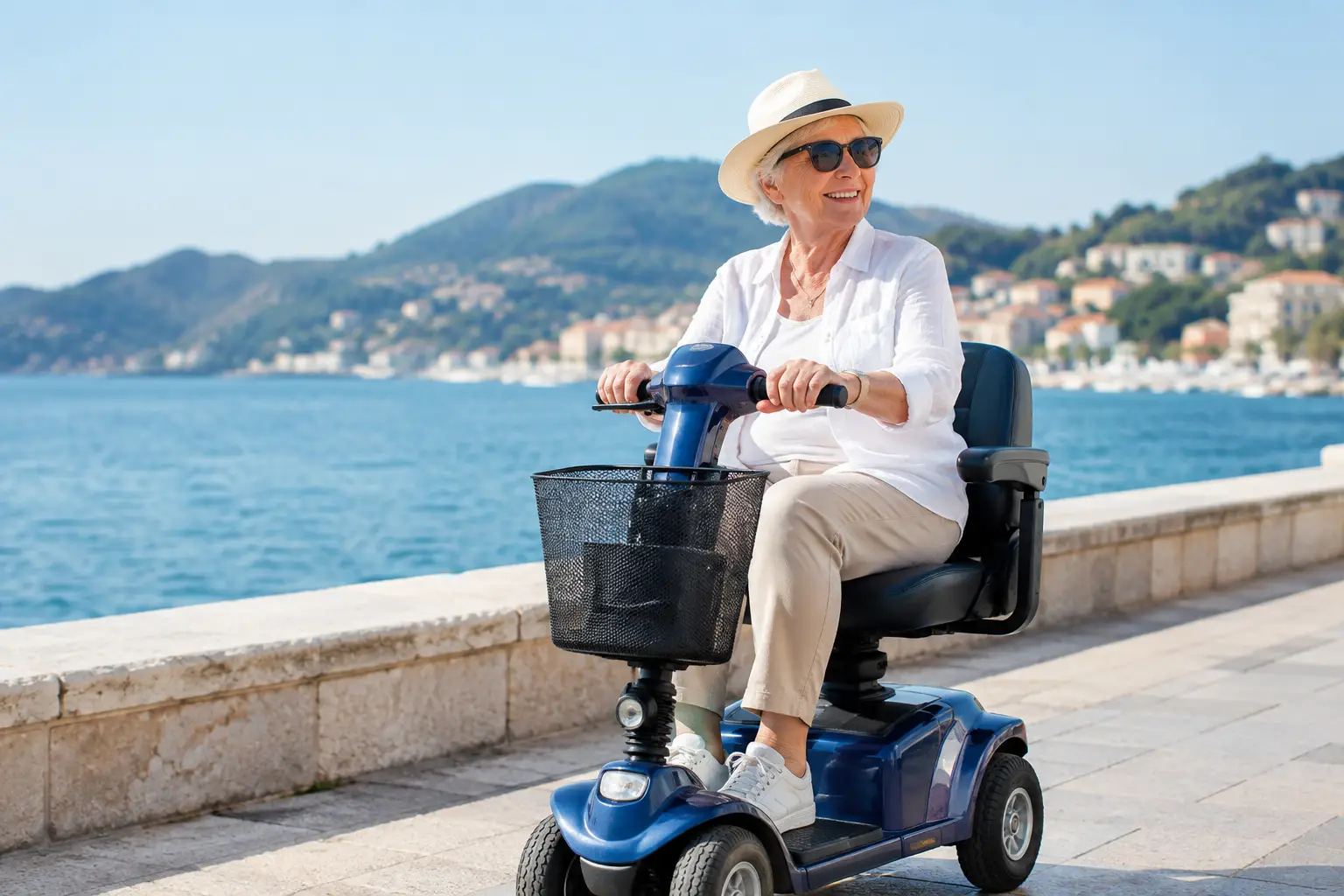
A hire scooter can be the difference between seeing a destination properly and spending the week watching everyone else disappear around the next corner. If you plan to rent mobility scooters overseas, do not treat it as a small add-on to the holiday booking. The scooter, its battery, the delivery point and the streets outside your hotel can make or break the whole trip.
I have found that the best accessible travel plans are the ones that deal with the awkward details before you leave home. A company saying it hires mobility equipment is not enough. You need to know what they supply, where they will bring it, whether it will cope with the terrain, and what happens when something goes wrong.
Rent mobility scooters overseas before you book
Book the scooter as early as you would book an accessible room. In popular resorts, cruise ports and major cities, the better suppliers can run short of suitable models during school holidays and peak season. Waiting until you arrive may leave you with a small travel scooter when you need something stable enough for a full day out.
Start with your hotel. Ask whether the entrance is step-free, whether lifts are large enough for the type of scooter you intend to hire, and whether you can charge a mobility scooter in your room or a secure designated area. Do not accept a vague answer such as “the hotel is accessible”. Ask for measurements, photos or a clear description of the route from the drop-off point to reception, the lift and your room.
A ground-floor room is not automatically the answer. It may involve a long route around the building, heavy fire doors or loose gravel outside a patio door. Equally, a room on an upper floor can work perfectly if the lift is reliable and properly sized. The point is to check the actual route you will use, not the label on the booking page.
When contacting a hire company, give your height, weight and the kind of journeys you expect to make. Mention cobbles, steep hills, promenades, beaches, theme parks or long days in historic city centres. This is not being fussy. It helps the supplier recommend a scooter with enough range, ground clearance and seating support.
Choose the right scooter, not simply the cheapest one
Travel scooters that split into pieces are useful for short, smooth journeys and car boots. They are often less comfortable over uneven paving and can feel twitchy on slopes. A larger pavement scooter may be a much better option if you plan to spend all day exploring, but it needs more turning room and may not fit through every hotel doorway or into every lift.
Check the stated user-weight limit and do not assume it includes luggage, shopping bags and oxygen equipment. Ask about the scooter’s range, then treat that number cautiously. Battery range drops with hills, rough ground, rider weight, heat, frequent stopping and a less-than-new battery. If the advertised range is 15 miles, plan your day as though you have rather less.
Also ask whether a charger is included and whether it works on the local voltage. Most modern chargers are designed for a range of voltages, but verify it rather than packing an adaptor and hoping. You need the correct plug adaptor too, particularly if your destination uses a different socket type from the UK.
Questions that prevent trouble at the handover
Get the important details in writing. A phone call is useful, but an email or booking confirmation gives you something to refer back to when a promised delivery has not appeared.
Before paying, establish the full hire cost, delivery and collection charges, deposit amount, cancellation terms and whether there is a call-out fee for breakdowns. Ask whether damage cover is included, what excess applies, and whether theft is covered if the scooter is stolen from outside your accommodation. If you have travel insurance, check whether hired mobility equipment is included. Many policies are far less generous than their wording first suggests.
Confirm the delivery time and location. “Hotel reception” can be a problem if you arrive after the desk has closed, if the hotel will not accept responsibility for the scooter, or if the supplier only delivers during a narrow daytime slot. Give your flight number where appropriate, but build in a plan for delays. You do not want to arrive at midnight and discover your scooter is locked in an office until morning.
At the handover, take photographs of the scooter from all sides. Record existing marks, check the tyres, test the brakes and lights, and make sure the seat and tiller adjustments work for you. Turn it on, reverse it, try the speed control and ask the representative to show you exactly how to charge it. If something feels wrong, say so before they leave.
Keep the supplier’s local telephone number saved in your phone, along with the hotel address and your room number. It sounds basic, but when you are stranded with a flat battery in an unfamiliar resort, you will be glad not to be searching through emails.
Battery rules and flying with mobility equipment
Hiring abroad can remove a great deal of airline stress because you are not taking your own scooter through the airport. But you may still use your personal wheelchair or scooter for the journey, and battery rules matter.
Airlines handle mobility equipment regularly, but procedures vary. You must tell the airline in advance about the make, model, weight, dimensions and battery type of any mobility aid you are flying with. Lithium batteries in particular have strict requirements around removal, protection and carriage in the cabin. Never rely on a general statement from a booking agent. Get confirmation directly from the airline and keep the battery specifications with you.
If you are hiring only at the destination, consider how you will manage the airport. Pre-book special assistance both ways, specify whether you can walk short distances or must remain in your own chair until the aircraft door, and allow extra time. Assistance should not mean being left at a gate for an hour with no accessible toilet nearby. Be clear about what you need.
Check the destination, not just the rental company
A perfect scooter is of limited use if the resort is built around steep cambers, high kerbs and pavements that disappear without warning. Look beyond the hotel marketing photographs. Find out whether there are dropped kerbs near the property, accessible taxis, usable public transport and attractions with step-free entrances.
Coastal resorts can be brilliant for scooter users because promenades are generally flat. The trade-off is that old towns behind the seafront may have cobbles, slopes and narrow streets. Large American-style resorts may have wide paths but huge distances between facilities. Historic European cities can be wonderfully compact, yet hard work if every street is uneven.
Weather deserves some thought too. Heavy rain can flood poorly maintained pavements and make ramps slippery. Extreme heat reduces battery performance and can make a black vinyl seat uncomfortable after ten minutes in the sun. Carry water, keep the charger dry and avoid leaving the scooter in direct heat for hours if you can.
Do not assume beach access means scooter access
A hotel may advertise beach access when it means a staircase, soft sand or a narrow boardwalk unsuitable for a standard mobility scooter. Some destinations offer beach wheelchairs or temporary access matting, but availability can be limited and may need booking. Ask where the accessible route starts, how far it runs and whether there is an accessible toilet nearby.
The same applies to cruises, excursions and transfer vehicles. “Accessible” can mean there is a ramp, but not necessarily enough space for a larger scooter or a secure way to carry it. Get dimensions and weight limits before committing to an excursion that leaves you on the quayside.
Have a backup plan for the days that go wrong
Even a well-planned hire can suffer a puncture, failed charger or delayed replacement. Build flexibility into your itinerary. Avoid booking non-refundable activities at opposite ends of a city on the same day, particularly on your first full day. Use that time to learn the local routes, identify accessible toilets and work out how far the scooter genuinely goes on one charge.
Carry a small kit with your booking details, charger, plug adaptor, rain cover or poncho, medication, water and a portable phone battery. A visible luggage tag with your name and hotel contact details is sensible too. Do not overload the tiller with heavy bags, as it can affect steering and make the scooter unstable.
If the scooter fails, get yourself somewhere safe first, then call the supplier. Take photographs and note your location. Most reputable firms will arrange repair or replacement, but response times depend on distance, time of day and local stock. This is why hiring from a company based near your accommodation is often worth paying a little more for.
The aim is not to plan every minute of your holiday. It is to remove the avoidable barriers so you can decide, on the day, whether to follow the promenade, stop for lunch or stay out for sunset. That freedom is what a properly chosen hire scooter should give you.
0 Comments
Leave a Comment