
How to Prepare a Wheelchair for Long Flights
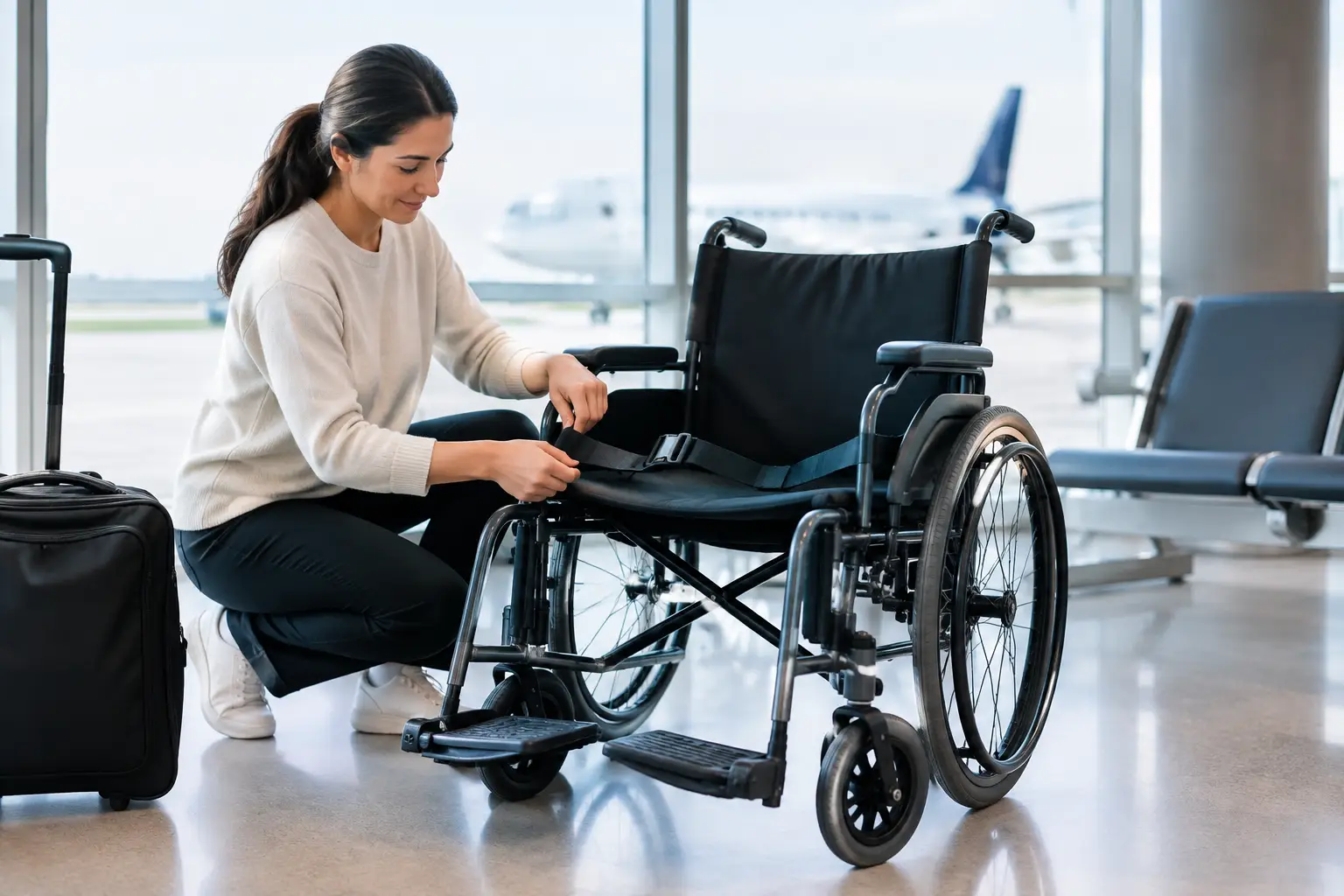
A long-haul flight is not the time to hope baggage handlers will work out your wheelchair controls. To prepare a wheelchair for long flights properly, treat the chair as essential mobility equipment, not ordinary luggage. The aim is simple: keep it safe, make its handling instructions impossible to miss, and give yourself a realistic plan if something goes wrong.
Air travel can still be one of the most practical ways to see the world, but the details matter. A chair can be damaged during loading, batteries can create confusion at check-in, and a poorly planned transfer can leave you uncomfortable before the aircraft has even left the stand. A little preparation gives you far more control.
Start with the airline, not the airport
Book assistance when you book the flight, then contact the airline directly with your wheelchair details. Do not assume the information entered by a travel agent, booking website or airport assistance desk has reached the people loading the aircraft.
Give the airline the chair's make and model, its weight, dimensions, battery type and whether it folds or can be disassembled. For a powered wheelchair, ask what information they need about isolating the battery and protecting the controls. Request written confirmation that the details have been added to your booking.
This is also the time to ask whether your wheelchair can be brought to the aircraft door and returned there on arrival. Most airlines can arrange this, but procedures vary by airport and aircraft stand. If your chair is taken at check-in, you may be using an airport chair for several hours, which is not ideal if you need your own seating, pressure relief or postural support.
Be clear about your transfer needs too. Tell them if you need an aisle chair, a lifting sling, an onboard wheelchair, extra time to board or assistance to remain with your travelling companion. Generic assistance requests often result in generic help. Specific requests are much more useful.
Check the battery rules before you travel
Battery questions cause more stress than they should, mostly because different battery types have different handling rules. The airline must know exactly what powers your wheelchair. Look at the battery label, take a clear photograph and keep the chair manual or a specification sheet on your phone and in your hand luggage.
Sealed gel and dry-cell batteries are usually more straightforward, but they still need to be secured and protected from short circuits. Lithium batteries are more tightly controlled. Some can remain fitted to the chair if they are properly isolated, while removable batteries may need to come into the cabin in protected packaging. Capacity limits and airline policies can differ, so never rely on advice from an old forum post or a previous trip.
If your battery is removable, practise removing and refitting it at home. Do not make the airport the first time you discover that a cover needs a particular screwdriver or that the connector is awkward to reach. Carry the approved charger in your hand luggage if possible, especially on a multi-sector journey where checked bags and mobility equipment may not arrive together.
Make clear handling instructions for your chair
A baggage team may have only minutes to load your wheelchair. A laminated handling card is not a guarantee against damage, but it gives them a fighting chance of moving it correctly.
Keep the instructions short, large and practical. Include how to switch the chair off, where to release any freewheel mechanism, safe lifting points, parts that must not be lifted, and whether the joystick or headrest can be removed. Add a mobile number and a note stating that the chair must remain upright if that applies.
For powered chairs, label the power button, battery isolation point and manual brake or freewheel levers with bright tape. A handler should not have to guess which lever lets the chair roll. If they release the wrong part, it can cause damage or make the chair unsafe when you get it back.
Take photographs of the chair from every angle shortly before leaving home. Photograph the joystick, wheels, footplates, armrests and any existing scratches. This is useful evidence if you need to report damage, but it also helps you explain exactly what is missing or bent when you are tired at the other end.
Protect the parts most likely to catch or snap
Removable parts are often the vulnerable bits. If your joystick can be safely removed, pack it in padded hand luggage. The same goes for detachable cushions, headrests, side guards, footplates and any bespoke support that makes the chair usable for you.
There is a trade-off here. Removing too much can confuse staff or leave the chair harder to move, so only take off components you can refit confidently. If a joystick cannot be removed, protect it with purpose-made padding or firm cushioning secured so it cannot come loose. Avoid wrapping the whole chair in a way that hides controls and lifting instructions.
Your seating cushion deserves particular thought. For many wheelchair users it is not an optional comfort item. It is part of pressure management and positioning. Keep it with you where practical, especially if you will be transferred into an aircraft seat. If it is too large for the cabin, explain why it needs careful handling and photograph its condition as well.
Plan the journey through the terminal
Long flights are tiring because of everything around them: early starts, queues, security, boarding delays and immigration at the far end. Build in more time than the airline's standard advice, particularly if you need assistance or are travelling through a large hub.
At check-in, confirm that your chair has been tagged to the correct final destination. On a connection, ask whether it will be returned at the aircraft door or transferred directly between flights. Direct transfer may sound easier, but it can mean being without your own chair during a long layover. If you need it for comfort, toileting, posture or independence, say so plainly.
Before the chair goes down to the hold, hand the instructions directly to the staff member collecting it and ask them to confirm the chair is switched off. Keep a copy of its dimensions, weight, serial number and battery information in your hand luggage. It is much easier to answer questions when you are not trying to remember details at the gate.
Think honestly about the aircraft seat
Most passengers cannot remain in their own wheelchair during a conventional flight. You will usually transfer into an aisle chair and then an aircraft seat, so speak to your clinician or occupational therapist before travel if you have complex transfers, limited trunk control, pain issues or a pressure-risk plan.
Choose an aisle seat unless you have a strong reason not to. It makes transfers and access to the onboard wheelchair more manageable. On very long flights, think about how you will reposition yourself, take medication, manage fluids and use the toilet. Cabin crew can assist within their training, but they are not personal care assistants. Travelling with someone who understands your needs may be sensible, depending on your level of independence.
Have a damage plan, even if you never need it
No one wants to begin a holiday at the baggage hall filling in forms, but a plan removes panic. Keep travel insurance details, wheelchair repair contacts, photographs and a written list of the chair's specifications on your phone and on paper.
If the wheelchair is damaged or delayed, report it before leaving the airport. Ask for a written report and take photographs immediately. Do not accept a vague promise that somebody will call later. Explain what the damage means in practical terms: for example, that a bent footplate prevents safe transfers or a broken joystick means you cannot move independently.
For international trips, research repair options at your destination before you travel. This is especially worthwhile if you use a specialist powered chair or custom seating. A generic mobility shop may not have the right parts, but knowing who to call can save valuable holiday time.
Your final pre-flight check
The evening before you leave, charge the wheelchair fully and test the controls, lights and tyres. Put your chair documents, medication, charger, essential tools and removable parts where you can reach them. Then check these final essentials:
- airline confirmation and airport assistance booking;
- wheelchair dimensions, weight, serial number and battery details;
- laminated handling instructions and recent photographs;
- padding for vulnerable controls and a small, airline-approved tool kit;
- insurance details and an emergency repair contact.
Preparing your wheelchair does not remove every risk from flying, and anyone who says otherwise is selling false reassurance. What it does is make you harder to fob off, easier to assist properly and better placed to deal with a problem. Your wheelchair is the equipment that gives you freedom at the destination - make sure the airline understands that before it disappears down the jet bridge.
0 Comments
Leave a Comment