
Mobility Scooter Travel Insurance Guide for Trips
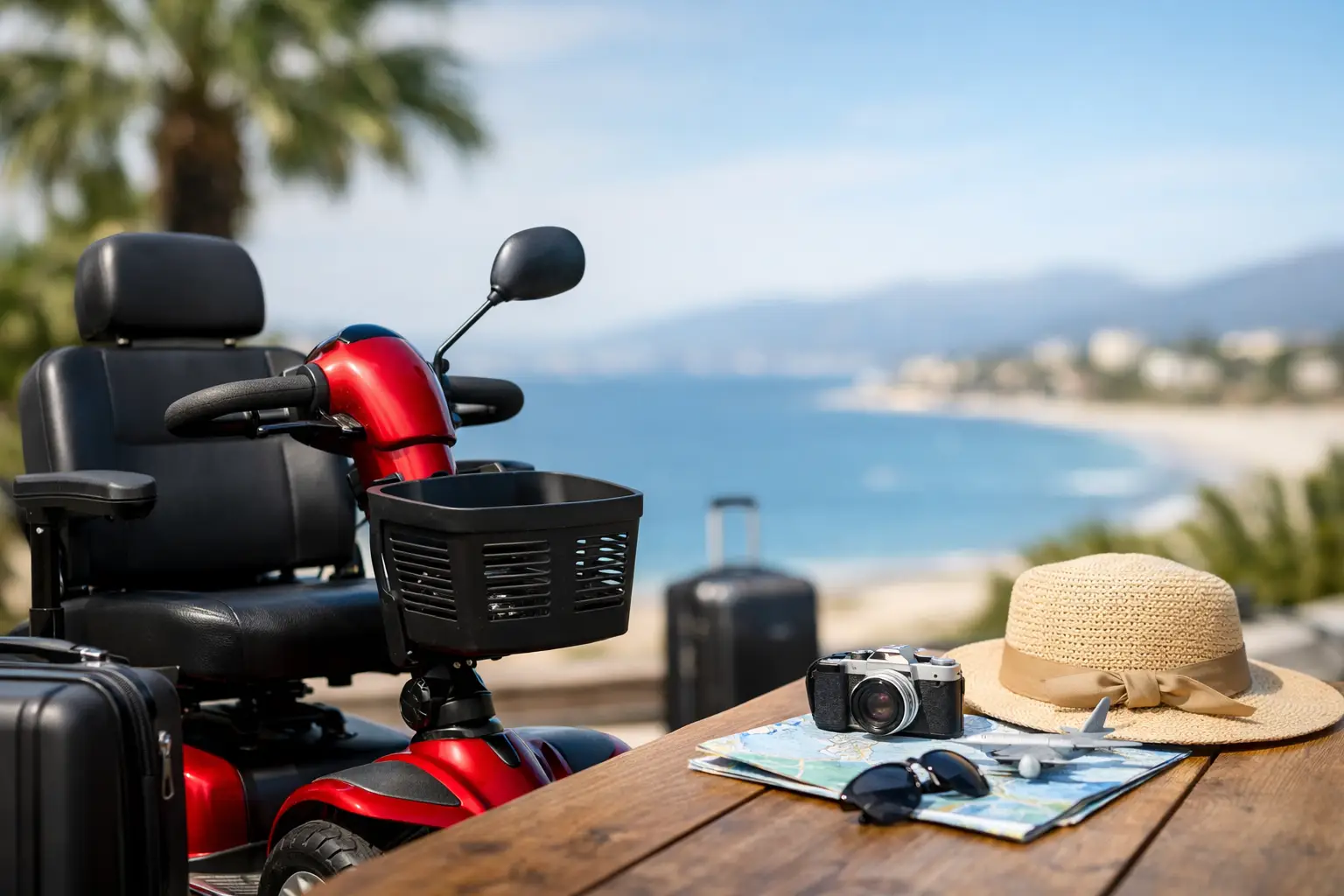
A damaged mobility scooter can turn a well-planned holiday into a very expensive problem before you have even reached the hotel. This mobility scooter travel insurance guide focuses on the details that matter when your scooter is part of how you get around, not just another item in the luggage hold.
A standard travel policy may cover emergency medical treatment, cancellation and lost bags, but that does not automatically mean it covers your scooter properly. The wording can be vague, the limits can be low, and some policies treat a mobility aid as personal baggage when it is clearly far more essential than that. Read the policy before paying for it, not while you are stuck at an airport trying to work out who is responsible.
Start with your medical travel cover
Your health is still the first thing to insure. If you have a pre-existing medical condition, declare it accurately. That includes conditions which affect your mobility, even if they feel stable or you have not needed treatment recently. Leaving something out to bring the premium down can give an insurer a reason to reject a claim later.
Ask whether the policy covers emergency treatment, hospital stays, repatriation and the cost of a travelling companion staying with you if you cannot return home as planned. For many scooter users, being sent home early is not as simple as booking the next available seat. You may need accessible airport assistance, suitable ground transport and arrangements for your scooter.
A GHIC is useful for state-provided healthcare in participating European countries, but it is not travel insurance. It does not cover private treatment, getting you home, cancelled flights or damage to a mobility scooter.
What scooter cover should actually include
The key question is simple: if your scooter is lost, damaged, stolen or unusable abroad, what practical help will the policy provide? Do not settle for a line saying “mobility aids covered” without checking the terms behind it.
Look closely at the maximum amount payable for your scooter. A limit of £500 may sound reasonable until you compare it with the replacement cost of a road-ready scooter, its batteries, seating, canopy, crutch holder or other adaptations. Check whether the insurer will pay the replacement value, a depreciated value, or only repair costs.
You also need to know whether the cover applies while the scooter is in airline, cruise line, coach, taxi or hotel custody. These are the moments when damage is most likely, particularly if staff are not familiar with handling heavy mobility equipment. Airline liability rules can be complicated and compensation may not reflect what it costs to replace your particular model. Insurance should fill gaps, but only if the policy specifically includes them.
A useful policy should be clear about cover for theft from a hotel, accessible vehicle or locked storage area. It may require you to use a lock, remove the key, or report theft to the local police within a stated time. Those conditions are not unreasonable, but they need to be realistic for the way you travel.
Mobility scooter travel insurance guide: questions to ask
Before buying, phone the insurer if the wording does not give a straight answer. Explain that you travel with a mobility scooter and ask for confirmation in writing, ideally by email. General call-centre reassurance is not the same as cover.
Ask these questions directly:
- Is my mobility scooter covered for accidental damage, theft and loss, including damage caused during flights, cruises and transfers?
- What is the maximum payout, and does it include batteries, chargers and fitted accessories?
- Will you pay for a hire scooter or other temporary mobility solution if mine cannot be used?
- Are there exclusions for lithium batteries, unattended scooters, public transport or certain countries?
- Does the policy cover personal liability if the scooter accidentally injures someone or damages property?
Temporary replacement is one of the most valuable areas to check. A payout after you return home is of little help if you are halfway through a two-week break and cannot leave your hotel. In reality, hiring an equivalent scooter at short notice may be difficult, especially in smaller resorts. Even where the insurer pays, you may need to arrange it yourself, so keep details of local accessible equipment hire options with your travel documents.
Flying with a scooter: insurance is only one part of the plan
Travel insurance does not make an airline accept your scooter. Airlines have their own rules on size, weight, battery type and whether the scooter can be lifted, stored and secured safely. Contact the airline before booking if possible, then again after booking to add assistance and confirm the scooter details.
You will normally need the make and model, dimensions, total weight, battery type and watt-hour rating where relevant. Take photographs of the scooter from all sides before handing it over, including close-ups of existing marks, controls, tyres and battery connections. A quick video showing that it powers on and drives properly can also be useful evidence.
Remove anything that can come loose, such as baskets, mirrors, cushions and phone holders. Take the key and charger into the cabin if the airline allows it. Label the scooter with your name, phone number and destination details, but avoid putting your full home address on display.
When the scooter is returned, inspect it before leaving the airport. Check the steering, seat, armrests, tyres, control panel and charging point, then switch it on and drive it if you can do so safely. Report damage immediately to the airline and get a written report. Insurers often expect you to pursue the carrier first, so keep every reference number, photograph and receipt.
Cruises, coaches and accessible transfers
Cruise holidays can be excellent for reducing the number of hotel changes, but the ship’s accessibility does not guarantee easy independent access in every port. Some itineraries use tender boats, which may make taking a scooter ashore impossible. Your insurance will not fix an inaccessible tender transfer, so check the route before you book.
For coaches and private transfers, confirm whether the vehicle has a ramp or lift, whether it can take the scooter’s weight, and whether you can remain seated in it. A driver saying “wheelchair accessible” does not always mean “mobility scooter suitable”. If the scooter must travel separately in a luggage compartment, ask how it will be secured and whether there is a damage process should anything happen.
If you are travelling in the UK, do not assume that home contents insurance or a scooter warranty gives you enough protection away from home. Some policies limit cover by distance, only cover theft from the home, or exclude commercial transport. A UK break still deserves the same careful reading, particularly if you are using rail, ferries or long-distance coaches.
Cancellation cover can protect more than flights
Accessible travel often costs more because of adapted rooms, private transfers, cabin choices and equipment hire. If illness forces you to cancel, you need to know whether those non-refundable arrangements are included in your cancellation limit.
Add up the full cost of the holiday rather than just the flights. Include accommodation, excursions, airport parking, accessible transfers, cruise add-ons and pre-paid attraction tickets. If the policy limit is below your total spend, it is not enough. Also check whether cancellation applies if the person who provides your care or travels as your essential companion becomes ill.
There is a trade-off here. The cheapest policy may look attractive, but a higher premium can be worthwhile if it properly covers your medical circumstances and the value of the equipment you rely on. The right policy is not necessarily the one with the biggest headline number. It is the one whose exclusions you can live with.
Keep a claim pack before you leave
Claims are easier when the evidence is already in one place. Save your policy documents, emergency assistance number, scooter purchase receipt or valuation, photographs, serial number, adaptation invoices and proof of any equipment hire. Keep digital copies on your phone and send a copy to the person travelling with you.
If something goes wrong, report it straight away. Notify the airline, hotel, cruise line or local police as appropriate, then call the insurer’s emergency assistance team before paying for major treatment, transport or replacement equipment. Keep receipts for everything, including taxis needed because your scooter is out of action.
Insurance cannot remove every barrier from travel, and it will not make poor airport handling acceptable. But the right cover gives you options when the unexpected happens. Treat your scooter as the essential piece of independence it is, check the wording line by line, and travel knowing you have a proper plan behind you.
0 Comments
Leave a Comment