
Mobility Scooter Battery Rules Explained
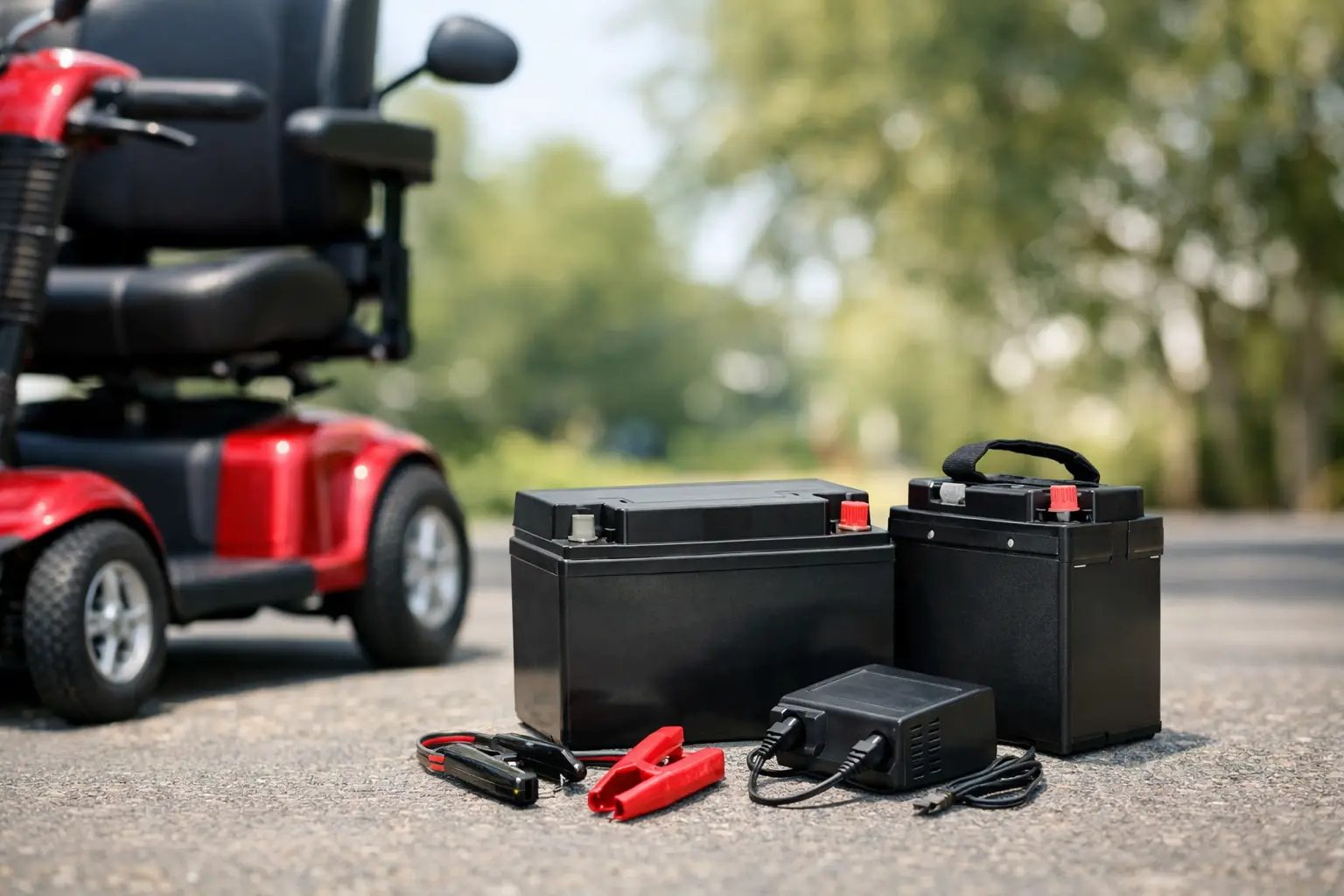
If you have ever turned up ready to travel and been met with a blank look at check-in, you already know why mobility scooter battery rules matter. The scooter might be allowed, the booking might be confirmed, and the staff might still stop you because nobody has properly checked the battery type, size or paperwork. That is the bit that catches people out.
The frustrating truth is that there is no single rule covering every journey. Mobility scooter battery rules change depending on whether you are flying, taking a ferry, boarding a coach or using rail replacement transport. The battery chemistry matters, the watt-hour rating matters, and sometimes the way the battery is fitted matters just as much.
Why mobility scooter battery rules vary so much
Most of the confusion comes from the fact that battery rules are not really about mobility scooters alone. They sit under wider transport safety rules for dangerous goods, vehicle carriage and passenger handling. In plain English, operators are asking one main question: if something goes wrong, how risky is this battery in an enclosed transport environment?
That is why a sealed lead-acid battery is often treated differently from a lithium-ion battery. Lead-acid batteries are heavier and less convenient, but they are familiar to many operators and often easier to approve when securely fitted. Lithium batteries are lighter and better for travel in many cases, but they attract tighter scrutiny because of fire risk if damaged, incorrectly packed or poorly manufactured.
This is also why one airline may say yes while another says no to what looks like the same scooter. It is not always fair, and it is not always consistent, but it is common.
The main battery types you need to know
For travel, you do not need an engineering lesson. You do need to know exactly what battery your scooter uses.
The two types most people come across are sealed lead-acid and lithium-ion. Sealed lead-acid batteries are common on larger or older scooters. They are sturdy, but heavy, and that weight can create handling problems even when the battery itself is permitted. Lithium-ion batteries are increasingly common on folding travel scooters because they are lighter and easier to remove.
What matters in practice is the label. Before any trip, check the battery itself or the manufacturer paperwork for the battery type, voltage and watt-hour rating. If you cannot find that information, sort it before you travel. Guessing at the airport is a poor strategy.
Mobility scooter battery rules for flying
Air travel is where most battery problems happen. Airlines usually allow mobility aids, but that does not mean every scooter battery is automatically cleared.
If your scooter uses a sealed lead-acid battery, approval is often possible provided the battery is securely attached, switched off and protected against accidental activation. Some airlines may want the battery disconnected by trained staff or secured in a particular way. Others are happy as long as it remains upright and fixed in place. That is why you need the airline's written guidance, not just a call centre reassurance.
If your scooter uses a lithium-ion battery, the watt-hour rating becomes critical. Many airlines accept batteries up to a certain limit, but not above it. Some allow one fitted battery and one spare, some allow two spares, and some apply extra conditions on packing and terminal protection. Spare lithium batteries usually need to travel in the cabin, not the hold.
There is also a difference between a removable battery and a non-removable one. A removable battery can sometimes save a trip because it can be carried separately if approved. A non-removable lithium battery on a larger scooter can be much harder to get accepted.
Always tell the airline exactly what scooter you use, the folded dimensions, total weight, battery type and battery watt-hours. Ask for approval in writing. If you are using a connecting flight, check every airline in the chain. One yes does not override one no.
What to carry for flights
When I say paperwork, I do not mean a massive folder. You just need the right details ready to hand.
Carry a battery specification sheet, the scooter manual or manufacturer confirmation, and your airline approval email. A photo of the battery label on your phone helps too. If the battery is removable, pack protective covers for the terminals and follow the airline's instructions exactly. Staff on the day may not be specialists, so having clear evidence avoids arguments.
Trains, coaches and rail replacement services
UK train operators do not usually focus on the battery in the same way airlines do. Their bigger concern tends to be overall scooter size, turning space, boarding ramps and whether the scooter is approved under the operator's mobility aid policy.
That said, mobility scooter battery rules can still become relevant when there is a safety concern or when rail replacement coaches are involved. A train booking can look fine until engineering works mean part of your journey is on a coach that cannot carry your scooter at all, regardless of battery type.
For ordinary rail travel, check scooter dimensions and weight first. For longer journeys, also ask what happens if the route changes to a bus or coach. This catches people out regularly. If your trip depends on replacement transport, battery approval becomes secondary to the basic problem that many coaches cannot safely take larger scooters.
Ferries and cruise travel
Ferries are often more flexible than airlines, but do not assume that means no rules. Operators may ask whether the battery is sealed, whether the scooter can remain upright, and whether charging on board is allowed. Some ferries are straightforward because your scooter stays with you or remains in the vehicle deck. Others have stricter arrangements depending on route length and vessel type.
Cruise lines can be more complicated. They often want advance notification of mobility equipment and may set their own rules on charging batteries in cabins. This is not just bureaucracy. Charging a scooter overnight in a tight cabin with trailing cables can create a genuine safety issue.
If you are sailing, ask two questions early: is the scooter accepted, and are there any battery or charging restrictions once on board?
Hotels and charging practicalities
Battery rules do not stop once you reach the destination. A hotel may say it is accessible, but that tells you nothing about whether there is safe, convenient charging space for a scooter.
This matters most for heavier scooters or those with non-removable batteries. If the charging point is tucked behind furniture, or only available in a corridor, that can make the room unusable. For lithium batteries, use the correct charger and avoid makeshift extensions unless the set-up is genuinely safe.
When you book, ask where the scooter can be charged and whether the room has enough space to position it properly. Practical details like this are exactly what separate a manageable trip from a stressful one.
The mistakes that cause the most trouble
The biggest mistake is leaving battery checks too late. People often focus on passport, insurance and hotel access, then assume the scooter will simply be treated like luggage. It will not.
The second mistake is relying on general customer service answers. You need confirmation from the team that deals with special assistance or mobility equipment, especially for flights and cruises.
The third is not knowing your battery specification. "It is a standard battery" means nothing to transport staff. Type, voltage and watt-hours are the useful details.
Another common issue is travelling with aftermarket or unlabelled batteries. Even if they work perfectly, they can be harder to approve because staff cannot easily verify the specification.
A simple way to prepare
The safest approach is boring, but it works. Check your battery type and rating. Contact the operator early. Send the scooter make and model, dimensions, weight and battery details. Ask for written confirmation. Keep those documents with you on the day.
If you are buying a new scooter mainly for travel, battery practicality should be part of the decision, not an afterthought. A lighter folding scooter with a clearly labelled removable lithium battery may be far easier to travel with than a bulkier model, even if the bigger scooter is more comfortable locally. It depends on the type of trips you want to do most often.
That trade-off matters. There is no perfect scooter for every journey. There is only the scooter that matches your real travel pattern.
At Andy Wright Travel, the same principle comes up again and again with accessible travel: the barrier is often not the journey itself, but poor information before it. Battery rules are a classic example. Once you know what your scooter has, what the operator allows and what proof to carry, the process becomes far more manageable.
If you are planning a trip, do not wait for staff to figure it out at the gate, terminal or platform. Get the battery details sorted early, keep everything in writing, and give yourself the best chance of travelling on your terms.
0 Comments
Leave a Comment