
Mobility Scooter Airport Guide for Flying
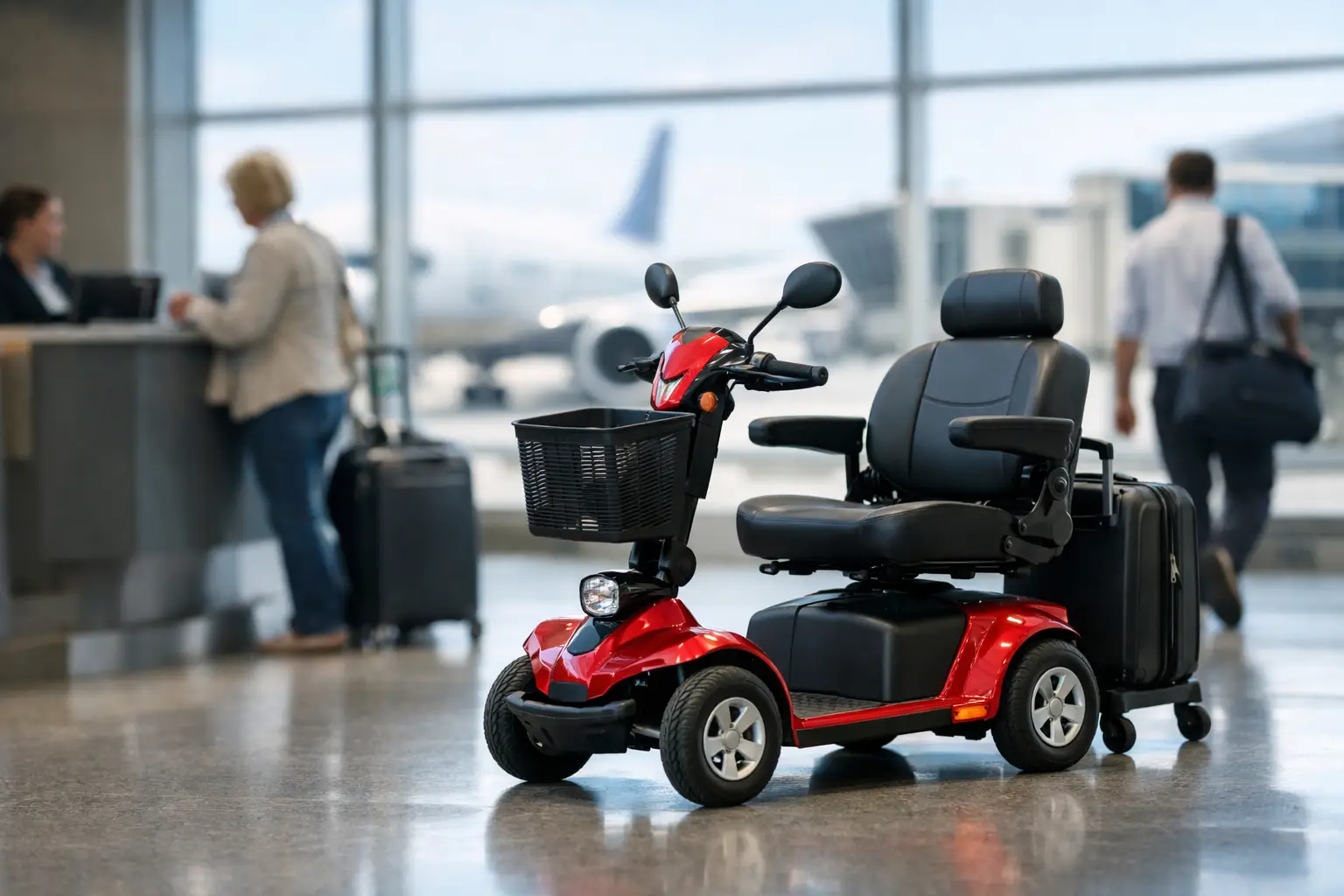
Airports can make even confident travellers feel like they are asking for special favours. If you use a scooter, that feeling gets worse when staff give different answers, airline websites are vague, and nobody seems sure what happens to your equipment once it disappears at the aircraft door. This mobility scooter airport guide is about cutting through that uncertainty and helping you fly with a proper plan.
The truth is simple. Travelling with a mobility scooter is absolutely possible, but airport travel works best when you treat it as an operational job, not a casual day out. The more detail you pin down before you leave home, the less chance there is of being stuck at check-in arguing about batteries, dimensions or whether your scooter can go in the hold.
What to sort before you book
The biggest mistake is assuming all airlines handle scooters in the same way. They do not. One carrier may accept your scooter with very little fuss, while another may have tighter limits on battery type, total weight or dimensions when folded or dismantled. That matters far more than the marketing line on the website saying they support passengers with reduced mobility.
Before booking, check four things with the airline and, if possible, get the details in writing. You need to confirm the scooter's overall dimensions, total weight including batteries, battery type, and whether the scooter can be folded or broken down. If your scooter has a removable battery, ask whether the battery must travel in the cabin or can remain attached. Never guess this part. Airline and safety rules around batteries are where many problems start.
It also helps to know whether you can stay in your own scooter all the way to the departure gate. In many airports, that is possible. In others, you may be transferred earlier to an airport wheelchair. If your independence depends on your own scooter for as long as possible, ask that question specifically rather than accepting a general promise of assistance.
Battery rules matter more than most people expect
A proper mobility scooter airport guide has to put batteries near the top, because this is where staff usually become cautious. Most scooters use either sealed lead-acid batteries or lithium-ion batteries, and airlines often have different handling rules for each.
Sealed batteries are often more straightforward, but the airline still needs to know what type they are. Lithium batteries tend to trigger more questions, especially around watt-hours, whether they are removable, and how terminals are protected. If your battery has any labels showing technical information, take clear photos and keep them on your phone. Better still, carry the manufacturer's specifications printed out. That one bit of paperwork can save a lot of back-and-forth at check-in.
If your battery is removable, pack it exactly as the airline instructs. That may mean carrying it into the cabin, protecting the terminals, and keeping it in approved packaging. If it is not removable, ask how the scooter should be prepared for hold loading. You want staff to know not just that the scooter is approved, but how it must be handled safely.
Tell the airline exactly what you are travelling with
Saying "mobility scooter" is not enough. Give the make and model if you can, plus dimensions, weight and battery details. If the scooter folds or dismantles, explain how. If there is a freewheel mode, say so. If the tiller can be secured, mention that too.
This is not about being difficult. It is about removing opportunities for confusion on the day. Ground staff deal with all sorts of equipment, and not everyone understands the difference between a compact travel scooter and a large road-style model. The clearer your information, the better your chances of avoiding last-minute refusals or poor handling.
The week before you fly
Do not leave preparation until the night before. Check your scooter is working properly, tyres are sound, and the battery is charging as it should. If anything is temperamental at home, it will be worse under airport pressure.
Take a few photos of the scooter from different angles before you travel. Include any existing marks. It is a simple step, but if your scooter is damaged in transit, you have a record of its condition before the flight. Remove loose accessories if possible. Baskets, mirrors, seat bags, cup holders and detachable control parts are all vulnerable once baggage teams start moving equipment around.
Labelling helps too. Put your name, phone number and flight details on the scooter. Add a short handling note if there is something important staff need to know, such as where the freewheel lever is or which part should not be lifted.
Arriving at the airport
Give yourself more time than a non-disabled traveller would need. That is not pessimism. It is realism. Even when assistance is booked, airport systems can be slow, and each handover adds time.
At check-in, be ready to explain your scooter calmly and briefly. Have the airline approval, battery information and dimensions easy to reach. Staff may already have notes on the booking, but never assume those notes have been read properly. You are often the person making sure the process stays on track.
If airport assistance is part of your plan, make clear whether you want to remain in your scooter for as long as possible. In many cases, you can use it through the terminal and transfer nearer the aircraft. That usually gives you more comfort and control than being moved into an airport wheelchair too early.
A mobility scooter airport guide to security and boarding
Security can feel awkward, but it is usually manageable when staff communicate properly. You may be swabbed rather than going through the standard route, and your scooter may be inspected manually. Allow time for that and do not let anyone rush you through a transfer that feels unsafe.
Boarding is where the pace often changes. Staff are focused on getting everyone onto the aircraft quickly, and that can work against disabled passengers if nobody has thought ahead. Ask clearly when and where you will transfer from your scooter. Confirm who is responsible for taking it to the hold and whether any final preparation is needed, such as switching the scooter off, disengaging the battery, folding parts down or placing it into freewheel mode.
If you can, watch the handover happen or make sure a member of staff repeats your handling instructions back to you. That may feel a bit firm, but this is your mobility, not a standard suitcase. A badly handled scooter at the other end can ruin the whole trip.
On arrival, expect a wait and plan for it
One of the most frustrating parts of flying with mobility equipment is arrival. Even when everything goes right in the air, your scooter may not appear quickly after landing. Sometimes it is delivered to the aircraft door. Sometimes it comes later through a separate baggage process. You need to know which applies to you before you land if possible.
If there is a delay, do not let staff brush it off with vague answers. Ask where the scooter is being brought to and who is physically collecting it. If you are transferred into an airport wheelchair, make sure someone remains responsible for reuniting you with your own equipment rather than leaving you parked and forgotten.
Before leaving the airport, check the scooter properly. Turn it on, test movement, inspect the controls, and look for bent parts, loose fittings or damaged bodywork. Report any issue immediately while you are still in the airport system. Once you have rolled out and gone to your hotel, it becomes much harder to prove where damage happened.
What if your scooter is too large or too complicated?
Sometimes the answer is not to fly with your usual scooter. If your day-to-day model is heavy, non-folding or close to airline limits, a lighter travel scooter may be the better choice for air travel. That does not suit everyone, especially if you need stronger support or longer range, but it is worth thinking about.
There is always a trade-off. A travel scooter is easier for airlines to accept and easier for staff to handle, but it may be less comfortable over long distances and less capable outdoors. Your best option depends on the trip, the destination and what you need once you arrive. Independence is the goal, not forcing one setup to work for every journey.
The real key is confidence backed by paperwork
Flying with a scooter should not require detective work, but too often it does. The travellers who usually get through it best are not the luckiest ones. They are the ones who have checked the airline rules, kept the paperwork, labelled the scooter, and asked direct questions before anyone has a chance to make assumptions.
That is the approach behind the advice at Andy Wright Travel and it is the approach that keeps accessible travel realistic rather than wishful. You should not have to lower your ambitions because airport systems are inconsistent. Go in prepared, stay calm when staff are vague, and back yourself when you know your equipment better than anyone in the room.
A good trip often starts long before the plane takes off - with one clear decision to stop hoping it will be fine and start planning as if your freedom depends on it, because quite often, it does.
0 Comments
Leave a Comment