
London Accessible Transport Case Study
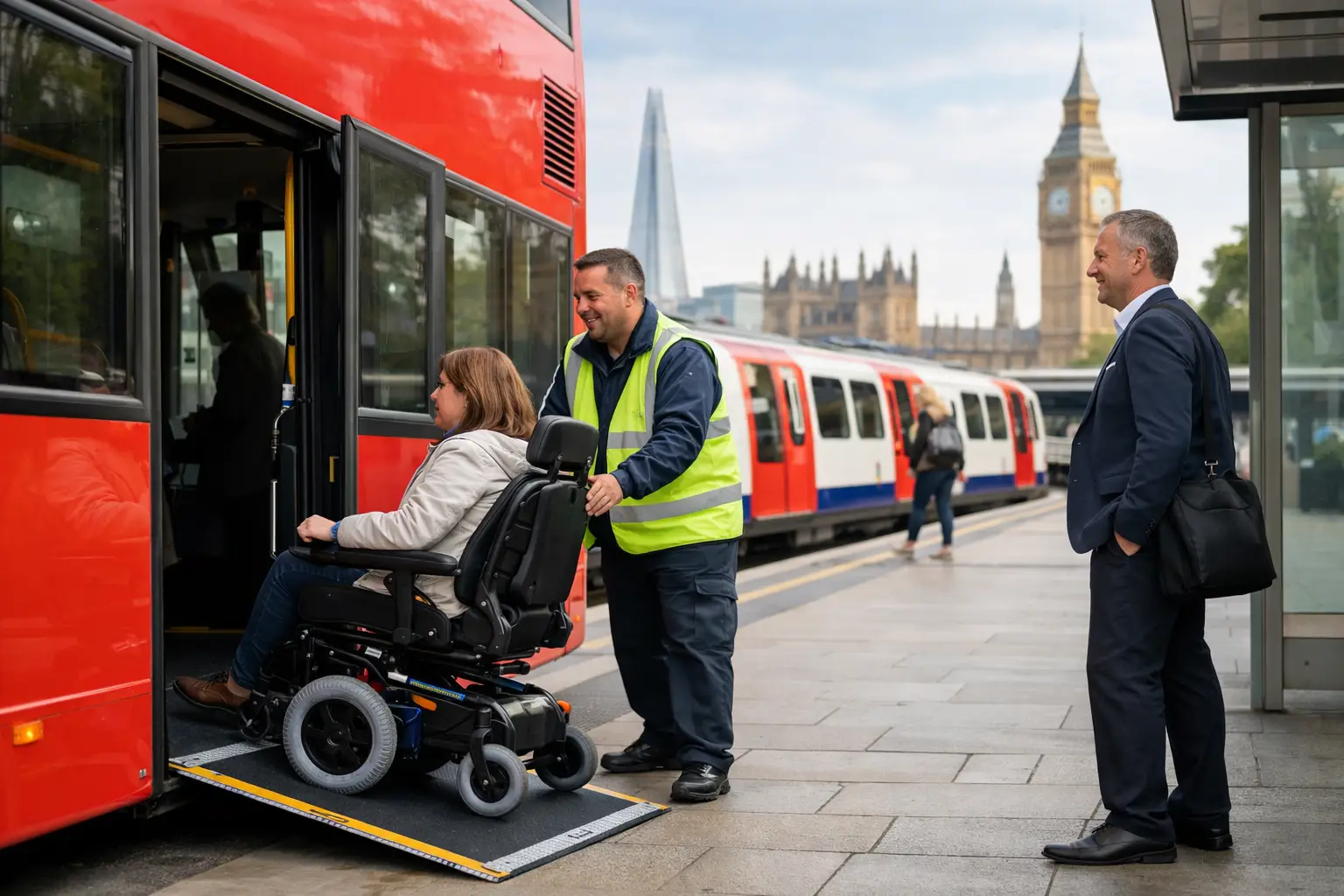
London gets talked about as if it is either brilliantly accessible or completely impossible. The truth sits somewhere in the middle, and that is exactly why a London accessible transport case study matters. If you are a wheelchair user, mobility scooter user, or planning with someone who is, you do not need glossy claims. You need to know what works, what fails, and how to keep moving when the plan changes.
This is where London stands out from many UK cities. It has more step-free options, more staff support and more accessible buses than most places. It also has a bigger, more complicated network, which means one broken lift or one wrong station choice can turn a simple journey into a tiring detour. For disabled travellers, London is rarely about whether travel is possible. It is about whether the detail has been checked properly.
What this London accessible transport case study shows
The main lesson from this London accessible transport case study is simple: London is usable, but only if you plan by mode, not just by destination. Saying you are going from King’s Cross to Westminster is not enough. You need to know whether you are using a bus, a black cab, an accessible Underground route, or a mix of all three.
That matters because accessibility in London is uneven. Buses are generally the strongest option for spontaneous travel. Taxis can rescue a difficult route but cost more. The Underground can be excellent on the right line and station pair, then completely unsuitable one stop later. Mainline rail and Elizabeth line services can be very good, but there is still a gap between official step-free claims and the reality of platform gaps, busy interchanges and lift dependence.
For most disabled travellers, the biggest mistake is treating the network as consistently accessible. It is not. The best results come from treating each leg as its own access check.
Buses are often London’s most dependable option
If your priority is reliability rather than speed, buses often come out on top. London buses are low-floor, have ramps, and are generally the easiest public transport option for wheelchair users. They also remove one of the biggest London transport problems - station lifts. No lift means no risk of being stranded by a lift outage.
That does not mean buses are perfect. Space can be tight, especially at busy times, and scooter users need to check whether their device meets accepted size and safety requirements. Road traffic can also slow everything down. Still, for many journeys across central London, a slower bus that you can actually board is better than a theoretically quicker Tube route that falls apart at the first inaccessible interchange.
There is also a confidence factor. With buses, you can usually see the boarding point, the kerb, the space available and the route number in front of you. That makes a big difference if you are travelling independently and do not want every journey to feel like a gamble.
The Underground is useful, but only on checked routes
This is the part of London that causes most confusion. People hear “step-free Tube” and assume that means straightforward access across the network. It does not. Some stations are step-free from street to platform only. Some are step-free from street to train. Some involve manual boarding ramps. Some have a large horizontal or vertical gap that may still make boarding difficult depending on your chair, scooter or confidence.
So the Underground works best when you have already checked your exact stations. The Elizabeth line has improved things massively and is one of the better options in London for many accessible journeys. Some newer or upgraded stations also perform well. But older parts of the network remain patchy.
Interchanges deserve special attention. A station may be accessible for entering and exiting, yet awkward or tiring for changing lines because of distance, crowding or lift dependence. That is often where journey planners miss the lived reality. On paper, the route works. In practice, it can be exhausting.
For wheelchair users, the Tube is often best used selectively rather than automatically. Pick the routes where the access is known to be good. Do not force it where the bus or taxi will give you a calmer trip.
Black cabs and minicabs fill the gaps
Accessible black cabs remain one of London’s strongest transport assets. For many travellers, they are the difference between giving up on a journey and getting on with the day. Most black cabs are designed with wheelchair access in mind, and drivers are used to carrying disabled passengers.
The downside is obvious - cost. If you rely on cabs for every journey, London gets expensive quickly. There can also be practical issues such as finding a cab at peak times or dealing with bad weather when demand rises.
Even so, cabs are not just a luxury option. They are often the sensible fallback when a station lift goes out of service, when evening fatigue kicks in, or when you are carrying bags and cannot face a complicated route. In real trip planning, having cab money set aside is often as important as having a railcard or Oyster balance.
Rail, Overground and the Elizabeth line can be strong choices
Outside the classic Tube map, some of the better accessible journeys in London happen on rail-based services. The Elizabeth line, in particular, has changed what is realistic for many disabled travellers moving across the city or out to Heathrow. Level boarding is still not universal everywhere in London transport, but these newer services often feel more manageable, more spacious and less stressful.
London Overground and National Rail services can also work well, especially where stations have lifts and staff support is available. But this is another area where you need to check specifics. Platform accessibility, staffing and boarding arrangements vary by station and operator.
If you are arriving in London by train, this is worth thinking about before the day of travel. The easiest long-distance arrival point is not always the most convenient central location. Sometimes it is better to arrive at a station with simpler onward access, even if that means a slightly longer overall journey.
Staff support helps, but do not build everything around it
One strength of London transport is that staff assistance is often available, especially on rail and Underground services. When it works well, it takes a lot of pressure off. Ramps can be provided, gates opened, and alternative routes explained clearly.
But there is a trade-off. Disabled travellers should be able to travel with support, not depend on luck. Staffing levels change, people are busy, and not every member of staff communicates with the same confidence. If your whole route only works because three separate assistance handovers happen exactly right, that route is more fragile than it looks.
The most resilient approach is to use support where it adds value, while still choosing routes that make sense if things are not perfect. Independence is not about refusing help. It is about not being stranded when help is delayed.
Real planning lessons from a London accessible transport case study
The practical lesson from any honest London accessible transport case study is that backup options matter as much as the first choice. Before leaving, it helps to know your preferred route, your acceptable alternative, and the point where taking a cab becomes the sensible decision.
It also helps to think about timing. London at 8.30 am and London at 11 am are two very different experiences if you use a wheelchair or scooter. Crowds affect boarding space, lift queues and stress levels. A route that is manageable off-peak can feel miserable in the rush hour.
Battery range matters too for scooter users. London can involve longer distances than expected, especially when step-free station entrances are not where you assumed, or when street diversions push you off the direct route. Add kerbs, gradients and pavement clutter, and the “short” final stretch can be the hardest part of the day.
Weather changes the picture as well. Heavy rain can turn a bus-first plan into a taxi-first one. Heat can make long station interchanges draining. None of that means do not go. It means plan with your real energy levels, not with best-case optimism.
The bigger picture for disabled travellers
London is one of the better cities in the UK for accessible transport, but that is not the same as saying it is easy. The network rewards preparation and punishes assumptions. For some travellers, that level of planning feels tiring before the day even begins. That frustration is valid.
At the same time, London does offer something worth recognising. There are enough workable options that a bad route usually does not have to end the day. A bus can replace a Tube. A cab can replace a failed interchange. A different station can rescue a rail journey. That flexibility is valuable, especially for people who are used to entire trips collapsing because one step or one inaccessible platform blocks everything.
That is why practical, lived-experience guidance matters so much at Andy Wright Travel and across the wider accessible travel community. Official accessibility information tells you what should happen. Real case studies show you what travelling there actually feels like.
If you are planning London, go in with confidence, but not blind confidence. Check the route, keep a backup, and give yourself permission to choose the option that protects your energy rather than the one that looks best on a map. Getting around independently is not about proving a point. It is about making the city work for you.
0 Comments
Leave a Comment