
Lift Equipped Taxis Versus Rideshare Compared
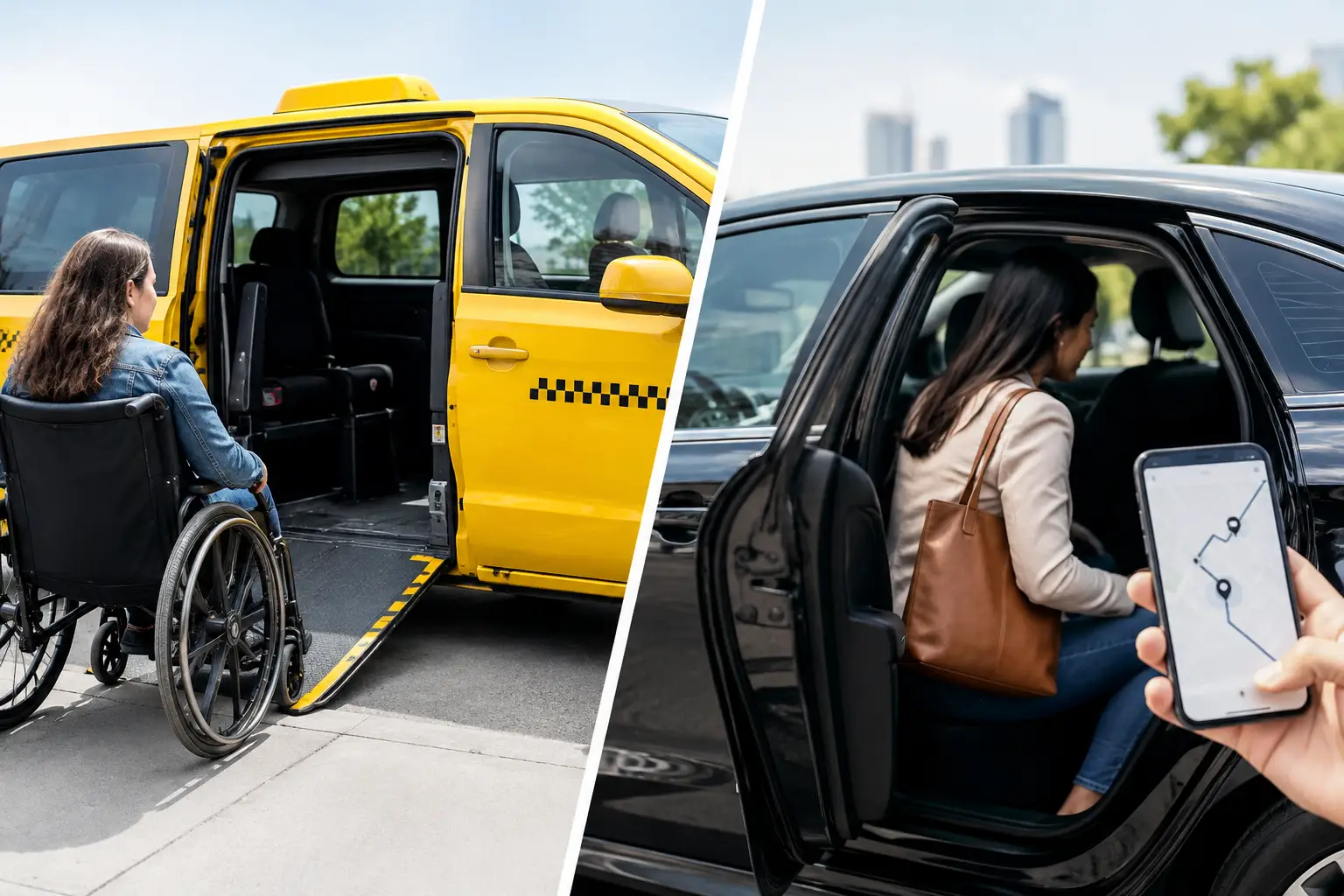
A driver can be five minutes away and still be the wrong transport for you. If you use a wheelchair or mobility scooter, the real question behind lift equipped taxis versus rideshare is not which app looks cheapest. It is whether you, your chair or scooter, and any companion can actually travel safely without a stressful pavement-side argument.
Both options can be useful. Both can also let you down. The right choice depends on your equipment, where you are travelling, how fixed your timings are, and how much uncertainty you can realistically absorb.
Lift equipped taxis versus rideshare: the key difference
A lift equipped taxi is normally a purpose-built wheelchair accessible vehicle, often called a WAV. It may have a rear ramp or hydraulic lift, wheelchair restraints, an accessible seatbelt and enough headroom for a passenger to remain in their wheelchair. In many UK towns and cities, these are the familiar black cabs or accessible private-hire vehicles licensed by the local authority.
Rideshare usually means an app-based private-hire journey booked through a service such as Uber or Bolt. The vehicle is commonly an ordinary car driven by an independent driver. Some platforms offer an accessible category in selected places, but that does not mean every journey will have a proper lift, suitable restraints, or room for a larger mobility scooter.
That distinction matters. A folding wheelchair that can be lifted into a car boot is one thing. A powered wheelchair, rigid chair, or mobility scooter is another. Do not assume that an advertised "accessible" option will take the equipment you rely on every day.
Reliability matters more when the journey has consequences
For a casual trip into town, a cancelled rideshare is irritating. For a train connection, airport check-in, hospital appointment or theatre booking, it can wreck the whole day. This is where a pre-booked lift equipped taxi often earns its higher fare.
A reputable accessible taxi operator can take your requirements in advance. You can explain the make and size of your scooter, whether you transfer into a seat, whether you need the vehicle lift rather than a ramp, and whether someone is travelling with you. The booking is tied to a real conversation, not just a pin on a map.
That does not make taxis flawless. A vehicle can run late in traffic, a driver may not have been given the full notes, and smaller operators may have only one accessible vehicle available. But you have a named firm to ring, a booking reference, and usually a better chance of sorting a problem before you are stranded.
Rideshare is strongest when you need flexibility. You might leave a restaurant earlier than planned, find that rain has made a long walk unpleasant, or need a short journey from an accessible station to your hotel. In busy city centres, a standard rideshare can appear quickly. For travellers who can transfer and have a folding chair, that convenience can be genuinely useful.
The problem is that availability shown on an app is not a guarantee that the car will work for you. A driver can accept, see your message about the wheelchair or scooter, then cancel. Even if they arrive, a small saloon with a full boot may not safely carry your equipment. Repeated cancellations are not merely inconvenient when you are outside in cold weather, on a dropped kerb, with nowhere suitable to wait.
Space is not the same as accessibility
One of the biggest traps is judging a vehicle by its size. A people carrier may look spacious but still be unsuitable for a wheelchair user. It may have no safe restraint points, no ramp, insufficient interior height, or a boot arrangement that leaves your chair loose in transit.
With a lift equipped taxi, ask whether you will travel seated in your wheelchair or transfer to a passenger seat. If you stay in the chair, the driver should secure it properly and provide an appropriate passenger restraint. A lap belt around a wheelchair is not a substitute for proper tie-downs and a fitted seatbelt.
Mobility scooter users need to be even more precise. Give the operator the scooter's length, width, height and weight, including any bags, crutch holder or rear box. Tell them if the battery is non-removable and whether the scooter can be driven up a ramp. A compact boot scooter is very different from a road-going scooter with a high seat and larger wheels.
Do not rely on the phrase "it should fit". Ask the firm to confirm it will fit in the vehicle allocated to your journey. If your scooter is unusual in size or weight, sending a photograph and dimensions when booking can save a lot of grief.
Cost: compare the whole journey, not the starting price
Rideshare fares can look attractive, particularly outside peak periods. You see a price estimate before confirming, payment is handled in the app, and there is no need to carry cash. That can make it a sensible option for passengers with a lightweight folding chair and a plan B.
However, app pricing can rise sharply when demand is high. Airport arrivals, concerts, poor weather and late-night journeys are classic times for surge pricing. The cheapest-looking option can become expensive just when you need it most.
Accessible taxis may cost more, especially if you need a larger vehicle or a long pre-booked journey. Yet a quoted fare can be easier to budget for, and the value is not only in the miles travelled. It is in getting the right vehicle, leaving when you need to leave, and not having to gamble on four unsuitable cars before one works.
UK taxi and private-hire rules vary between local authorities, so do not make assumptions about wheelchair-user charges, assistance duties or card payments based on another town. If a fare seems unclear, ask before the vehicle arrives. For a longer journey, request the price or pricing basis in writing.
When rideshare can be the better choice
Rideshare is not automatically the bad option. It can work well if you use a folding manual wheelchair, can transfer comfortably, are travelling with someone who can help with the chair, and do not have a time-critical appointment. It is also handy as a back-up in a city where accessible taxis are thin on the ground.
If you use it, message the driver immediately after matching. Be clear and brief: say whether the chair folds, whether you transfer, and whether it will go in the boot. Do not wait until they arrive to mention a scooter or powered wheelchair. It will not prevent every cancellation, but it reduces wasted time.
For some journeys, a hybrid approach is best. Pre-book a lift equipped taxi to the airport or station, where timings and luggage matter, then use rideshare locally only if your equipment and circumstances make it practical.
Questions worth asking before you book
For any new taxi company, get answers to the practical points that decide whether the trip is possible:
- Is the vehicle fitted with a lift or ramp, and which do I need?
- Can I stay in my wheelchair, with proper restraints and a passenger seatbelt?
- Will my specific mobility scooter fit, including its weight and height?
- Can a companion and luggage travel as well?
- Is the journey definitely pre-booked with an accessible vehicle, rather than merely requested?
It is worth keeping these details in your phone. Include your chair or scooter model, dimensions, weight, preferred loading method and any help you need. You should not have to repeat your entire mobility story every time you book transport.
Plan for the return journey as carefully as the outward one
Many accessible travel plans fail at the return leg. You arrive at an attraction, hotel or restaurant without trouble, then discover there are no WAVs available at closing time. This is especially common in smaller towns, rural areas and resorts where accessible transport is limited.
Where the timing matters, book both directions. Confirm the collection point too. "Outside the station" can mean a rank, a short-stay car park, a side entrance, or a road with no safe place for the lift to operate. At airports and large venues, ask exactly where accessible taxis collect passengers and allow extra time to reach it.
Keep the operator's phone number and booking details accessible, not buried in an email. If a driver is delayed, you want to be able to call from the pavement without searching through your inbox.
The best transport choice is the one that leaves you in control. If a rideshare fits your chair, budget and flexibility, use it with your eyes open. If your equipment is larger, your journey matters, or you simply need certainty, book the lift equipped taxi and give the operator the detail they need. Independence is not about taking unnecessary risks. It is about making the journey work on your terms.
0 Comments
Leave a Comment