
How to Write a Wheelchair Friendly Attraction Review
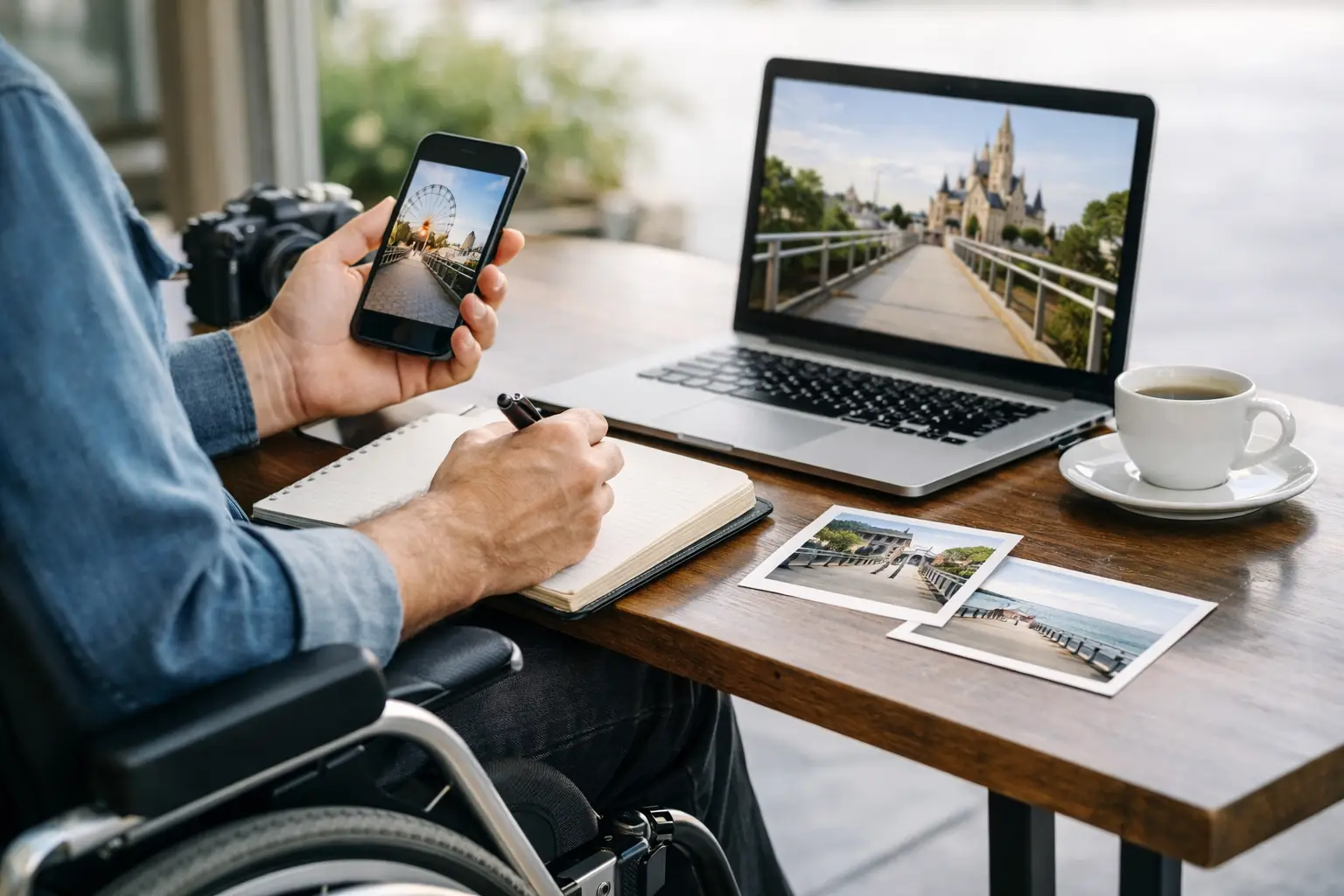
Most attraction websites say the same thing: accessible toilets, step-free access, friendly staff. Then you arrive and find a steep path, a heavy door, or a so-called accessible route that adds half a mile to the visit. That is exactly why a proper wheelchair friendly attraction review matters. It is not about repeating the venue's claims. It is about giving disabled travellers the detail needed to decide whether a day out is realistic, comfortable and worth the effort.
If you use a wheelchair or mobility scooter, or you travel with somebody who does, you already know the difference between marketing and reality. A useful review fills that gap. It helps people plan with confidence, and just as importantly, avoid turning up somewhere that is technically accessible but practically hard work.
What makes a wheelchair friendly attraction review genuinely useful
A good review starts with the question most disabled travellers ask first: can I actually do this without unnecessary hassle? That means the review has to focus on the full journey, not just the bit inside the attraction. Parking, drop-off points, path surfaces, ticket desks, toilets, seating, slopes, lifts and staff attitude all matter because one weak point can change the whole day.
This is where many mainstream reviews fall short. They talk about whether a place is interesting, expensive or busy, but skip the details that decide whether a wheelchair user can manage the visit independently. For this audience, access is not an extra feature. It is the foundation of the experience.
A useful review also avoids the trap of treating accessibility as yes or no. Very few places are fully accessible to everyone. Some work well for manual wheelchairs but are awkward for larger powerchairs. Others are fine once inside but difficult from the car park. In reality, accessibility is often a series of trade-offs, and honest reviews should say so plainly.
Start with arrival, not the attraction
The first thing many readers need to know is how difficult it is to get from the outside world to the entrance. If there is accessible parking, say where it is in relation to the main entry. If the marked bays are too far away, on a slope, or often full, that should be stated clearly. If there is a drop-off point but no shelter, mention that too.
Public transport matters as well, especially in city locations where parking is limited. But it is not enough to say a place is near a station. What disabled travellers need to know is whether the route from station to entrance is realistic with a wheelchair or scooter. Cobbles, steep hills, broken pavements and poor crossings can make a short distance far more difficult than it sounds.
Then comes the entrance itself. Is there level access, a ramp, or a separate accessible entrance? If there is a buzzer for assistance, readers should know in advance. Separate access is sometimes the only workable option, but it can still feel awkward or slow, so it is worth explaining how it actually works on the day.
Inside the venue, the detail matters
Once inside, a wheelchair friendly attraction review should cover space, layout and ease of movement. Wide open galleries are very different from historic buildings with narrow corridors and tight turns. It helps to explain whether visitors can move around freely or whether there are pinch points that make the visit frustrating.
Lifts deserve special attention because they are often the make-or-break feature in multi-level attractions. If there is only one lift, say whether it was reliable and easy to find. If staff need to operate it, or if queues build up at busy times, that is worth mentioning. These details sound small until you are stuck waiting on one floor while the rest of your group carries on.
Floor surfaces are another practical point that gets ignored too often. Smooth flooring is usually straightforward, but gravel, thick carpet, uneven stone and timber boards can all slow things down. The same goes for gradients. A gentle incline may be manageable for one person and exhausting for another, particularly for manual wheelchair users travelling without assistance.
Toilets, seating and rest points are not side issues
For many disabled travellers, accessible toilets can decide whether an attraction is manageable at all. A review should say where they are, whether they are easy to reach, and whether they appear genuinely usable rather than simply labelled accessible. If the only toilet is at the far end of the site or reached by a separate route, that changes how people plan their visit.
Seating and rest areas matter just as much, including for people who can walk short distances but need regular breaks. Large attractions can be tiring even when access is fairly good. A place with frequent benches, indoor rest points and a café with enough space between tables is very different from one where you are expected to keep moving for two hours.
If you are reviewing somewhere outdoors, think about weather exposure too. Rain, heat and wind affect everybody, but they can have a bigger impact if you cannot easily take cover or move quickly. A practical review should say whether there are sheltered sections and whether paths become harder to use in bad weather.
Staff can improve an average visit or ruin a good one
A lot of attractions rely on staff support to bridge access gaps. Sometimes that works well. Sometimes it means you spend the day asking for keys, waiting for ramps or explaining basic needs over and over again. A review should be honest about that balance.
Good staff do more than smile. They know the accessible route, understand how equipment works, and treat disabled visitors like ordinary paying guests rather than a problem to manage. If staff were proactive, respectful and informed, say so. If they were polite but clearly untrained, that matters too.
There is a difference between a venue being possible and being comfortable. Staff attitude often sits right in the middle of that difference.
How to handle attractions with mixed accessibility
Not every review needs a dramatic verdict. Plenty of attractions are worth visiting despite clear limitations, as long as readers know what to expect. A historic site, for example, may have excellent staff, decent access to key areas and solid facilities, but still include upper floors or original features that are not wheelchair accessible. That is not automatically a reason to dismiss it. It just needs to be explained properly.
This is where lived experience matters more than broad labels. Saying a place is partially accessible is not enough. Better to explain what you could do, what you could not do, and whether the accessible areas still felt worthwhile. That gives readers something real to work with.
For the same reason, it helps to mention who the attraction may suit best. A site might be manageable for powerchair users on dry days, but awkward for manual wheelchairs because of slopes. A museum might be easy for independent wheelchair users but difficult for families with a scooter, a buggy and little room to move. Specifics are more useful than generic approval.
A simple structure that works every time
If you are writing your own wheelchair friendly attraction review, keep the order practical. Start with arrival and parking, then cover the entrance, internal access, toilets, seating, food and drink options, and staff support. Finish with your honest view on whether the attraction is worth the effort for wheelchair or scooter users.
That structure works because it follows the same thought process as trip planning. People are not just asking whether an attraction is good. They are asking whether they can manage the whole visit with dignity and without nasty surprises.
Try to include measurements or comparisons where possible, but only if you are confident. If a ramp felt steep, say that. If a doorway was tight for a larger chair, say that too. You do not need to sound technical. Clear, direct language is usually far more helpful.
Why honesty helps the whole community
There can be pressure to stay positive when reviewing attractions, especially if staff were trying their best. But honesty is not negativity. It is respect for the people who will rely on your information. Disabled travellers often spend more time, money and energy organising a day out than non-disabled visitors. They deserve reviews that reflect that reality.
A fair review should still recognise effort. If a venue has clear limitations because of age, space or listed-building restrictions, say so. But effort does not cancel out practical barriers. A place can be well-intentioned and still difficult. Both things can be true at once.
That balance is what makes first-hand accessible travel content so valuable. It replaces vague reassurance with workable detail. That is a big part of why brands like Andy Wright Travel have built trust with wheelchair and mobility scooter users. The point is not to sell the dream of easy travel. The point is to show what is possible, what is awkward, and how to prepare properly.
The best reviews do not just describe a place. They give people back a bit of certainty. And when you travel with mobility challenges, certainty is often the thing that makes the trip happen at all.
0 Comments
Leave a Comment