
How to Use Accessible Public Transport
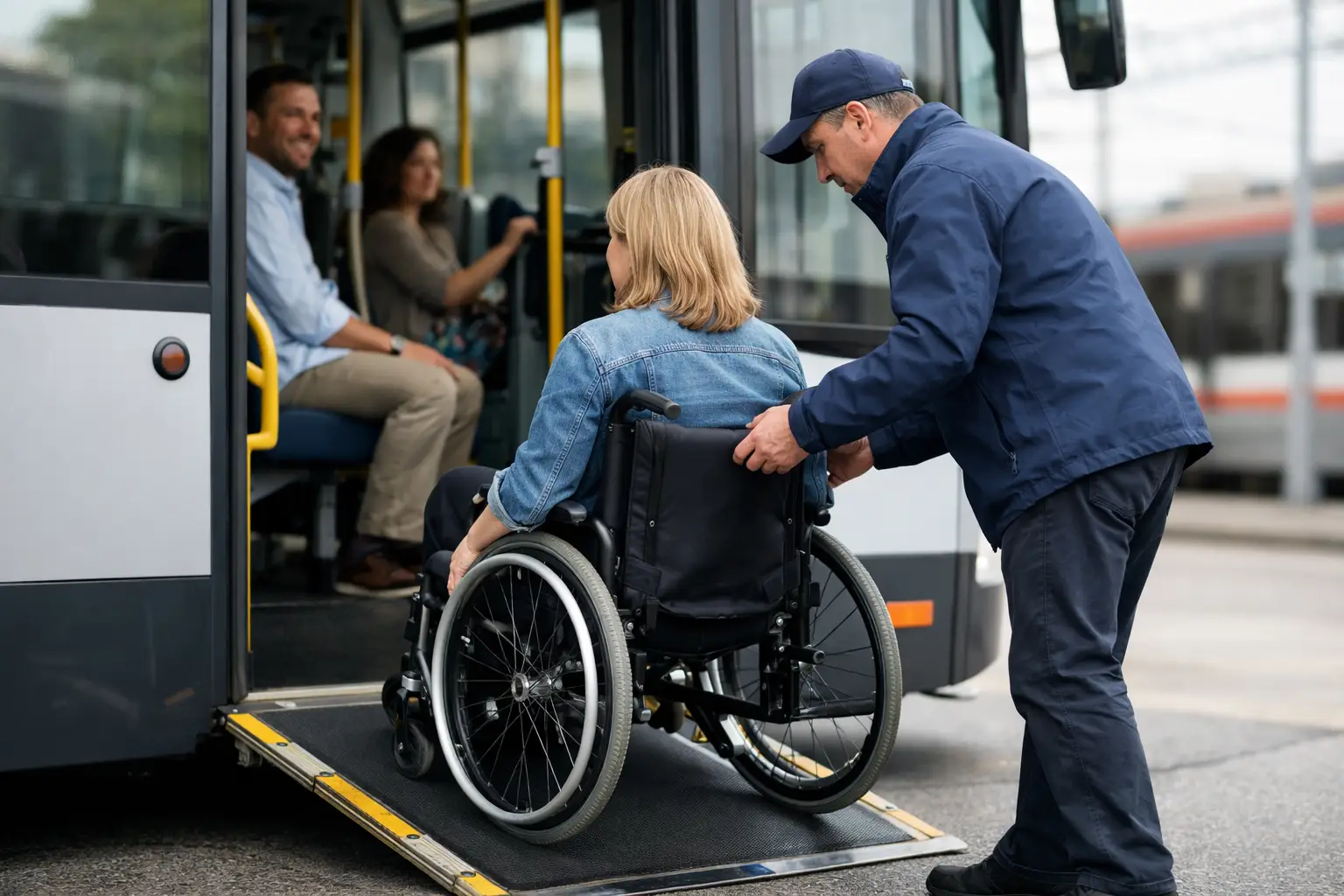
Accessible public transport often looks straightforward on paper right up until you need the ramp, the working lift, the correct space on board and staff who actually know the process. That is why learning how to use accessible public transport is less about reading a policy and more about knowing what to check before you leave, what to ask for, and what to do when the system does not work as promised.
For wheelchair users, mobility scooter users and anyone travelling with reduced mobility, confidence comes from preparation. Not overthinking everything, but understanding the weak points. A route can be technically accessible and still be a poor option if the station lift is unreliable, the bus stop has no kerb, or the gap onto the train is too wide to manage safely.
How to use accessible public transport without guesswork
The most useful place to start is by being honest about your own access needs. That sounds obvious, but many travel problems happen because transport is labelled accessible in a very broad way. A manual wheelchair user, a powerchair user, a mobility scooter user and somebody who can walk short distances may all need completely different things.
Think about your turning space, the weight and size of your chair or scooter, whether you can manage a ramp gradient, and whether you need step-free access at every stage. Also consider battery range if you are using a powered device, especially on longer days with station diversions or delays.
From there, plan each section of the journey separately. Do not just check the main mode of transport. Check how you get to the stop or station, whether there is a dropped kerb, whether the entrance is level, whether there is an accessible toilet if needed, and what happens at the other end. A journey is only as accessible as its worst point.
Buses and coaches
Buses can be one of the easiest forms of accessible public transport when the route is modern, the kerbs are decent and the driver is switched on. They can also be frustrating if the ramp is faulty, the wheelchair bay is blocked, or the stop itself is awkward.
With local buses, the key issue is usually boarding rather than booking. Low-floor buses with ramps are common in many parts of the UK, but common is not the same as guaranteed. If you are trying a new route, it helps to travel outside the busiest times first. That gives you more space, a better chance of using the wheelchair area properly, and less pressure if the driver needs a moment to deploy the ramp.
If you use a mobility scooter, check the operator's policy before travelling. Some bus companies allow only certain types of scooter, often smaller class 2 models, and may require a permit scheme or an assessment. That can feel irritating, but it is better to know in advance than be turned away at the stop.
Coaches are more mixed. Some are well set up, while others still involve advance notice, limited wheelchair spaces or awkward boarding arrangements. If you are booking a coach, ask direct questions rather than accepting the word accessible on its own. Ask whether you can remain in your wheelchair, whether a lift is available, how many wheelchair spaces there are, and what the boarding process actually looks like.
Trains: where planning matters most
Rail travel gives you reach, but it usually needs the most preparation. When people ask how to use accessible public transport confidently, trains are often the sticking point because there are more moving parts - station access, platform changes, boarding ramps, booked assistance and the size of the train itself.
Step-free stations are not all equal. One station may be fully step-free from street to train, while another is only step-free on one platform or requires a long route via lifts and bridges. Always check both the departure and arrival station, and any interchange in the middle. A single inaccessible change can ruin the whole plan.
Passenger assistance can make rail travel far easier, especially if you need a ramp or help finding the right carriage. Book it whenever you can, even if the journey seems simple. It creates a record, gives staff notice and reduces the chances of being left on the platform while everyone assumes someone else is dealing with it.
That said, assistance is not perfect. Staff can be excellent, indifferent or simply overstretched. Build in a bit of margin where possible. Arriving earlier than you strictly need to is often worth it, especially at large stations. It gives you time to locate staff, check the lift situation and deal with last-minute platform changes.
On board, the trade-off is usually between convenience and capacity. Some trains have generous wheelchair spaces and accessible toilets. Others technically meet the standard but still feel cramped. If you use a larger powerchair or scooter, train dimensions matter. This is one area where real-world reviews are often more useful than official wording.
What to ask before a train journey
If the information online is vague, ask whether there is level boarding or a ramp, whether the accessible toilet is in your carriage, and whether your wheelchair or scooter size can be accommodated. If you need to transfer to a seat, ask how close that seat is to the wheelchair space and toilet. Small details make a big difference over a long journey.
Trams, underground systems and metro networks
Trams are often among the better options because many systems are built with level or near-level boarding in mind. But again, the issue is not just the vehicle. It is the platform edge, the street approach and whether every stop on your route is equally accessible.
Underground and metro systems need more caution. Some cities advertise step-free travel, but only parts of the network genuinely work for wheelchair and scooter users. One line may be straightforward while another has a huge gap, no lift, or staff support that varies by station.
The practical approach is to avoid assumptions. Check station-by-station details, not just system-wide maps. In older networks especially, step-free can mean step-free to platform but not onto the train. That difference matters.
Taxis and community transport
Accessible public transport is not only about buses and trains. Wheelchair accessible taxis and community transport can be the most realistic option for part of a journey, especially if a station lift is out of order or the final mile is poor.
This is where flexibility matters more than ideology. Independent travel is not about forcing every trip onto standard public transport if the route clearly does not work. Sometimes the smartest plan is train plus accessible taxi, or bus out and taxi back when energy levels are lower.
When booking, be clear and specific. Say whether you are remaining in your wheelchair, whether it is powered, and whether you are travelling with luggage or a second person. Accessible vehicles are not all the same size, and vague bookings can go wrong fast.
What to do on the day
Once you know how to use accessible public transport in theory, the next step is managing the reality of the day itself. Keep your phone charged, take any booking reference or assistance confirmation with you, and allow more time than a non-disabled traveller would need. That is not being pessimistic. It is sensible.
If something is not right, say so early. If the driver has not lowered the ramp properly, if the wheelchair bay is blocked, or if station staff seem unsure, speak up before the vehicle leaves. Calm, direct communication works better than hoping the issue will sort itself out.
It is also worth having a fallback plan. That might mean knowing the next accessible stop, having a local taxi number saved, or knowing whether a companion can meet you if the planned route breaks down. Public transport accessibility is improving, but breakdowns still happen.
Confidence comes from repetition
Your first trip on a new route is usually the hardest one. After that, you know the kerb height, the staff attitude, the platform layout and whether the official information matched reality. That knowledge builds quickly.
This is where lived experience matters more than glossy promises. Brands like Andy Wright Travel exist because disabled travellers need the practical truth, not just accessibility badges. The more you use a route, the less intimidating it becomes and the easier it is to spot which parts are reliable and which need a backup plan.
Public transport does not need to be perfect for you to use it well. It needs enough planning, enough honesty and enough confidence to work around the weak spots. Start with one journey, keep notes on what actually happened, and let experience do the rest. Independence often grows that way - not all at once, but one workable trip at a time.
0 Comments
Leave a Comment