
How to Travel With a Mobility Scooter
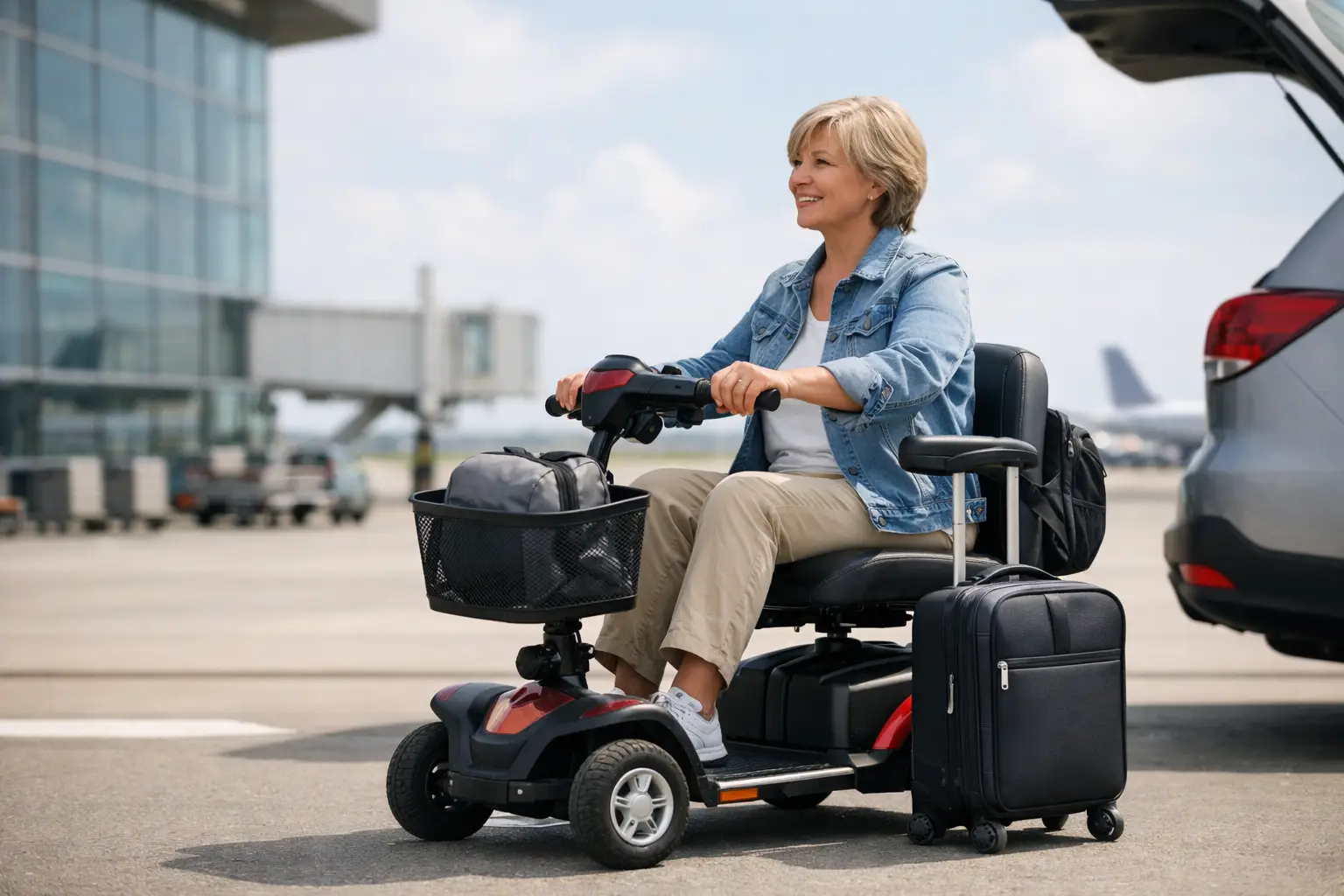
The hard part of travelling with a mobility scooter is rarely the scooter itself. It is the missing detail. A hotel says it is accessible, but the lift is too small. An airline accepts scooters, but nobody mentions battery rules until check-in. A train journey looks simple, then the station at the other end has no working step-free route. If you are working out how to travel with a mobility scooter, the biggest win is not confidence for confidence’s sake - it is having the right information before you leave home.
That is what makes the difference between a stressful trip and one you can actually enjoy. You do not need perfect conditions, but you do need to know your scooter, your route and your backup options.
How to travel with a mobility scooter without nasty surprises
The first rule is straightforward: plan around real access, not labels. “Accessible” can mean anything from fully step-free with wide turning space to a token ramp at the entrance and little else. For scooter users, the details matter more than the promise.
Start with your own scooter. Know its length, width, turning circle, total weight and battery type. Keep those details written down on your phone and on paper. You will use them when booking transport, checking hotel lifts, asking about accessible taxis and confirming whether your scooter can be carried or stored.
Portable travel scooters and larger road-legal models create very different travel plans. A lightweight boot scooter gives you more options with cars, coaches and smaller hotel rooms, but may be less comfortable over long distances or rough surfaces. A bigger scooter gives you range and stability, but narrows your choices. Neither is automatically better. It depends on the trip.
A city break with taxis and trains may suit a compact scooter. A seafront holiday or a destination with uneven pavements may justify taking the larger model if transport and storage allow for it.
Check the journey in stages, not as one booking
A lot of travel problems happen because people only check the headline journey. The flight is booked, the hotel is booked, and on paper everything looks sorted. Then the weak point appears in the transfer, the station, the kerb height outside the flat or the restaurant toilets nearby.
Break the trip into stages. Think about leaving home, reaching the station or airport, boarding, arrival, local transport, check-in and getting around once you are there. If one stage does not work for your scooter, the whole plan becomes harder.
Flights and airports
Flying with a mobility scooter is possible, but it takes more preparation than most airlines make obvious. Contact the airline before booking if the information online is vague. You need to confirm dimensions, weight, battery type and whether the battery must be disconnected or protected for travel.
Lithium batteries often have stricter rules than sealed lead-acid batteries. Some airlines are clear and organised. Others are not. Do not assume staff at the airport will all give the same answer, because they often will not.
Ask how your scooter will be handled from check-in to loading and whether you can keep it with you to the gate. In most cases, that is the best option. It reduces time spent without your scooter and lowers the chance of damage from unnecessary handling. Take photos of the scooter before check-in, especially if it has removable parts.
If your scooter can be dismantled, decide in advance whether that genuinely helps. Sometimes it makes loading easier. Sometimes it creates more loose pieces to lose or damage.
Trains and stations
Rail can be excellent or awkward, depending on the route. The key issue is not just whether the train has a wheelchair space. It is whether the stations on both ends are reliably step-free and whether staff assistance is booked properly.
Reserve assistance when you can, but still arrive early and be ready to advocate for yourself. Ramps, boarding points and platform changes do not always run smoothly. Ask whether your scooter size is accepted, because some train operators are stricter than others.
A folded or dismantled travel scooter may give you more flexibility than a larger scooter, but only if you can manage that process safely. If you cannot, then a supposedly flexible option is not really flexible at all.
Cars, taxis and transfers
If you are travelling by car, check boot space with the scooter measurements in mind, not guesswork. If your scooter uses ramps or a hoist, test everything before the day of travel. It sounds obvious, but plenty of stress comes from trying equipment for the first time when you are meant to be setting off.
For taxis and private transfers, ask direct questions. Can they take a mobility scooter of your exact size and weight? Does it stay upright? Is a WAV needed? Are there ramps or a lift? General statements like “yes, we take wheelchairs” are not enough.
Accommodation can make or break the trip
Hotels and flats are where generic accessibility claims do the most damage. A room may be labelled accessible while having heavy doors, awkward bathroom layouts, thick carpets or no proper turning space beside the bed.
Before booking, ask about the route from entrance to room, lift dimensions, doorway widths, bathroom layout and whether the scooter can be charged safely in the room. If you use a larger scooter, ask where it can be stored if room space is tight. Some places are happy to help once asked. Others have simply never thought about it.
Ground-floor rooms are not always best. Sometimes they are furthest from reception or involve outdoor routes with poor surfaces. Likewise, an upper-floor accessible room can be fine if the lift is dependable and large enough. The point is to ask for specifics.
If you can, request recent photos or a video walkthrough. This is often more useful than a written accessibility description. At Andy Wright Travel, that sort of real-world detail is exactly what disabled travellers tend to trust, because it shows what the place is actually like rather than what it claims to be.
Think beyond the room
A hotel might work perfectly for sleeping and still be a poor base for your trip. Look at the area around it. Are pavements dropped? Is there a steep hill? Are shops and restaurants reachable on a scooter? Is the nearest beach, promenade or attraction genuinely accessible, or just theoretically close by?
This is where street-level planning matters. On a map, 500 metres can look easy. On cracked paving, with narrow gaps and badly parked cars, it can be exhausting.
That is why day-to-day practicality matters as much as transport. Check where you will charge the scooter, where you will store shopping or bags, and whether there are accessible toilets near the places you actually want to spend time.
Pack for reliability, not for luck
A good travel kit is not glamorous, but it saves trips. Take your charger, any adapter you may need, your scooter key, basic tools if your model allows for simple adjustments, and a copy of the manual or at least the model details. If your scooter has removable battery packs, make sure they are packed and labelled properly.
It also helps to carry a simple note with your emergency contacts, medical information if relevant, and the scooter’s make and model. If something goes wrong, clear information speeds things up.
Weather protection matters too, especially in the UK. A wet journey can turn into a miserable one if your scooter controls, seat or storage are exposed. A cover, poncho or lap blanket may sound minor until you need it.
Be realistic about pace
One mistake many people make is trying to travel as if mobility access will be straightforward everywhere. Even with good planning, accessible travel often takes longer. Boarding can take longer, transfers can take longer, and finding the workable route can take longer.
Build in margin. Do less in a day if needed. Choose accommodation that reduces effort rather than adding to it. Protect your energy for the bits of the trip you actually care about.
That is not lowering your sights. It is travelling smart. Independence does not mean pretending barriers do not exist. It means planning well enough that they do not ruin the whole experience.
If something goes wrong
Even solid planning cannot prevent every problem. Lifts break. Staff misunderstand scooter policies. Accessible rooms turn out not to be accessible enough. When that happens, stay focused on the practical fix.
Ask for alternatives straight away. Another room. Another entrance. Another transfer vehicle. Another boarding method. Take notes and photos if needed, especially if you may need to complain later, but deal with the immediate issue first.
The honest truth is that travel with a mobility scooter can still involve more effort than it should. But it is very often achievable with the right checks and a refusal to rely on vague promises. The more detail you pin down in advance, the more freedom you give yourself once the trip starts.
Travel is not only for people who can improvise their way around broken access. With proper planning, clear questions and a bit of stubbornness, you can make far more journeys work than many people would have you believe.
0 Comments
Leave a Comment