
How to Plan Disabled Day Trips That Work
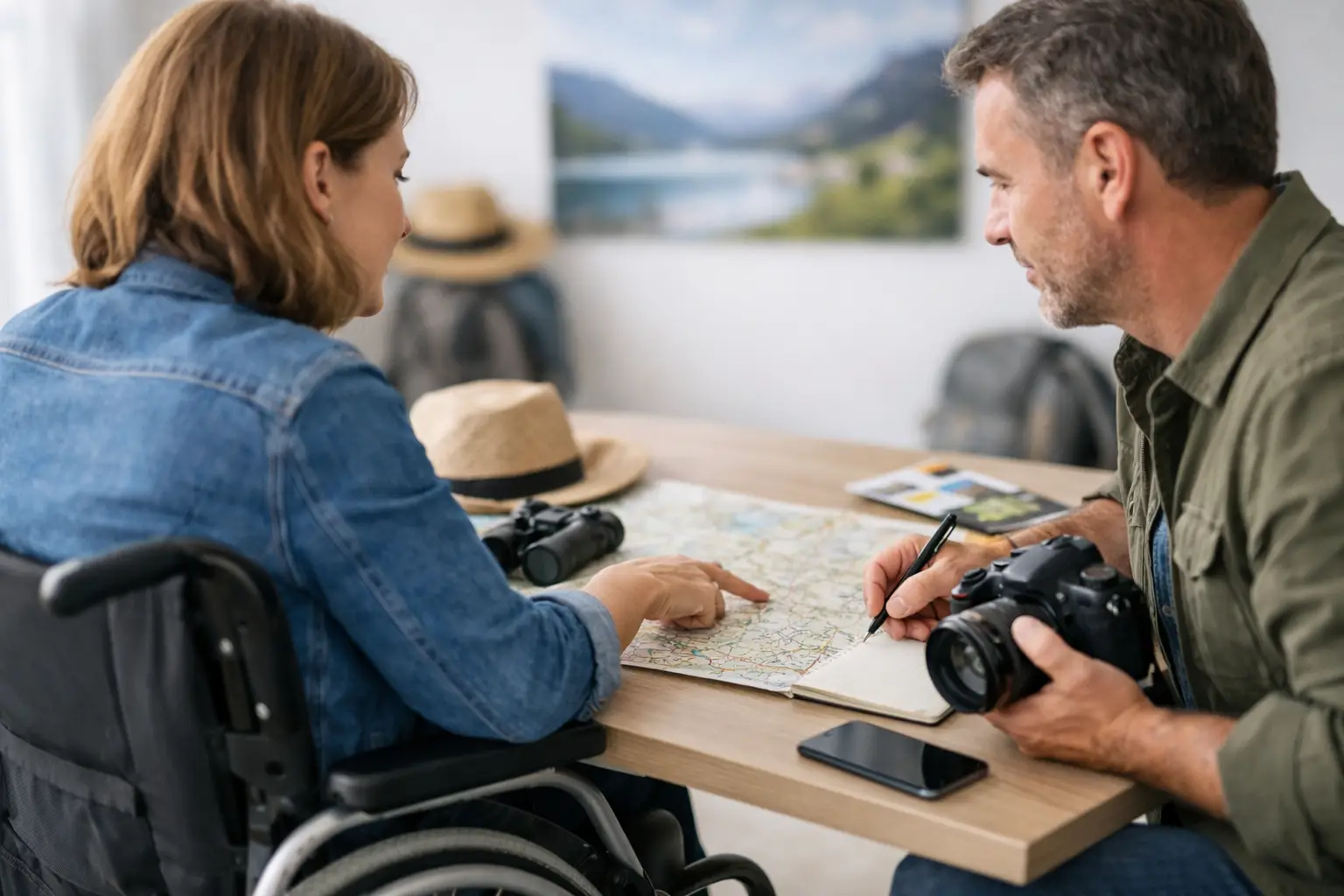
A day trip can go wrong long before you leave the house. Not because the place is bad, but because the details were never clear in the first place. If you are working out how to plan disabled day trips, the biggest win is not finding somewhere flashy - it is knowing exactly what will happen from your front door to the journey home.
That is where most generic advice falls apart. A venue might say it is accessible, but that can mean anything from a proper step-free route with usable toilets to a single portable ramp and a lot of wishful thinking. For wheelchair users, mobility scooter users, and anyone travelling with limited mobility, a good day out depends on practical facts, not broad claims.
How to plan disabled day trips without guesswork
The best place to start is not the attraction itself. Start with your non-negotiables. That means the things that will make the trip possible or impossible, regardless of how nice the destination looks in photos.
For some people, that is level access from car park to entrance. For others, it is a reliable accessible toilet with space to turn, scooter charging, a short distance between key areas, or seating at regular intervals for a walking companion. If you need an accessible taxi, a hoist, or step-free rail access, put that at the top from the start. It saves wasting time on places that were never realistic.
This sounds basic, but it changes the whole planning process. Instead of asking, “Where should we go?”, ask, “What conditions does the day out need to meet?” Once you know that, your options become clearer and your chances of a stressful surprise drop sharply.
Build the trip around the journey, not just the destination
Many disabled day trips fail on transport rather than the venue. A brilliant museum is no use if the nearest accessible station has a broken lift, or if the car park is gravel and the path to the entrance is uphill.
If you are driving, check more than whether parking exists. Look at where the accessible bays are, whether they are usually enough in number, whether the route from the bays is level, and whether there is a height restriction if you use an adapted vehicle. A location may technically have Blue Badge parking but still be awkward if the spaces are too far away or the surface is poor.
If you are using trains, coaches or taxis, allow more time than you think you need. Assisted travel can work well, but delays happen and equipment fails. It is better to build slack into the day than to spend the whole trip trying to recover lost time. For some outings, especially in older towns or coastal areas, driving may simply be the more realistic option. That is not giving in - it is planning honestly.
When researching, use street-level images, recent visitor reviews and venue photos wherever possible. Andy Wright Travel has built its reputation on this kind of practical, lived-experience detail because it is often the only way to spot issues that official descriptions leave out.
Check the access chain from arrival to exit
A lot of places pass the first test and fail the second. You get through the main door, then find the accessible route to the café is via a long detour, or the lift is tucked away behind a heavy fire door, or the toilet is on another floor and out of order.
Think of the day in stages. Can you arrive easily? Enter without difficulty? Move around independently? Use the toilet comfortably? Sit down when needed? Buy food without a high counter becoming a barrier? Leave without a steep route back to the car or station?
This matters because accessibility is rarely one single feature. It is a chain. One weak link can spoil the whole outing. A heritage site with decent parking but loose gravel everywhere may still be hard going for a scooter. A shopping centre with lifts and toilets may still be tiring if the distances are huge and seating is limited. It depends on your mobility, your equipment, your stamina and who is travelling with you.
Phone ahead and ask better questions
A quick phone call often tells you more than a polished accessibility page. The trick is to ask questions that get specific answers.
Instead of asking, “Is it wheelchair accessible?”, ask, “Can I get from the accessible parking bay to the entrance without steps?” Ask whether toilets are RADAR-key operated, whether scooters are allowed in all public areas, whether there are manual or powered doors, whether lifts are currently working, and whether there are any steep sections on site. If you are bringing a larger powered wheelchair or scooter, ask about turning space and narrow doorways.
You can usually tell quite quickly whether the person answering understands access properly. If the replies are vague, that is useful information in itself. It does not always mean the venue is unsuitable, but it does mean you may need a backup plan.
Be realistic about energy, weather and timing
One of the biggest mistakes in planning disabled day trips is trying to do too much. A packed itinerary can look efficient on paper and feel exhausting in real life.
Choose one main destination and one optional extra, not four stops spread across the day. Keep transfer times sensible. If the outing involves a lot of outdoor movement, think carefully about weather. Rain can turn a manageable route into a difficult one very quickly, and hot weather can be draining if shade and indoor rest points are limited.
Timing matters as well. Early starts can help with parking and crowd levels, but they are not always best if morning routines, medication or personal care take time. A later start with fewer moving parts is often the better call. Independence is not about forcing a standard itinerary - it is about building one that works for you.
Pack for the problems you can predict
Good planning reduces risk, but it does not remove it. A practical bag can rescue a day trip when the venue falls short.
That might mean spare medication, continence supplies, a power bank, waterproofs, snacks, drinks, a charger for your scooter if appropriate, and a RADAR key. If you use a cushion, lap blanket, transfer aid or particular support item at home, think seriously before leaving it behind for the sake of convenience. A day out is much easier when your basics are covered.
It also helps to keep key information handy on your phone or written down: booking references, the direct number for the venue, taxi details, and any assistance arrangements for rail travel. Small bits of preparation make a big difference when something changes on the day.
Pick destinations with the right kind of accessibility
Not every good day trip needs to be ambitious. Some of the best accessible outings are the ones with fewer variables - modern museums, accessible seafronts, well-designed garden centres, larger shopping and leisure complexes, or attractions with clear paths and decent facilities.
Historic buildings, beaches, country parks and old town centres can still be possible, but they need more scrutiny. Cobbles, slopes, narrow gateways and uneven terrain may be manageable for one person and completely off-putting for another. There is no shame in choosing the easier option if it means you can enjoy the day rather than endure it.
This is where experience counts. A place can be technically accessible and still not feel worth the effort. Equally, somewhere with a few manageable limitations may still make a great trip if you know what to expect. Honest planning beats idealistic planning every time.
Have a Plan B and use it without guilt
Even with good research, things go wrong. Lifts break. Accessible toilets get locked. Parking fills up. Weather changes. Public transport lets you down.
The answer is not to stop travelling. It is to have a fallback. That might be a second café nearby, a different attraction in the same area, or a simple decision point such as, “If parking is full, we go somewhere else.” Making that call early protects your energy and your mood.
Plan B is not failure. It is part of how to plan disabled day trips properly. Flexible thinking often makes the difference between a miserable day and a good one.
Trust your own standards
You do not need to lower the bar because a venue says it is doing its best. If access is poor, it is poor. If information is vague, it is vague. You are allowed to expect clear details and usable facilities.
The more day trips you do, the more confident you become at spotting warning signs early. You learn which questions matter, which destinations suit your style of travelling, and how much time to allow. That confidence is built trip by trip, not all at once.
A well-planned disabled day trip is not about wrapping everything in cotton wool. It is about removing avoidable barriers so you can get on with enjoying the place, the company and the freedom of going out on your own terms. Start with the facts, trust what you know you need, and make the day fit your reality rather than somebody else’s idea of easy.
0 Comments
Leave a Comment