
How to Pack Mobility Scooter for Travel Safely
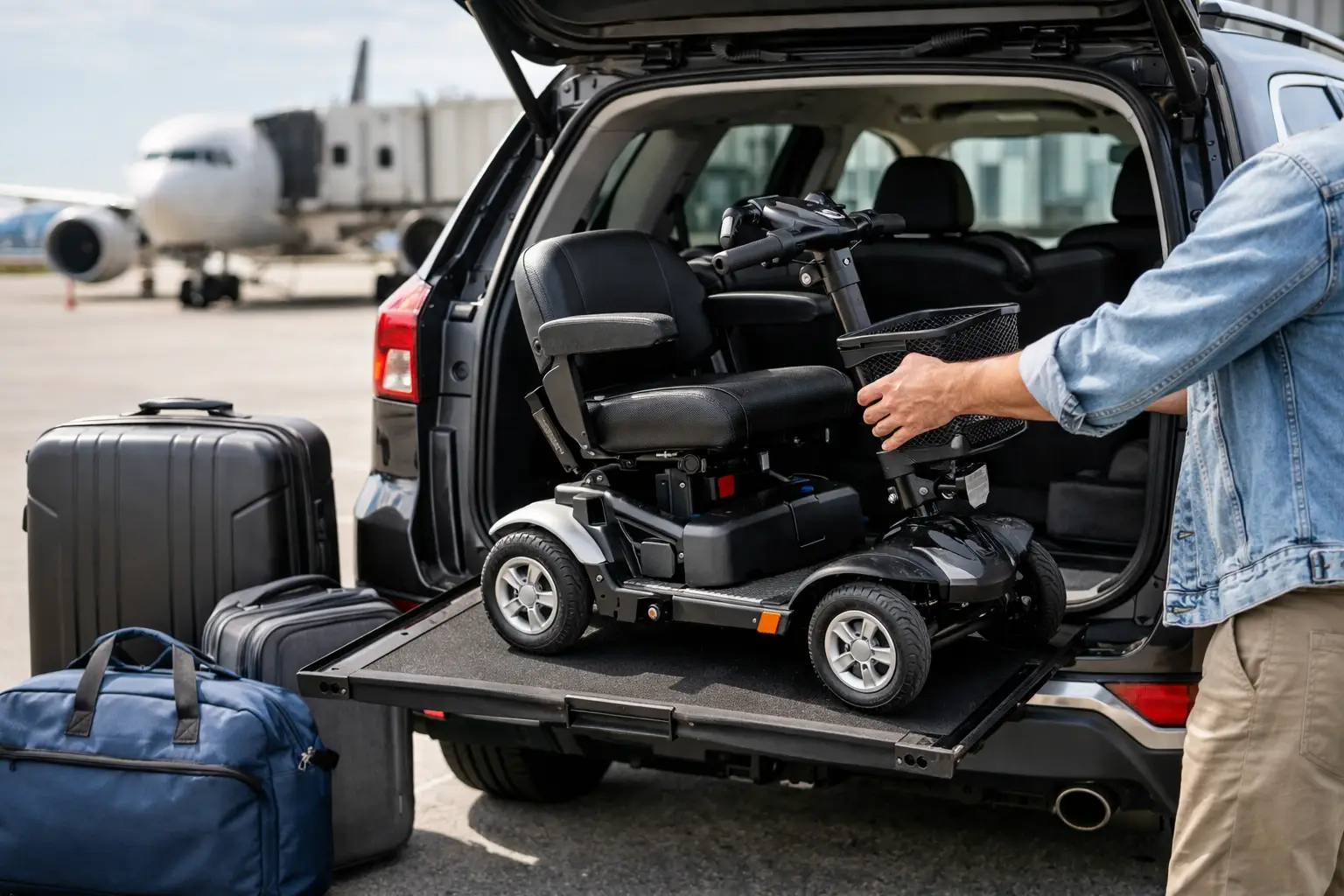
A mobility scooter is not ordinary luggage. It is your independence once you arrive, so learning how to pack mobility scooter properly is about far more than fitting it into a boot or handing it to airline staff. A rushed job can mean a loose battery cable, a damaged tiller, missing key or flat tyre at the point you most need the scooter to work.
The right method depends on your model, its weight and how you are travelling. A small folding scooter for a city break needs different preparation from a larger pavement scooter being transported in an adapted vehicle. The aim is the same: protect the scooter, keep essential parts with you, and make it easy for someone else to handle if they have to.
Start with the scooter manual and its real weight
Before buying straps, bags or extra padding, check the manufacturer’s manual. It tells you whether the scooter is designed to fold, split into pieces or remain upright during transport. It should also confirm the total weight, the heaviest individual component, battery type and any lifting points.
Do not rely on a retailer description or an estimate. The difference between 20kg and 30kg can decide whether a car boot is realistic, whether a family member can safely lift a section, or whether a train station can provide appropriate assistance. If the scooter breaks down into a seat, battery, rear motor section and front chassis, weigh the heaviest piece rather than adding up the total.
Take a few photos of the scooter before disassembly, including cable positions and any removable pins. They are useful when rebuilding it after a long journey, particularly if you are tired after a flight or have had help from someone unfamiliar with the model.
How to pack a mobility scooter for a car
For most UK holidays, the car is the simplest option, but it still needs planning. Empty the boot completely first. A scooter rarely fits around luggage, and trying to squeeze cases beside it can put pressure on the tiller, controls or brake lever.
If your scooter folds, remove the basket and loose accessories, fold it exactly as the manual shows, and secure any part that could spring open. A soft cover prevents scratches, but it does not stop the scooter moving. Use rated luggage straps attached to proper boot anchor points to keep it upright or in its approved transport position.
For dismantling scooters, start by switching off, removing the key and disconnecting the battery if the manual requires it. Keep pins, charging leads and the key in a clearly marked pouch that stays in the passenger compartment. The same goes for the battery on many portable models. It is too easy for small but essential parts to disappear under holiday bags.
Avoid placing heavy suitcases on the seat, armrests or tiller. These parts can look sturdy but are not designed to take a concentrated load. Put a folded blanket between sections if they touch, especially around the control panel and mudguards. Check that nothing is pressing the accelerator lever before closing the boot.
If lifting is difficult or unsafe, do not make it a test of determination. A boot hoist, ramp, scooter carrier or accessible vehicle may be the sensible answer. Independence includes choosing equipment that does not leave you or your travelling companion injured before the holiday begins.
Prepare the battery before any journey
Battery care is where packing a mobility scooter becomes more serious, particularly for air travel. Check the battery label well before departure. Most compact travel scooters use sealed lead-acid or lithium batteries, and the airline’s rules may differ for each type.
Airlines usually need advance notice that you are travelling with a mobility aid, its dimensions, weight and battery details. Ask what paperwork they require and whether the battery must remain fitted or be removed and carried into the cabin. Get the response in writing where possible. Airport and check-in staff may be helpful, but they cannot always override their airline’s battery policy at the desk.
For any journey, make sure terminals are protected from short circuits. Follow the manual rather than covering connections with improvised tape. If the battery is removable, use its proper protective case or a firm container that stops it being knocked about. Never pack a damaged, swollen, leaking or unusually hot battery for travel.
Charge the scooter fully before leaving, but do not assume it will be charged at your destination. Pack the correct charger and, for overseas trips, the appropriate plug adaptor. Check local voltage requirements too. Some chargers are dual voltage, others are not.
Protect vulnerable parts, not just the paintwork
The items most likely to cause problems are usually the ones that stick out. Remove the basket, cup holder, mobile phone mount, walking-stick holder and any shopping bag hooks. They can catch on doors, conveyor belts or other luggage and may damage the scooter’s steering column in the process.
Turn the key off and remove it. If your scooter has a freewheel lever, make sure it is in the drive position unless transport staff have specifically asked otherwise. A scooter left in freewheel can roll unexpectedly during loading.
Use light padding around the tiller, display, mirrors and armrests. A towel, small blanket or purpose-made cover is enough. There is no need to wrap the whole scooter like furniture, especially if staff need to identify controls and lifting points. What matters is preventing knocks to the components that would stop you using it.
Keep a small travel kit with the charger, key, user manual, tyre pump if relevant, puncture repair solution where appropriate, and any tools supplied with the scooter. Add a printed card with your name, mobile number, model name, weight and simple instructions such as “do not lift by tiller” or “keep upright”. It gives baggage handlers, drivers or hotel staff something clear to work from when you are not beside the scooter.
Flying with a mobility scooter: make the handover clear
At the airport, tell the assistance team how you want the scooter handled. Explain whether it folds, whether the battery is removable, where the freewheel lever is and which parts must not be lifted. Keep the instructions short and practical. You do not need to apologise for asking people to protect equipment you rely on.
Ask to stay on the scooter until the latest safe point, often the aircraft door, where airport procedures allow it. Take the key, battery if required, charger, seat cushion and removable accessories with you. Photograph the scooter immediately before handing it over, including its general condition and any existing marks.
When it is returned, inspect it before leaving the airport if you can. Check the tiller moves normally, the seat is secure, tyres are sound, the basket fittings are intact and the scooter powers on. Report damage straight away, even if you think you can manage temporarily. Waiting until you reach the hotel makes a claim harder and can leave you without practical support.
There is a trade-off here. A protective travel bag can reduce cosmetic damage, but it can also hide instructions and make handling awkward. For many scooters, visible labels, removable accessories and a clear handover are more useful than a bulky cover. It depends on the model and how it is being transported.
Do a final departure check
The evening before travel, do a short test run rather than simply switching the scooter on. Check the battery level, brakes, lights, horn, speed control and tyre condition. Listen for any new noise. If something feels wrong at home, it is unlikely to improve after several hours in a car or in an airport hold.
Then check the practical details: key with you, charger packed, battery paperwork printed, accessories removed, straps ready, and destination charging sorted. If you are travelling with someone else, show them how to release, fold or dismantle the scooter before you set off. It is much easier to explain in your own driveway than in a rainy station car park.
A well-packed scooter is not about treating it like fragile cargo. It is about arriving ready to get out, explore and keep control of your trip. Give it the same attention you give passports and medication, because for many travellers, it matters just as much.
0 Comments
Leave a Comment