
How to Find Step Free Attractions
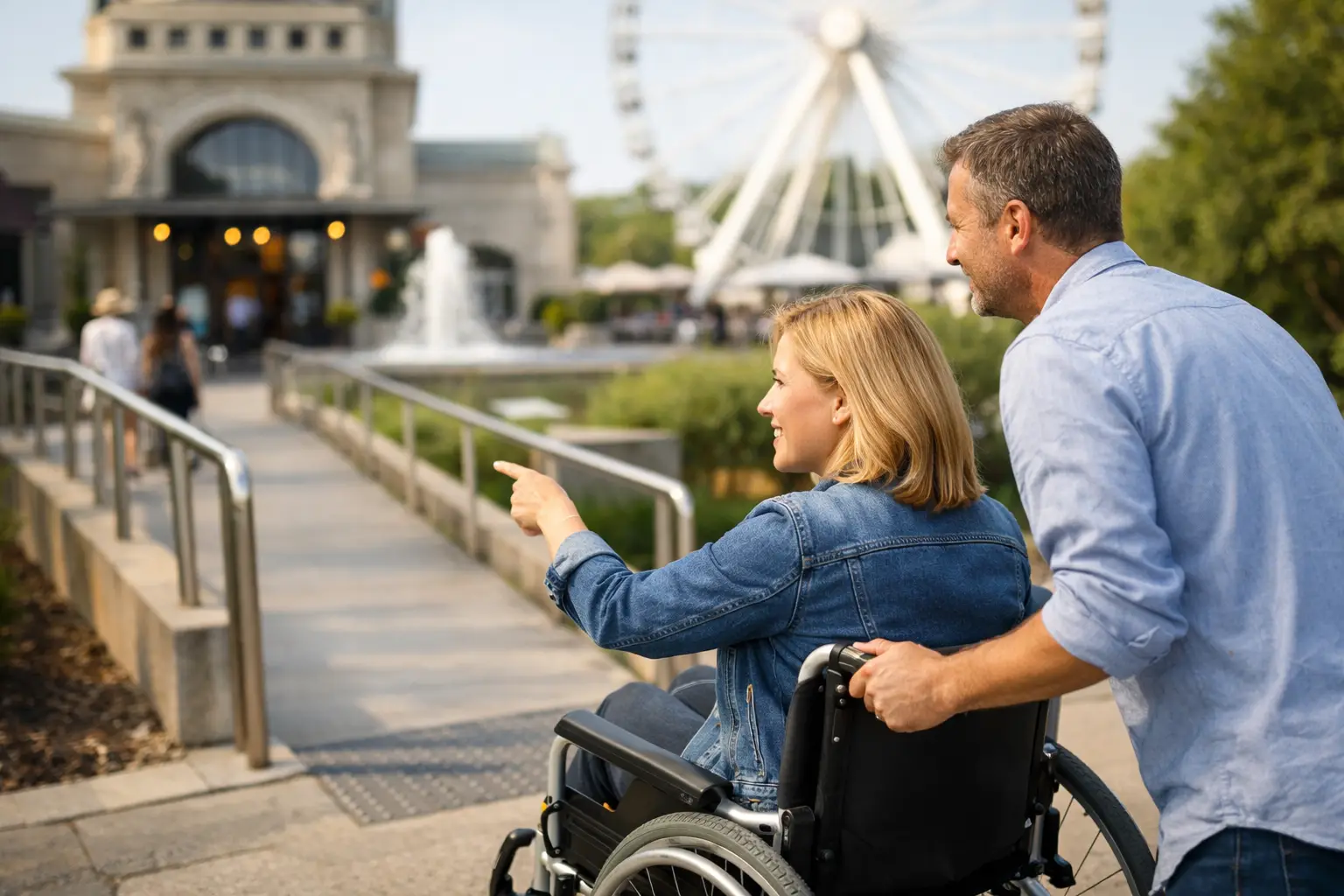
You can waste hours planning a day out, only to find the "accessible entrance" is round the back, up a steep path, through a heavy gate and only open if somebody spots you. That is why knowing how to find step free attractions properly matters. For wheelchair users, mobility scooter users and anyone travelling with limited mobility, step free on paper is not always step free in real life.
The good news is that you can cut down the guesswork. You will not remove every surprise, because accessibility information is still patchy and sometimes badly written, but you can get far closer to the truth before you leave home.
How to find step free attractions without relying on one sentence
A lot of attraction websites bury accessibility under a single line such as "wheelchair friendly". That tells you almost nothing. What you need is detail.
Start with the attraction's own accessibility page, but do not stop there. Look for plain facts rather than broad claims. If a venue says there is step free access, check whether that means the whole site, just the entrance, or only certain floors. A museum with a lift may still have galleries connected by short flights of steps. A heritage site may have one accessible route but miss out courtyards, towers or viewing points.
The most useful information usually covers entrance routes, lift access, adapted toilets, surface types, gradients, door widths and whether mobility scooters are allowed. If those points are missing, the page is incomplete no matter how friendly the wording sounds.
Photos can tell you more than the accessibility text. Look at entrance images, street view, visitor photos and videos. A single picture can reveal kerbs, gravel, manual doors or a ramp that is far steeper than it should be. If the attraction has social media, check recent posts as well. Access can change after building work, events or temporary closures.
Check the route, not just the building
One of the biggest mistakes people make is focusing only on whether the attraction itself is step free. The route to it matters just as much.
A venue may have a lift and accessible toilets, but if the nearest station has no lift, the pavement is broken up, or the drop-off point is on a hill, your day starts badly. For many wheelchair and scooter users, the route between transport and entrance is where the real barrier sits.
Look at where Blue Badge parking is located, whether there is an accessible bus stop nearby, and how far the walk or roll is from the car park. Check if the approach includes cobbles, loose stone, grass, steep gradients or busy road crossings. Historic towns are especially worth checking carefully because "character" often means awkward surfaces and narrow paths.
If you are using public transport, do not assume a major city attraction is easy to reach. Rail stations and Underground stops can still catch you out. Build the full route from station to entrance before you commit.
How to ask the right questions
If the website is vague, ring or email the attraction. This is often the quickest way to separate genuine access from marketing language. The trick is to ask specific questions.
Do not ask, "Is it accessible?" Most places will say yes, and you are back where you started. Ask whether the main entrance is step free, whether all public areas can be reached without stairs, whether there are ramps or lifts, and whether a mobility scooter can be used throughout the site. If you use a larger scooter, ask about turning space, narrow doorways and any size restrictions on lifts.
It also helps to ask about the awkward bits people forget to mention. Are there heavy manual doors? Is there a separate entrance? Are there sections with gravel or steep slopes? Are the accessible toilets open all day or locked with a radar key? If there is a café, gift shop or viewing platform, can you reach those as well?
The way staff answer tells you a lot. If someone can describe the layout clearly, that is a good sign. If they keep repeating "it should be fine" without detail, treat that as uncertain rather than reassuring.
Read reviews from disabled visitors
Official information has limits. Real-world reviews from disabled visitors are often more useful because they notice the details that matter when you are actually there.
Look for comments from wheelchair users, mobility scooter users and people travelling with carers. Pay attention to practical points such as whether lifts were working, whether staff knew what to do, and whether accessible toilets were easy to reach. If several people mention the same problem, take it seriously.
At the same time, remember that access is personal. A venue that works well for a manual wheelchair user may be awkward for a large pavement scooter. A place that is manageable for somebody who can transfer and walk a short distance may not work for someone who needs fully step free access throughout. Reviews are valuable, but they need to match your own needs.
That is where specialist accessible travel publishers are useful. First-hand reviews from people who actually travel with mobility equipment tend to be far more honest and practical than generic tourist round-ups. Andy Wright Travel has built trust precisely because lived experience spots issues that standard travel writing misses.
Watch for problem words in accessibility descriptions
Some words should make you pause. "Mostly accessible" usually means not fully step free. "Assistance available" can mean you need staff to use a side entrance or portable ramp. "Accessible route" may involve a long detour. "Suitable for wheelchairs" does not always include mobility scooters.
Heritage attractions are especially prone to soft wording. Castles, old houses and historic sites may genuinely try their best, but listed buildings come with compromises. You might get access to the grounds and ground floor, but not upper levels. That does not mean the trip is not worth doing. It just means you need the truth before you go.
The aim is not to dismiss places that have limitations. It is to know what those limitations are so you can decide whether the visit still works for you.
Compare facilities against your actual needs
Not every traveller needs the same level of access. This is where honest planning matters.
If you can manage a short ramp but not a steep one, note that down. If your scooter is heavy and cannot be lifted, portable ramp access may be useless. If you need a Changing Places toilet rather than a standard accessible loo, a basic facilities list is not enough. If you are travelling alone, routes that require staff assistance may feel very different from travelling with a partner or carer.
When you are deciding how to find step free attractions that genuinely suit you, think beyond the headline term. Step free is only part of the picture. Toilets, seating, charging points, shelter, queue management and distances across the site can all make the difference between a good day out and an exhausting one.
Use a simple pre-booking check
Before you book tickets, run through a short mental check. Can you get from your transport to the entrance without steps? Can you move around the main parts of the attraction independently? Can you use the toilet you need? Can you leave easily if the weather turns or you get tired?
If one of those answers is unclear, keep checking. It is far easier to spend another ten minutes researching than to lose a day, fuel, ticket money and energy on a place that is not properly accessible.
This does not mean every outing has to be over-planned. Sometimes you will still take a chance, especially if the attraction is nearby and the risk is low. But for bigger trips, expensive tickets or unfamiliar destinations, careful checking saves a lot of frustration.
Accept that step free can still come with compromises
Even when an attraction is genuinely step free, that does not always mean it is easy. You may still deal with busy lifts, long accessible detours, uneven outdoor sections or poor signage. That is not ideal, but it is different from being shut out completely.
The key is knowing which compromises you are happy to accept. Some people are fine with a slightly longer route if the rest of the site works well. Others need direct, independent access at every stage. Neither is wrong. Good planning is about finding places that respect the way you travel, not forcing yourself to cope with barriers just because the website says accessible.
A decent day out should not depend on luck. The more specific your checks, the better your odds of finding attractions that are genuinely step free, practical and worth your time. And when you do find places that get it right, keep a note of them. Reliable access information is still too hard to find, and every honest recommendation helps the next person travel with more confidence.
The best trips usually start with one simple decision - refusing to accept vague accessibility claims as good enough.
0 Comments
Leave a Comment