
How to Find Scooter Friendly Accommodation
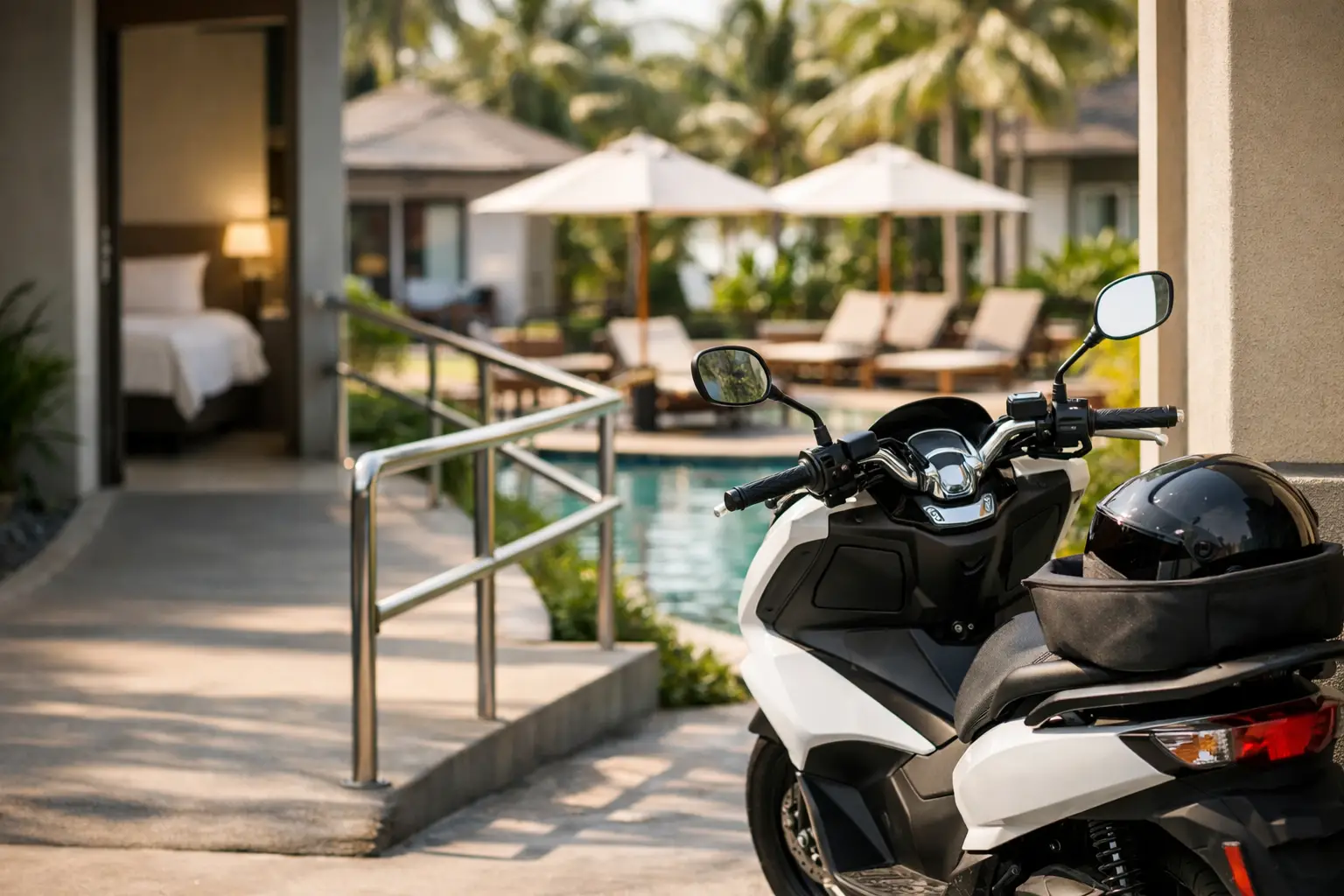
You can spot the problem straight away when a hotel says it is “accessible” but cannot tell you whether your mobility scooter will fit through the bedroom door, reach the bathroom or charge safely overnight. That is why finding scooter friendly accommodation takes more than ticking an accessibility filter. You need proper detail, because vague promises are no use when you are arriving tired and relying on your scooter from the moment you check in.
For scooter users, the difference between a good stay and a stressful one usually comes down to practical access, not marketing labels. A place can have a ramp at reception and still be completely wrong for your needs. Equally, a small guest house or holiday let that never uses the word “accessible” might actually work very well if the layout, entrances and bathroom are right. The key is knowing what to check and asking the right questions before you book.
What scooter friendly accommodation really means
Scooter friendly accommodation is not just somewhere with step-free access. It is somewhere that works for the full journey of your stay - arrival, getting to your room, moving around comfortably, using the bathroom, charging the scooter and leaving again without hassle.
That means the route from car park or drop-off point matters as much as the room itself. A property may offer an adapted room, but if there are steep external paths, heavy manual doors or a tiny lift, you are already dealing with barriers. The same applies inside the room. Clear floor space, sensible furniture layout and enough turning room can matter more than whether the property uses the right accessibility wording on its website.
This is where disabled travellers are often let down. Too many places think accessible means suitable for anyone with any mobility need. In reality, a manual wheelchair user, a powerchair user and a mobility scooter user can all need different things. A scooter-friendly room needs to work for the size, turning circle and charging needs of the scooter, not just offer a grab rail in the bathroom.
The checks that matter before you book
The first thing to establish is whether your scooter can get into the building and to the room without being folded, lifted or transferred. If staff say, “There are just a couple of steps but we can help,” that may be fine for one traveller and completely unworkable for another. Independence matters, and so does safety.
Ask for actual measurements where possible. Door widths, lift dimensions and the width of the route into the bathroom are far more useful than a general “yes, it should be fine”. If you use a larger mobility scooter, this becomes even more important. Many properties picture an access ramp and assume that solves everything, but a narrow corridor or awkward corner can still stop you dead.
Charging is another detail people leave too late. If your scooter is essential for getting around, you need to know where it can be charged, whether there is space to park it overnight and whether the room layout allows this without blocking exits. Some properties are happy for scooters to be charged in rooms. Others prefer a storage area. Neither is automatically right or wrong, but you need clarity before arrival.
Bathroom access also needs a proper conversation. A wet room can be excellent, but only if you can get into it and position yourself safely. A roll-in shower means little if the bathroom door is too narrow or the sink placement leaves no turning space. If you transfer from scooter to shower chair or seat, ask about that exact setup rather than assuming all adapted bathrooms are similar.
Questions to ask about scooter friendly accommodation
When you contact a hotel, flat or holiday park, keep your questions direct. Tell them what scooter you use and what you need to do independently. That gives you a much better chance of getting a useful answer.
A few practical questions usually reveal whether the property understands access or is guessing. Ask whether there are any steps anywhere on the route from arrival to the room. Ask for the width of the main entrance door, bedroom door and bathroom door. Ask whether the lift fits a mobility scooter and whether there is turning space outside it. Ask where you can charge the scooter overnight and whether accessible parking or a level drop-off point is available.
Photos and videos are worth requesting too. A member of staff can say a bathroom is spacious, but one photograph of the doorway, shower and floor area will tell you far more. If they cannot provide measurements, they may still be able to send images of key areas. For many travellers, that is enough to spot likely problems.
If the person answering your questions sounds unsure, do not ignore that instinct. It does not always mean the property is unsuitable, but it does mean you should push for better information. Real accessibility knowledge tends to show up quickly. Staff either know the room and can describe it clearly, or they fall back on general phrases that do not help.
Hotels, flats and holiday lets - what works best?
There is no single best type of scooter friendly accommodation. It depends on how you travel, whether you need support from staff and how much space you want.
Hotels can work well because they often have lifts, staffed reception and more formal accessibility policies. If something goes wrong, there is usually someone on site to help sort it. The trade-off is that hotel rooms can be tighter than they look online, especially around the bed and bathroom, and adapted rooms are not always designed with scooter users in mind.
Serviced flats and holiday lets often give you more space, which can make a huge difference if you use a larger scooter or need room for equipment. They can also be better for longer stays because you are not constantly manoeuvring around one compact room. The downside is inconsistency. One property may be excellent, while another describes itself as step-free but has a gravel drive, narrow internal doors or a bathroom that does not really work.
Holiday parks sit somewhere in the middle. Accessible caravans and lodges can offer decent space and parking nearby, but site layout matters. A well-designed unit is not much use if the route to reception, restaurant or entertainment area includes steep hills or poor surfaces.
Why location can matter more than the room
A room can be perfect and the trip can still be hard work if the surrounding area is not usable. That is why scooter friendly accommodation should always be judged alongside its location.
Check the surface outside the property, the distance from parking or transport, and whether the local area has dropped kerbs, level pavements and reliable access to shops, restaurants or attractions. If you are staying somewhere remote, think about whether a breakdown, flat battery or bad weather would leave you stuck.
This is especially important on city breaks. A hotel may be technically accessible, but if it is perched on a steep hill or surrounded by cobbles, you may spend the whole trip planning around that one obstacle. Sometimes the better choice is a more basic property in a much more practical location.
Red flags worth taking seriously
Some warning signs come up again and again. One is the phrase “partially accessible” with no explanation. Another is when staff say they have never had a scooter user stay before but are sure it will be fine. That is not evidence.
Be cautious if the website only shows the bed and never the bathroom, entrance or circulation space. The same goes for listings that mention accessible facilities but give no photographs, no dimensions and no clear description of routes through the property. If access depends on using a back entrance, staff assistance or portable ramps, that is not always a deal-breaker, but it does need proper thought.
There is also a difference between being welcomed and being manageable. You should not have to negotiate every doorway, ask staff to move furniture or rely on someone finding a charger socket behind a cabinet. If the stay sounds awkward before you have even arrived, it usually will be.
Building your own booking routine
The best way to avoid nasty surprises is to use the same booking routine every time. Start with the room and building layout, move on to charging and parking, then check the area around the property. Save photos, measurements and written confirmation, particularly if you have asked about something specific.
Over time, you build a clearer sense of what tends to work for you. That matters because access is personal. The right accommodation for one scooter user may be wrong for another depending on scooter size, transfer ability, whether you travel solo and how much support you need from staff.
That is why honest, experience-led travel content matters so much. Brands like Andy Wright Travel exist because disabled travellers need more than generic accessibility claims. We need practical detail that respects how travel really works.
A good stay should let you focus on the trip itself, not on whether you can get through the next door. When accommodation genuinely works for your scooter, it gives you more than convenience - it gives you freedom to travel on your own terms.
0 Comments
Leave a Comment