
How to Choose Accessible Accommodation
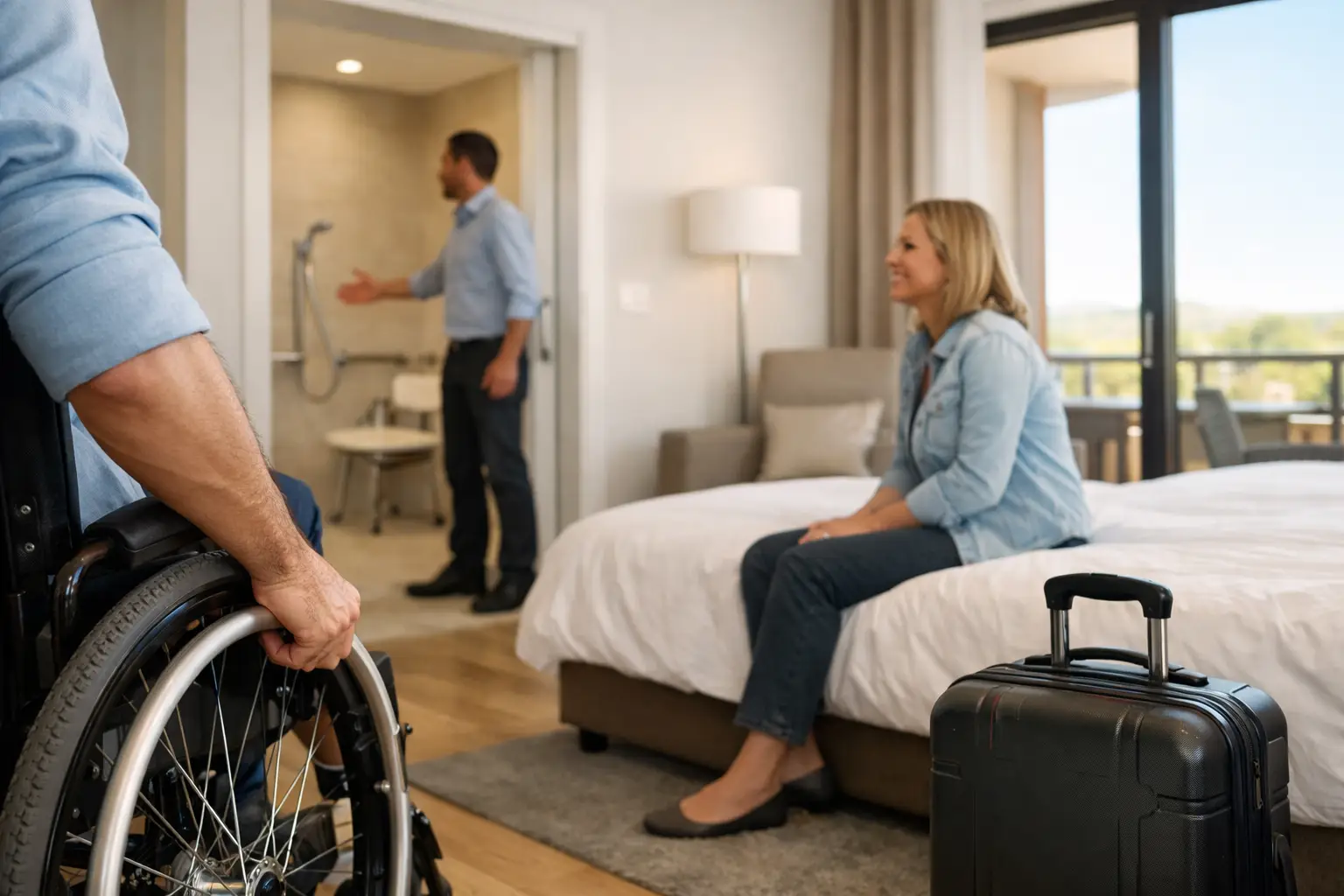
You can spot the problem in seconds. A hotel says it is accessible, the photos look fine, then one badly placed step at the entrance or a tiny bathroom turns the whole trip into hard work. That is why knowing how to choose accessible accommodation matters so much. For wheelchair users, mobility scooter users, and anyone planning around reduced mobility, the difference between a good stay and a stressful one often comes down to the details no glossy listing bothers to mention.
Generic accessibility claims are not enough. "Step-free" can mean a steep ramp. "Accessible bathroom" can mean a standard bathroom with one grab rail. "Ground floor room" can still involve a long route, heavy fire doors, and a shower you cannot actually use. The aim is not to find accommodation that sounds accessible. It is to find somewhere that works for your body, your equipment, and the way you travel.
How to choose accessible accommodation without guesswork
The best starting point is to ignore the label and focus on your non-negotiables. Accessibility is not one fixed standard in real life. A manual wheelchair user may need different things from a powerchair user. A mobility scooter user may be fine with a small threshold but need proper charging space. Someone who can transfer may cope with a standard bed height, while someone else needs hoists or plenty of clearance.
Before you compare properties, write down what you actually need rather than what would be nice to have. That usually includes entrance access, lift access if the room is not on the ground floor, bathroom layout, bed height, turning space, and whether your scooter or wheelchair can be charged safely in the room. If you are travelling with a carer, partner or family member, think about sleeping arrangements and whether there is enough space for both of you to move around comfortably.
This step sounds basic, but it stops you being talked into something that is only vaguely suitable. If a place cannot meet the essentials, it is the wrong place, however good the location or price may be.
Start with the practical basics
Location matters, but not just in the usual travel sense. A central hotel is no use if the street outside is steep, paved badly, or full of dropped kerbs that do not line up properly. Likewise, a lovely countryside stay may become limiting if parking is awkward or the route from the accessible room to the restaurant involves gravel, ramps or uneven surfaces.
When checking a property, look beyond the room itself. Ask where the accessible parking bays are, how close they are to reception, and what the route is like from car park to entrance. If you are arriving by taxi or accessible transport, find out whether there is a level drop-off point. For many disabled travellers, the external approach is the first real test of whether a place understands accessibility or merely advertises it.
Inside, think about the whole journey. Can you get through the main entrance independently? Are there heavy manual doors? Is reception desk height manageable? If there is a lift, ask for the internal dimensions, not just whether one exists. Some lifts are fine for a manual chair but useless for a larger powerchair or mobility scooter.
The room itself - where claims often fall apart
Room descriptions are usually where hotels become most vague. This is where direct questions save you a lot of trouble.
Door width is one of the biggest issues. A room can be labelled accessible, but if the bathroom door is too narrow for your chair or scooter, that label means nothing. Ask for actual measurements for the bedroom door, bathroom door, and any tight corners inside the room. If you use a larger scooter, check whether it can enter the room and still leave enough space to transfer or move around.
Then ask about turning space. Hotels often mention floor area but not what is blocking it. Fixed furniture, bedside tables, decorative chairs and luggage racks can make a decent-sized room feel cramped very quickly. If you need room to turn fully, say so clearly and ask whether staff can remove loose furniture if needed.
Bed height can also make or break a stay. Too high and transfers become difficult. Too low and getting up becomes hard work. This is one of those details many properties never mention online, but decent staff should be able to measure it for you. It is not fussy to ask. It is basic planning.
Bathrooms deserve extra scrutiny
If there is one area where you should never rely on a vague description, it is the bathroom. Terms like wet room, roll-in shower and accessible bathroom are used far too loosely.
Ask whether the shower is genuinely level access or whether there is a lip. Even a small lip can be a problem depending on your setup. Check whether there is a fixed shower seat or a portable one, and whether it is securely mounted if fixed. Ask where the grab rails are placed, because the wrong position can make them almost pointless.
The toilet setup matters just as much. You need to know the toilet height, the transfer space on each side, and whether there are fold-down rails. Some bathrooms technically include rails but leave no room for a side transfer. Others have enough floor space but put bins or radiators in the way.
A basin can create problems too. If you need to roll underneath it, ask whether it is open beneath or mounted over a vanity unit. Mirrors, towel rails and shelving should also be considered if you need to use them from a seated position.
Photos help here, but only if they are current and clear. If the hotel sends one carefully cropped image of a shower corner, that is not enough. Ask for wider shots of the whole bathroom.
How to choose accessible accommodation by asking the right questions
This is the part many travellers skip because they feel awkward. Do not. A phone call or email can tell you far more than any booking platform ever will.
The quality of the answer matters almost as much as the answer itself. If a member of staff understands what you are asking, checks properly, and comes back with specifics, that is a good sign. If they keep repeating that the room is accessible without answering the actual question, treat that as a warning.
Good questions are simple and precise. Ask for measurements, not opinions. Ask whether there are steps, not whether the property is easy to access. Ask whether your scooter can be charged in the room and where. Ask whether the accessible room is near the lift, restaurant, or exit if that matters to you. If breakfast is served in another part of the building, check access to that area too.
If you use specialist equipment, say so. Mention your chair or scooter type, approximate width, and whether you need transfer space on a particular side of the bed or toilet. The more specific you are, the more useful the answer is likely to be.
Photos, reviews and floor plans - use them properly
Photos are useful, but only if you read them like a traveller who knows what can go wrong. Look for thresholds, carpet thickness, furniture layout, shower edges, balcony steps, and whether the entrance appears level. Zoom in. Marketing images often reveal more than the hotel realises.
Reviews can help, but treat them carefully. One person saying a hotel was perfect does not mean it will suit you. Their access needs may be completely different. What you want from reviews is detail. Comments about ramp gradients, bathroom layouts, door widths, parking, and staff knowledge are far more valuable than general praise.
If a property has a floor plan or can send one, even better. That can help you judge route widths and room layout more accurately than polished photography.
When to compromise and when not to
Sometimes you will not find somewhere that ticks every box, especially in older buildings, rural areas, or historic city centres. That does not always mean you should walk away, but you need to be honest about what is manageable and what is not.
A slightly longer route to the dining room may be workable. A shower with a small lip might be manageable for one traveller and a complete barrier for another. On the other hand, if you cannot get into the bathroom independently, cannot charge your scooter safely, or cannot enter the building without help you do not want, that is not a small compromise. That is a bad booking.
This is where lived experience matters. Disabled travellers are often expected to be grateful for half-solutions. You do not need to lower your standards just because a property calls itself accessible.
Book smart and get confirmation in writing
Once you have found somewhere suitable, make sure the booking notes clearly state the accessible features you were promised. If possible, get confirmation in writing by email. That gives you something to refer back to if there is confusion on arrival.
It is also worth confirming shortly before travel, especially if accessible rooms are limited. Mistakes happen, and the last thing you want is to arrive and find your room has been allocated elsewhere or that a refurbishment has changed the layout.
A bit of extra checking can feel tiring when you just want to get the holiday booked. But it is far less tiring than turning up somewhere that leaves you stranded, uncomfortable, or dependent on constant help.
Choosing accessible accommodation is rarely about finding perfection. It is about finding a place that supports your independence, respects your practical needs, and lets you focus on the trip rather than the obstacles. Ask the awkward questions, trust your instincts, and remember that a proper accessible stay should make travelling feel possible, not like a favour.
0 Comments
Leave a Comment