
How to Check Step Free Access Properly
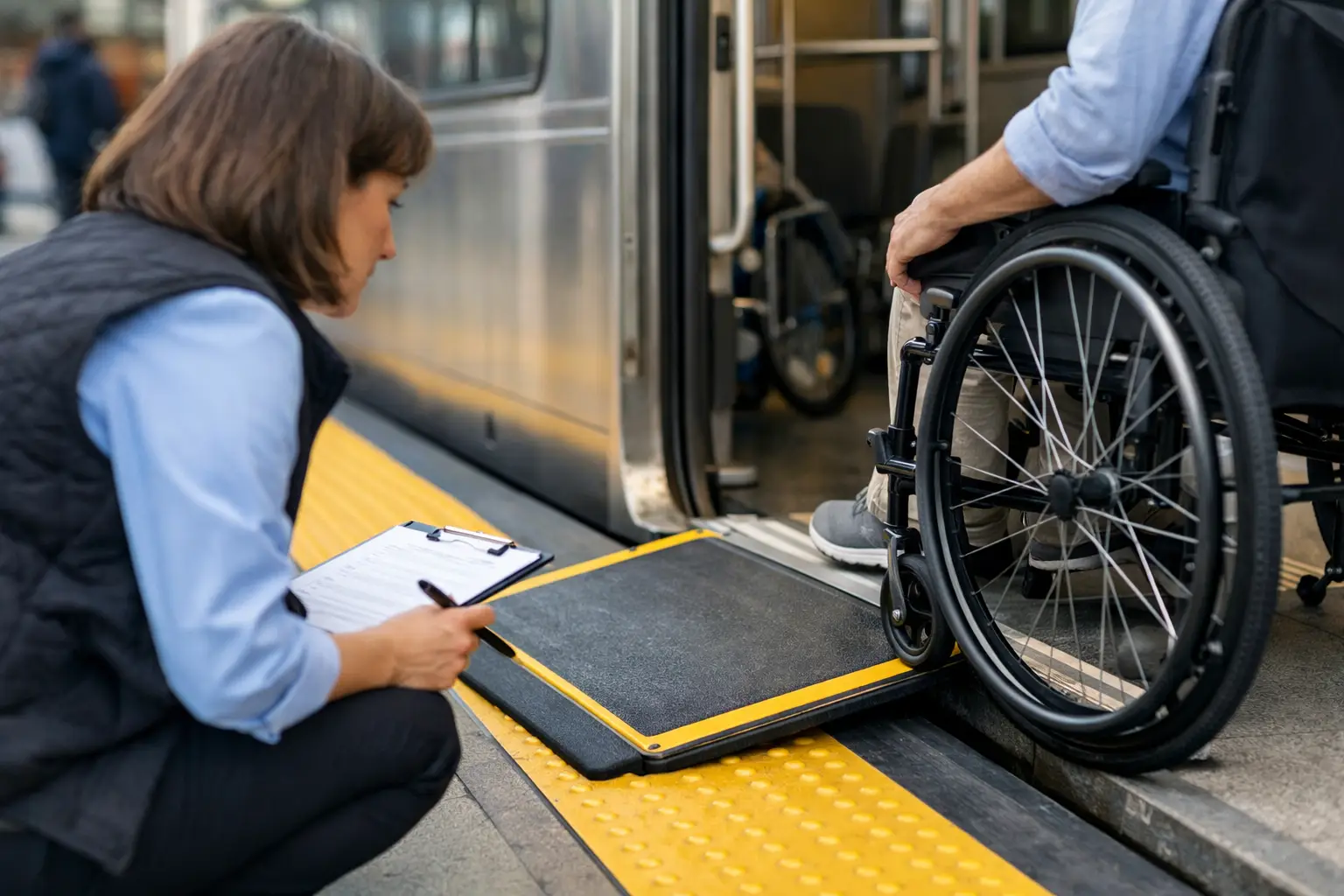
A venue saying it has "accessible access" tells you very little when you use a wheelchair or mobility scooter. One small step, a heavy manual door, or a lift that is often out of order can be the difference between a smooth day out and being stuck outside. That is exactly why knowing how to check step free access properly matters before you book, travel or turn up.
Plenty of places use accessibility as a broad label, but step free access is a specific thing. It usually means you can get from the street or entrance to the main areas without needing to climb steps. The problem is that many businesses, stations and attractions use the term loosely. They may count a side entrance, a goods lift, or a ramp so steep it is no real use unless you have assistance.
If you have travelled with mobility equipment for any length of time, you already know the gap between what is advertised and what is actually usable. The safest approach is to treat every claim as a starting point, not the final answer.
What step free access actually means
When you check step free access, you need to think beyond the front door. A place is not truly step free just because there is one ramp at the entrance. You need to know whether the full route you need is step free, including arrival, entry, toilets, lifts, seating areas, platforms, bedrooms or key visitor spaces.
For example, a railway station may be step free from the ticket hall to one platform but not the other. A hotel may have step free access into reception but no lift to upper floors. An attraction may have an accessible entrance and then a steep route inside that rules out independent use.
That is why the better question is not "Is it step free?" but "Is the exact route I need step free and usable with my equipment?"
How to check step free access before you go
The first check is always the official source, but stop there and you are taking a gamble. Official websites can be outdated, vague or written by someone who does not understand what wheelchair or scooter users actually need.
Start by looking for the access page, venue map, station guide or room details. You want specifics. Look for phrases such as step free entrance, lift access, level access shower, platform access, ramp gradient, door widths and accessible toilet location. If the wording is fluffy and unspecific, that is a warning sign.
Photos matter just as much as text. If a hotel says it is accessible, look closely at entrance shots, bathroom pictures and corridor images. If a station claims step free access, check whether there are visible lifts, ramps or dropped kerbs. One good photo can tell you more than a paragraph of marketing copy.
Then move on to recent real-world evidence. Reviews, travel forums, social media posts and video walk-throughs often reveal the practical detail that official pages miss. A disabled traveller mentioning a narrow lift or a broken access gate is often more useful than the venue's own accessibility statement. If you can find content from another wheelchair or scooter user, even better.
Questions to ask when websites are vague
If the information is not clear, contact the place directly. Email is useful because you have a written record, but a phone call can be quicker if you need answers fast. Either way, ask specific questions. General questions lead to general replies.
Instead of asking "Do you have step free access?" ask things like: is there any step from the pavement to the entrance, is there lift access to all floors, what is the width of the bedroom and bathroom door, can a mobility scooter get from reception to the room without steps, and is the accessible toilet on the same level as the main area?
If it is a station or transport hub, ask whether every platform you may need is reachable step free, whether lifts are working reliably, and what happens if there is disruption. A route that works perfectly on paper can fall apart if one lift is out of service.
Pay attention to how they answer. A confident, detailed reply usually suggests they know their access arrangements. A vague answer such as "we should be fine for wheelchairs" usually means they do not.
How to check step free access for trains and stations
Rail travel is one of the biggest areas where wording can catch people out. Some stations are step free only in one direction of travel. Some have ramps that require staff help. Some are technically accessible, but only if lifts are working and staff are available when you arrive.
When you check step free access for rail journeys, do not just check your departure station. Check the arrival station and any interchange as well. One inaccessible change can wreck the whole route.
Look at station access notes carefully. You want to know whether there is step free access from street to platform, whether there is a gap or step between train and platform, and whether booked assistance is needed. If you rely on a mobility scooter, also consider space on board and whether the operator accepts your scooter type and size.
It is often worth having a backup station or route in mind. That may sound overcautious, but it can save the day if a lift fails or staff support does not appear when it should.
Hotels: where step free often stops at reception
Hotels are notorious for broad accessibility claims. Many will describe themselves as accessible because they have a ramp into reception and one larger room. That does not mean the whole stay will work for you.
You need to know whether the full route is step free from the car park or drop-off point to reception, lift, room, restaurant and any accessible toilet. If breakfast is served in a lower level dining room with no lift, that matters. If the accessible room has a bathroom lip you cannot manage safely, that matters even more.
Always ask for actual measurements if door widths, turning space or shower access are critical for your setup. "Wheelchair friendly" is not a measurement. If possible, ask for photos of the exact accessible room and bathroom, not a generic room type.
For mobility scooter users, charging arrangements are worth checking too. A hotel may be step free but have limited space to store or charge a scooter safely.
Attractions, restaurants and older buildings
Historic sites, small independent venues and older town centre buildings are often the hardest to judge. Some do a good job with ramps, lifts and alternative entrances. Others are working around serious structural limits.
This is one of those areas where it depends. A listed building may genuinely have partial access only, and at least that is honest. The real problem is when partial access is dressed up as full access.
Ask whether all public areas are step free or only some. If there is an alternative entrance, ask whether it is open all day or only when staff are free to unlock it. If there is a portable ramp, ask whether it is always available and whether you need to call ahead. If there is accessible seating, ask where it is and how you reach it.
Restaurants can be especially awkward because one small threshold, tightly packed tables or an inaccessible toilet can make the visit stressful. Here again, photos and direct questions are your friend.
Red flags that should make you double-check
Some phrases should make you pause. "Accessible for most guests" is vague. "There is just one small step" may be fine for one person and impossible for another. "Assistance can be provided" sounds helpful, but not everyone wants or can rely on being pushed, lifted or escorted.
Another red flag is when a place avoids measurements altogether. If they cannot tell you whether the doorway is 70cm or 90cm wide, they probably have not assessed access in a practical way.
Old photos are another issue. A venue may have renovated, changed layout or lost an access route since the images were uploaded. Try to find the most recent evidence you can.
Why lived experience matters more than labels
This is where disabled-led travel content earns its keep. People who actually travel with a wheelchair or scooter tend to notice the details that glossy access statements miss - the slope from the pavement, the weight of the door, the awkward turn into the toilet, the distance from lift to room.
That practical eye makes all the difference. It is also why so many travellers turn to brands like Andy Wright Travel for honest, ground-level information rather than relying only on generic venue claims.
You do not need perfection to travel well. You do need accurate information. Sometimes a place with partial access can still work if you know exactly what to expect and can plan around it. The trouble starts when you are told it is step free and discover the catch when you arrive.
The best habit you can build is simple: verify the route, not the label. Check the details, ask the awkward questions, and trust evidence over reassurance. A few extra minutes before booking can save hours of stress later - and make it far more likely that the trip feels like freedom, not a battle.
0 Comments
Leave a Comment