
How to Book an Accessible Hotel Properly
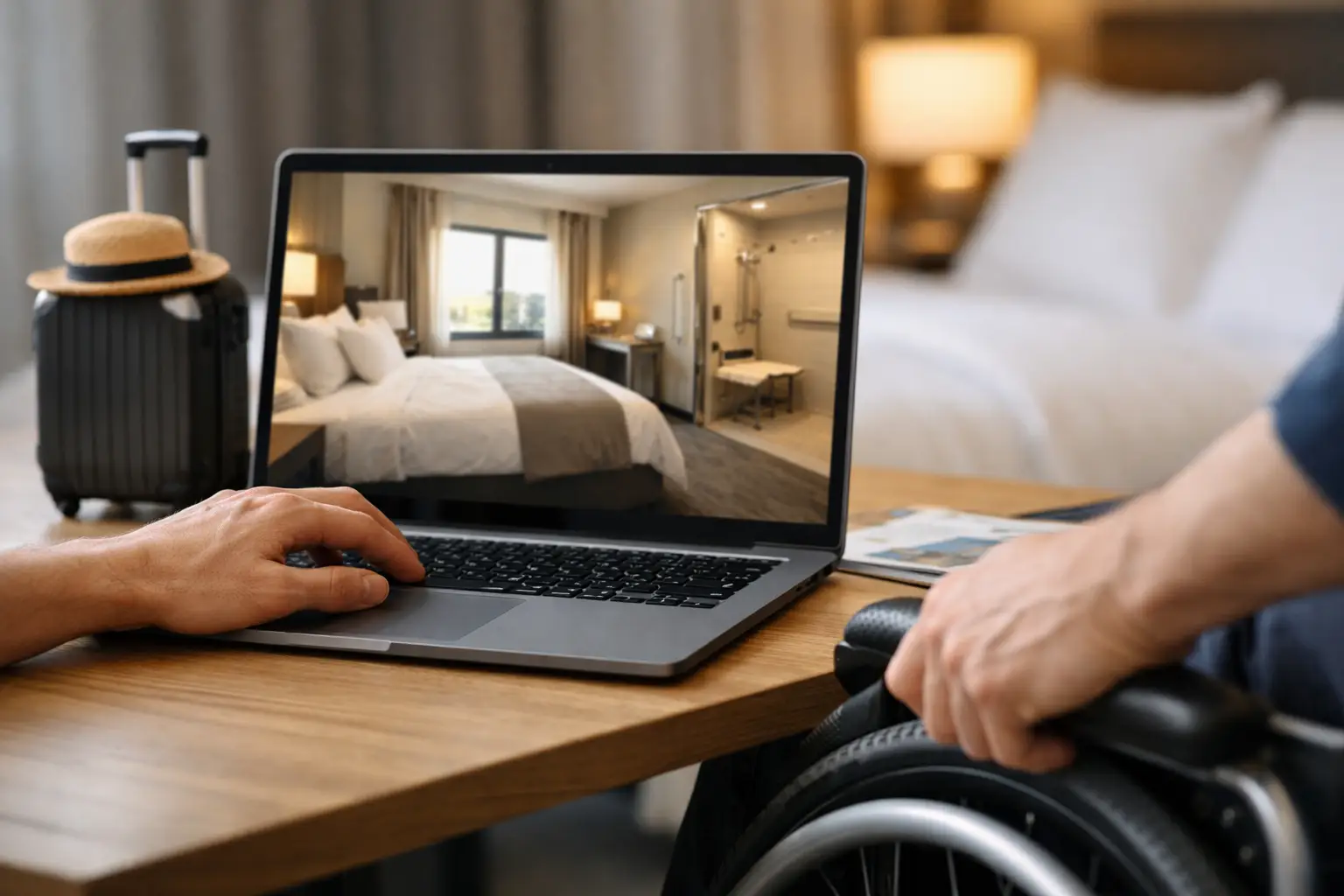
You can lose hours comparing hotels, tick the accessible filter, read the room description, and still turn up to find a step at the entrance, a bathroom door too narrow, or a bed you cannot transfer into safely. That is why knowing how to book accessible hotel stays properly matters. For wheelchair users, mobility scooter users, and anyone planning around reduced mobility, the booking itself is only half the job. The real work is checking whether the place will actually function for you.
Generic booking sites are often the first problem. They treat accessibility like a simple yes or no, when in reality it is a series of practical details. A hotel might call itself accessible because it has a lift, but that tells you nothing about the width of the room door, the height of the shower lip, whether a scooter can turn inside the bedroom, or if the so-called wet room is actually usable. If you want a holiday with less stress, you need to book with a healthy level of scepticism.
How to book accessible hotel without relying on filters alone
Filters are useful for narrowing the list, but they should never be the reason you book. Think of them as a starting point, not proof. A property marked accessible might have one adapted room, and that room may not suit your equipment or your transfer needs.
Start by reading every part of the room description, not just the accessibility label. Look at the photos carefully. If the hotel only shows a wide shot of the bedroom and no bathroom, that is usually a sign you need more information. Check whether the listing mentions step-free access, roll-in shower, grab rails, lift access to all floors, lowered sinks, bed height, and space beside the bed. If those details are missing, assume nothing.
A lot depends on how you travel. A manual wheelchair user may manage in a room that would be awkward for a larger powerchair or mobility scooter. Someone who can stand briefly may cope with a small shower lip, while someone else cannot. Accessibility is personal. The right room for one disabled traveller can be completely wrong for another.
Ask the hotel the questions that actually matter
Before you pay, contact the hotel directly. Email is usually best because you get a written record, but if you ring them, follow it up in writing. Avoid vague questions like, “Is your hotel accessible?” You are far more likely to get a useful answer if you ask for specific measurements and features.
Ask whether there is step-free access from the street or car park to reception, whether there are any heavy manual doors, and whether the lift fits your wheelchair or scooter. Ask for the width of the bedroom and bathroom doors at the narrowest point. Ask whether the shower is genuinely roll-in or whether there is a lip. Ask if there is space to park and charge a mobility scooter safely inside the room or in a secure area.
Bed height matters more than many hotels realise. If you need to transfer from a wheelchair, a bed that is too high or too low can turn a manageable stay into a difficult one. The same goes for space on both sides of the bed. Some adapted rooms still cram furniture into every corner, which leaves no turning room and no practical transfer space.
If you use a hoist, ask whether the room can accommodate one and whether there is enough clearance under the bed if you are bringing your own. If you need a shower chair, ask whether it is fixed or portable and what type it is. Hotels often say they have a shower seat, but that can mean anything from a solid fold-down seat to a flimsy plastic stool.
Photos and floor plans tell you what marketing copy will not
Good accessible hotel booking often comes down to evidence. Ask the hotel to send current photos of the adapted room, bathroom, entrance, and any route from reception to the room. If possible, ask for photos taken on a mobile phone rather than polished marketing shots. You want to see real angles, real doorways, and real floor space.
A floor plan can also help, especially if you travel with a larger chair or scooter. Even a rough sketch is better than a blanket promise that the room is spacious. Spacious means different things to different people. A hotel manager may think a room feels roomy because two walking guests can move around it. That tells you very little if you need turning space.
This is where experience-led content is valuable. Brands like Andy Wright Travel exist because disabled travellers need more than broad claims. Real-world detail beats sales language every time.
Check the whole journey, not just the room
One of the biggest mistakes people make when working out how to book accessible hotel accommodation is focusing only on the bedroom. A suitable room is useless if you cannot get into the building, reach breakfast, or leave the hotel independently.
Check the entrance first. Is there a ramp, and if so, how steep is it? Is there an alternative accessible entrance hidden around the back? If that entrance is used, is it open at all times or only when staff are available? These details matter when you arrive late, travel alone, or simply do not want to feel like a problem every time you come and go.
Then look at the public areas. Is the restaurant step-free? Is the bar on a different level? Is there an accessible toilet on the ground floor? If breakfast is served in a basement dining room with no lift, that changes the experience completely.
Parking and drop-off are just as important. If you drive, ask where accessible parking spaces are located and whether they are level. If you arrive by taxi, ask whether there is a straightforward drop-off point near the entrance. Cobbles, steep driveways, and long gravel paths can be a nuisance or a complete barrier depending on your setup.
Booking direct can make life easier
Third-party sites are fine for research, but booking direct often gives you more control. You can confirm that the correct accessible room has been assigned, add notes about your equipment, and ask for written confirmation of the features you need. It also reduces the risk of turning up and being told that your request was “not guaranteed”.
If you do book through a third-party platform, contact the hotel straight away afterwards. Confirm that they have allocated the adapted room itself, not just added an accessibility request to a standard booking. Those are very different things.
Be especially careful in large hotel chains. Some are excellent, but consistency varies from one property to another. A brand name does not guarantee the same accessible layout in every location. Treat each hotel as its own case.
Red flags that should make you pause
If staff cannot answer basic access questions, that is a warning sign. If they keep repeating that the hotel is wheelchair friendly but cannot provide door widths or bathroom details, press pause. The same applies if they promise to “do their best” instead of confirming the room features clearly.
Another red flag is when the accessible room is described in terms of preference rather than function. Phrases like “larger room”, “easy access”, or “suitable for less mobile guests” are too vague on their own. You need specifics.
Watch out too for older hotels in historic buildings. Some do accessibility very well, but many work around their limitations with partial solutions. That may still be enough for some travellers. It may be nowhere near enough for others. This is one of those situations where honesty beats optimism.
A simple way to decide if a hotel is right for you
Try judging the hotel against your non-negotiables, your useful extras, and your deal-breakers. Non-negotiables are the things you must have, such as step-free entrance, roll-in shower, or space to charge a scooter. Useful extras might be an on-site restaurant or accessible parking. Deal-breakers are the things that would make the stay unsafe, exhausting, or undignified.
That approach stops you being swayed by attractive photos or a good rate. A cheaper room is not a bargain if it leaves you stranded in the bathroom or unable to get to breakfast without help.
There is no perfect script for how to book accessible hotel accommodation because every traveller has different needs. But there is a reliable mindset: trust detail, not labels. Ask awkward questions. Get answers in writing. And if a hotel seems evasive, move on. A good stay starts long before check-in, and the right information gives you something far more useful than a deal - it gives you confidence to travel on your own terms.
0 Comments
Leave a Comment