
How to Avoid Inaccessible Hotel Rooms
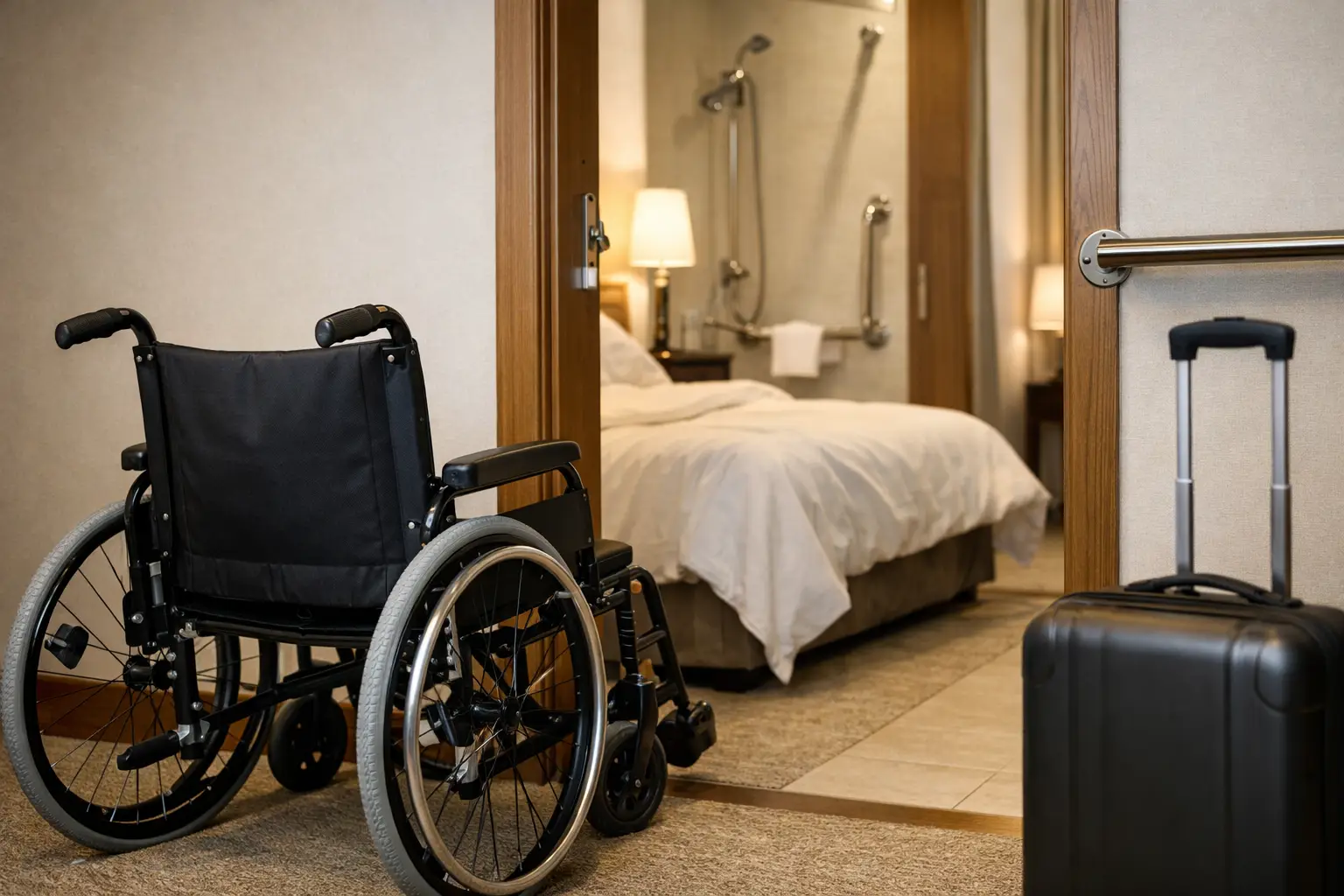
You do not usually find out a hotel room is inaccessible when you are calmly comparing prices. You find out after a long journey, when the so-called accessible room has a step into the bathroom, a bed too high to transfer onto, or doors too narrow for the chair or scooter you actually use. That is exactly why knowing how to avoid inaccessible hotel rooms matters so much. A bad room is not a minor inconvenience. It can wreck the whole trip.
The biggest problem is that many hotels use the word accessible far too loosely. One hotel may mean level access, a proper wet room and enough turning space. Another may mean there is a lift somewhere in the building and a grab rail by the loo. If you rely on a wheelchair or mobility scooter, that gap in understanding is where most booking mistakes happen.
Why hotel accessibility claims go wrong
A lot of hotel staff are not trying to mislead you. They simply do not understand what practical access looks like on the ground. If the room is bigger than average, they may describe it as wheelchair friendly. If there is a walk-in shower with a lip on the tray, they may still call it step-free. If the hotel has one adapted room, they may assume it suits everyone.
That is why broad labels are not enough. Accessibility is not one thing. It depends on your equipment, your transfer method, whether you travel solo, and what support you need in the bathroom. A room that works for one wheelchair user may be completely unusable for another.
How to avoid inaccessible hotel rooms before you book
The safest approach is to treat every booking as if the website information is incomplete, because it often is. Photos help, but they rarely show the things that matter most, such as shower thresholds, bed clearance or whether there is enough room to approach the toilet from the side.
Start by checking whether the hotel gives detailed access information or just generic promises. If the page only says accessible rooms available, that is not a good sign. If it lists door widths, bathroom layout, lift dimensions and parking arrangements, you are dealing with somewhere that at least understands the questions.
Then contact the hotel directly. Not the booking platform, not a central reservations line reading from a script if you can avoid it. Speak to the property itself and ask specific questions about the exact room you may be given. If the staff member cannot answer, ask them to go and physically check. This is not being difficult. It is basic trip planning.
Ask about the room, not the category
One of the most common mistakes is accepting reassurance about an accessible room type rather than a particular room number. Hotels are not always consistent. Two adapted rooms in the same building can be very different. One may have a proper roll-in shower while another has a shower over the bath with grab rails. One may have space on both sides of the bed while another only on one side.
Ask whether they can note and confirm the specific room allocated to you. If that is not possible until closer to arrival, ask for the exact features of every adapted room they might assign. You need to know what could happen if they move bookings around.
This is also where experience matters. If a staff member keeps saying things like fairly wide, quite spacious or should be fine, press further. Those phrases usually mean nobody has measured anything.
The questions that stop nasty surprises
If you want to know how to avoid inaccessible hotel rooms in a practical way, the answer is simple: ask blunt, measurable questions. You do not need a polished conversation. You need facts.
Ask for the width of the bedroom door and bathroom door at the narrowest point. Ask whether the shower is genuinely roll-in or whether there is a lip. Ask if there is a fixed shower seat or a portable one. Ask the height of the bed from floor to mattress top. Ask whether there is clear floor space on both sides of the bed for transfer.
In the bathroom, ask where the grab rails are and whether the toilet has transfer space on the left, right or both sides. Ask whether the sink can be used from a seated position and whether the mirror is low enough to be useful. If you use a mobility scooter, ask where it can be stored and charged safely.
Also ask about the route to the room. A perfectly adapted bedroom is no use if there are steps at the hotel entrance, a heavy manual door you cannot manage alone, or a lift too small for your chair or scooter. Accessibility starts at the kerb, not the bedside table.
Why photos and videos matter more than promises
If the hotel can send current photos of the room and bathroom, that is often more useful than a long conversation. You are looking for the layout, not the décor. A clear photo will show whether the shower area is actually level, whether the toilet is boxed into a corner, and whether turning space looks realistic.
Video is even better. A short walk-through filmed on a phone can reveal tight corners, awkward thresholds and furniture placement far better than promotional images. If a hotel is confident in its accessible room, it should not be a struggle to provide this.
If they refuse or keep sending stock images, take that as a warning sign. It does not always mean the room is bad, but it does mean you are still guessing.
Booking platforms are useful, but limited
Online booking sites can be handy for comparing prices and locations, but they are poor at handling detailed access needs. Filters such as wheelchair accessible often mean very little. Sometimes they refer only to public areas. Sometimes they are based on hotel self-description with no proper checks behind it.
Use those platforms to narrow down options, then verify everything yourself. Never assume the notes in a third-party listing match the reality of the room. If you do book through a platform, follow up with the hotel in writing and ask them to confirm the access features you need. That way, there is a clear record.
Red flags that usually mean trouble
A few warning signs come up again and again. If staff sound vague, rushed or irritated by basic access questions, that usually tells you all you need to know. The same applies if they say nobody has ever asked before. Disabled travellers ask because the details matter.
Be cautious if a hotel says the room is accessible because it is on the ground floor. Ground floor does not mean suitable. Be cautious if they describe a bath with grab rails as adapted without mentioning a separate shower. Be cautious if they say all wheelchairs are different in a way that shuts down the conversation rather than helping you work out whether the room fits your needs.
And if the answer to several questions is probably, most likely or I think so, keep looking.
It depends on your setup
There is no universal checklist that suits every disabled traveller. If you can manage a small bathroom threshold with assistance, your acceptable options are wider than someone who needs fully level access and independent transfer space. If you travel with a folding wheelchair, lift size may matter less than for someone using a larger powerchair or scooter.
That is why honesty with yourself is just as important as honesty from the hotel. Do not book a room because it is almost right if one key feature could make it unusable. Saving money or choosing a better location can seem worth it at the booking stage. It often does not feel worth it when basic tasks become exhausting.
Confirm again before you travel
Even after you book, do one final check a few days before arrival. Ask the hotel to reconfirm the room and your access requirements. Hotels do change room allocations, especially during busy periods, and an accessible room can be given away by mistake if nobody flags it properly.
Keep the confirmation with you when you travel. If there is a problem on arrival, having clear written notes about what was promised gives you a much stronger position. It will not magically fix a bad room, but it can help you push for a practical solution quickly.
A better trip usually starts with more questions
There should not be this much detective work involved in booking a hotel room, but that is the reality many of us deal with. The good news is that every detailed question you ask cuts down the risk. You are not being fussy. You are protecting your independence, your comfort and your holiday.
When a hotel answers clearly, provides photos and understands why details matter, that is usually a very good sign. And when they do not, walking away before booking is often the smartest travel decision you can make.
0 Comments
Leave a Comment