
Folding Scooter Versus Powerchair for Travel
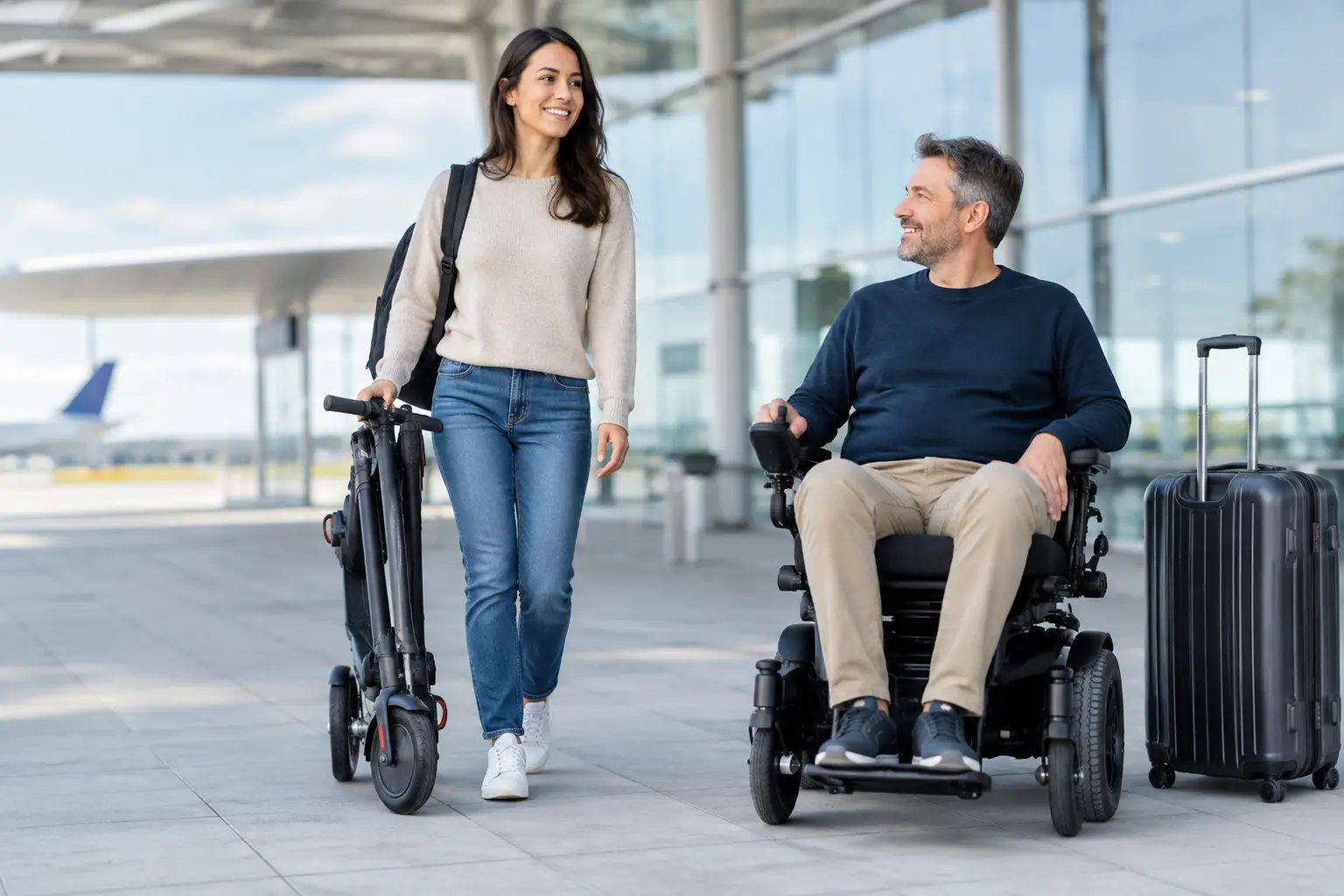
A folding scooter can look like the obvious answer when a trip involves a car boot, train platform or airport check-in. But the folding scooter versus powerchair decision is not really about which one is easiest to pack away. It is about which vehicle will still keep you comfortable, independent and safe after a full day getting around an unfamiliar place.
For some travellers, a folding scooter makes a weekend break possible. For others, choosing one instead of a powerchair means shorter days, sore joints and being stuck when pavements become rough. There is no single winner. The right choice depends on how you use your mobility equipment at home, how you travel, and what the destination is genuinely like on the ground.
Folding scooter versus powerchair: the real difference
A folding scooter is built around portability. Many models fold manually or electronically into a compact shape that can fit in a car boot, be lifted by one or two people, or be stored more easily in a hotel room. They are often lighter than larger road scooters and can be a practical option for travellers who still walk short distances but need help covering more ground.
A powerchair is built around seated support and control. It is usually easier to manoeuvre indoors, particularly in narrow hotel rooms, restaurants and accessible toilets. Its joystick control also allows you to get close to tables, sinks and beds without the wider turning circle of a scooter. For someone who uses a wheelchair all day, that difference is not a luxury. It is the difference between managing independently and needing help with everyday tasks.
The trade-off is weight. A powerchair, especially one with proper suspension, a supportive seat and a useful range, may need a wheelchair-accessible vehicle or hoist. It is not something most people can simply lift into a standard hatchback. A folding scooter is more convenient to transport, but convenience has limits when the seat, wheels or battery are not suited to a demanding day out.
Start with the journey, not the brochure
Before choosing equipment for a holiday, think through every stage of the journey. A hotel may advertise an accessible room, but can you reach it from the car park? Will the lift take your scooter or chair? Is there space beside the bed to transfer? Can you get around the breakfast room without reversing into other guests?
The same applies outside. Historic towns, seafronts, old railway stations and city centres can all be brilliant places to visit, but they place very different demands on mobility equipment. Smooth promenades and shopping centres suit most folding scooters. Cobbles, steep ramps, cracked pavements and loose gravel expose their weaknesses quickly.
A powerchair with larger wheels, better ground clearance and a more stable seating position will generally cope better with long days and poorer surfaces. That does not mean every powerchair is suitable for every destination. Small front castors can struggle on deep cobbles or soft ground, while very heavy chairs can be difficult on older lifts and some accessible transport.
The key is to plan for the worst surface you are likely to meet, not the best photograph on a destination website.
Comfort matters more after day three
A folding scooter may feel perfectly adequate during a 20-minute test ride in a showroom. The real test comes after several hours in a museum, queueing for an attraction, crossing a large airport or exploring a city where the pavements are not level.
Most folding scooters have compact seats and limited adjustability. Some have no suspension, smaller wheels and a riding position that puts pressure through your back, hips or knees. If you have pain, fatigue, poor trunk control, pressure-area risks or difficulty transferring, these are serious considerations. A scooter can get you from A to B while still leaving you too uncomfortable to enjoy the destination.
A powerchair is often the stronger choice for full-day use because the seating can be matched more closely to your needs. Features such as an adjustable backrest, head support, pressure cushion, elevating leg rests or tilt may sound technical, but they can make a long travel day manageable. They also allow some users to stay in their chair throughout the day rather than repeatedly transferring on and off a scooter.
That said, a compact powerchair is not automatically more comfortable than a good folding scooter. Try the actual model for as long as possible and consider your normal posture, not the posture you adopt briefly to make something work.
Transport: where folding scooters shine
If you regularly travel in an ordinary car with friends or family, a folding scooter can remove a major barrier. A lightweight model may be practical for a boot without needing a hoist or adapted vehicle. This can make spontaneous day trips and short breaks far easier.
It can also be useful on rail journeys, provided you check the train operator's wheelchair and scooter rules in advance. Space, ramp availability, turning areas and permitted dimensions vary. Do not assume a scooter that folds will be accepted or will fit safely in the designated space.
For flights, both folding scooters and powerchairs need more preparation than many people expect. Airlines need accurate information about dimensions, weight, battery type and whether the battery can be removed. Lithium batteries have particular restrictions, and different airlines apply their own rules. Contact the airline before booking if possible, then confirm again before travelling. Take photographs of your equipment, label removable parts and carry clear handling instructions.
A folding scooter may be easier for ground staff to move, but it can still be damaged. A powerchair is heavier and more complex, yet many regular wheelchair users rightly choose it because arriving with the chair that supports their body is worth the extra logistics. Neither option removes the need to arrange airport assistance well ahead of time.
Independence at the hotel and around town
This is where the folding scooter versus powerchair question becomes very personal. Scooters are excellent for covering distance outdoors, but they can be awkward in confined indoor spaces. You may need room to swing the tiller, make a wider turn or park the scooter before transferring. In a small accessible bathroom, that can be frustrating.
Powerchairs usually offer better control in tight spaces. A mid-wheel-drive chair can turn almost on the spot, which helps in bedrooms, lifts and restaurant aisles. If you need to get close to a washbasin or pull up to a table, joystick control is often more natural than a scooter tiller.
However, not every holiday needs that level of indoor manoeuvrability. If you can walk around a hotel room and mainly need mobility for promenades, attractions and town centres, a folding scooter may give you all the freedom you need with less transport hassle.
Be honest about what happens when you are tired. A device that works when you are fresh may become difficult after a delayed flight, a poor night's sleep or an unexpected diversion because a lift is out of order.
Range, weather and real-world reliability
Manufacturer range figures are useful only as a starting point. Hills, passenger weight, cold weather, stop-start use, rough surfaces and battery age all reduce range. If your plan involves a long promenade, a large theme park or an all-day city itinerary, leave plenty in reserve. Running out of charge miles from the hotel is not the memory anyone wants from a holiday.
Folding scooters usually have smaller batteries, which helps with portability but can limit how far you can comfortably travel. A powerchair may offer a bigger battery and greater range, although that adds weight and may make airline arrangements more complicated.
Think about charging too. Ask whether the hotel can provide a safe socket near the bed or where the equipment will be stored. Avoid trailing cables across doorways, and do not rely on charging in a public corridor or luggage room unless the hotel has agreed to it. If you use a folding scooter, make sure you can physically unfold it and operate its controls when your hands are cold or tired.
Choose for your normal needs, then adapt the trip
The biggest mistake is buying or hiring a folding scooter solely because it looks travel-friendly, when your everyday needs point towards a powerchair. Your mobility equipment should support your body and your independence first. Travel plans can be adapted with an accessible taxi, airport assistance, a suitable vehicle or careful hotel research. It is much harder to adapt when the equipment itself is wrong for you.
On the other hand, if you are mobile on your feet for short distances and need a simple way to cover more ground on holidays, a folding scooter can be a sensible, liberating piece of kit. It may be the difference between staying close to the hotel and joining everyone else on the seafront, at the attraction or in the town centre.
Where possible, take a realistic test route before committing. Try kerbs, slopes, uneven paving, a tight doorway and a few hours in the seat. The best travel mobility choice is the one that leaves you with enough energy to enjoy where you have gone, not just enough battery to get back.
0 Comments
Leave a Comment