
How to Fly With Your Mobility Scooter Safely
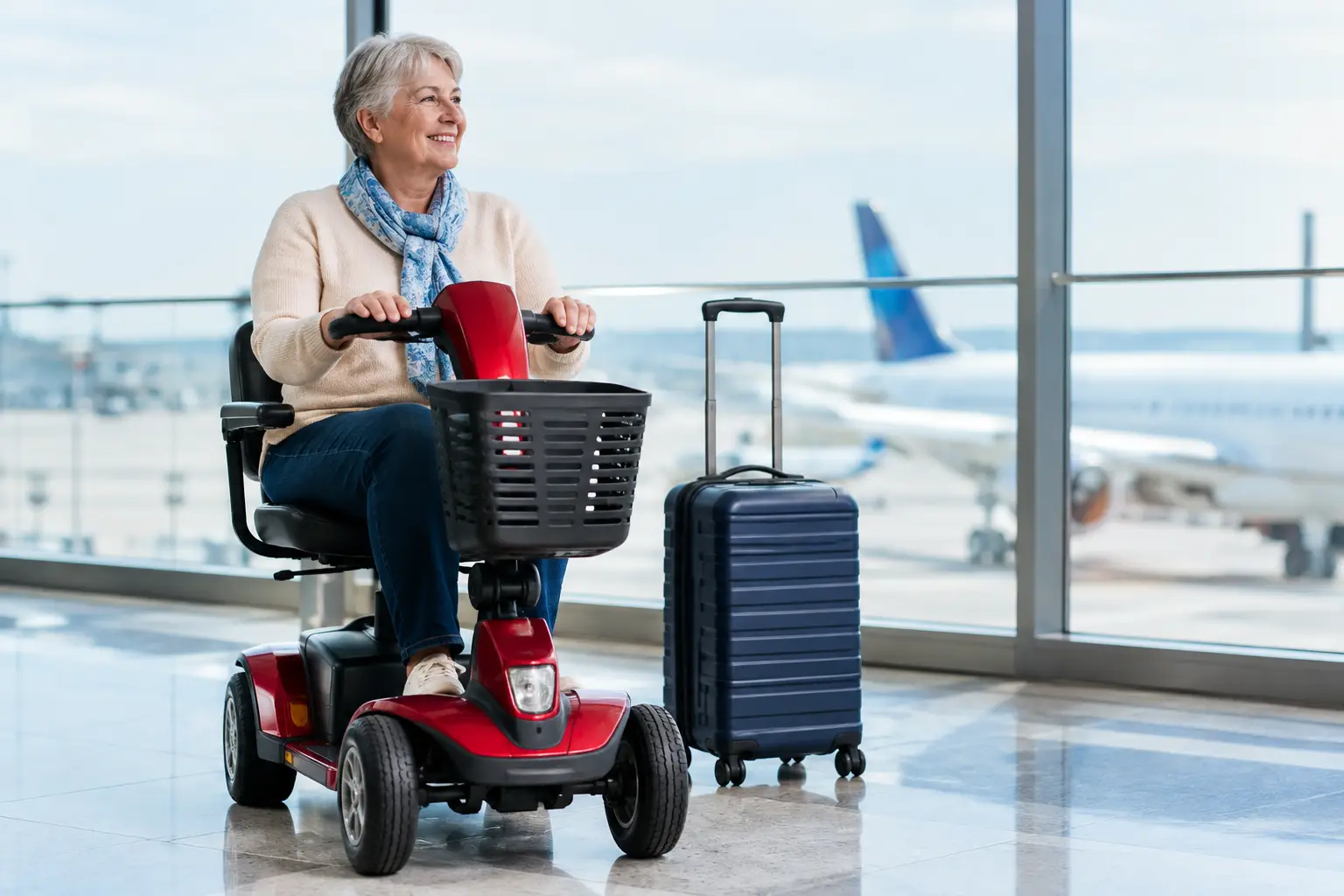
The point where a mobility scooter disappears at the aircraft door can be the most stressful part of a holiday. To fly with a mobility scooter safely, you need more than a booking marked “special assistance”. You need the airline to understand the scooter, its battery and its handling requirements before you arrive at the airport.
I have found that most problems happen when assumptions are made. A call centre says the scooter is fine but has not recorded its battery details. Ground staff see a scooter at check-in but do not know how to put it into freewheel. Or a traveller assumes their scooter will come back at the aircraft door, only to find it on the baggage belt. A little firm preparation protects both your equipment and your independence.
Start with the battery, not the flight
Your scooter’s battery type is the first thing an airline will ask about, and it can decide whether you can take that particular scooter. Do not guess. Check the label on the battery itself and the manual, then keep the information with your travel documents.
Most mobility scooters use one of three broad battery types: sealed lead-acid, lithium-ion, or a non-spillable gel or AGM battery. Airlines and airport ground handlers follow dangerous-goods rules, but their own procedures can differ. Lithium batteries usually receive the closest scrutiny because of fire risk. There may be a watt-hour limit, a limit on the number of batteries, or a requirement to remove the battery and take it into the cabin.
A sealed lead-acid battery can often remain fitted if the scooter is loaded upright and the terminals are protected. That does not mean every airline will accept every model without question. Ask for written confirmation that your exact battery type, voltage, amp-hour rating and, where relevant, watt-hour rating have been approved.
The watt-hour figure is usually calculated by multiplying volts by amp-hours. For example, 24 volts multiplied by 12 amp-hours equals 288 watt-hours. Do not rely on that calculation alone if the battery label gives a different official figure. Photograph the label clearly and send the image to the airline when requested.
How to fly with a mobility scooter safely: get approval in writing
Book assistance as soon as you book the flight, then contact the airline directly rather than relying only on a travel agent or comparison site. Tell them you are travelling with a mobility scooter, not simply “a wheelchair”. Give them the make, model, folded or assembled dimensions, total weight and battery specification.
Ask four direct questions: whether the scooter is accepted; whether the battery must be removed; whether it will be returned at the aircraft door; and what paperwork they need at check-in. If your journey includes more than one airline, check every flight separately. The most restrictive carrier can determine what is possible.
Keep emails, reference numbers and a printed copy of the airline’s confirmation in your hand luggage. Staff at the airport are usually trying to help, but they may not have access to a note made weeks earlier. A clear document can prevent a long and exhausting discussion at the desk.
It is also worth contacting the airport’s assistance provider. Explain that you use a scooter and whether you can transfer to an aisle chair or need support to reach your seat. Do not be embarrassed about setting out what you need. Assistance works best when staff know the plan before the busy departure period begins.
Prepare the scooter for people who have never seen it before
Ground handlers cannot be expected to know every scooter model. Your job is to make safe handling obvious, even when you are no longer beside it.
Clean the scooter before travel so the controls, labels and moving parts are easy to see. Remove loose items such as baskets, cup holders, mirrors, walking-stick clips and personal bags. Anything that can detach can be lost or broken in the hold. If the seat folds, secure it. If the tiller folds, follow the manufacturer’s instructions and use a strap only where it cannot damage cables or controls.
Make a one-page handling sheet in plain English. Include how to switch the scooter off, how to place it in freewheel, how to engage drive mode again, where it can safely be lifted, and any instruction for disconnecting the battery. Add your name, mobile number, flight number and destination. Laminate it or put it in a waterproof clear pouch fixed where staff can see it.
Take photographs from all sides before handing it over, including close-ups of existing marks, tyres, battery connections and the control panel. This is not being difficult. It gives you a proper record if something goes wrong and helps you explain damage accurately.
If your scooter has a removable key, take it with you. If it has a remote, charger or detachable battery, ask the airline where each item must travel. Never put the charger in your cabin bag unless the airline confirms it is permitted. A charger may be fine in checked baggage, but battery arrangements are different and must be checked for your model.
At the airport, allow time but stay in charge
Arrive earlier than you normally would, particularly when travelling from a busy UK airport in peak holiday season. You may need to show battery evidence, wait for a supervisor or have the scooter inspected before security. Rushing is when paperwork is missed and instructions get muddled.
At check-in, confirm again where the scooter will be returned. Aircraft-door delivery is often possible, but it depends on the airport, aircraft stand, local safety arrangements and the type of mobility equipment. If it cannot come to the door, ask exactly where it will be available and what chair will take you from the aircraft to that point.
Before you leave the scooter, demonstrate the key steps to the member of staff taking it. Show them the power button, freewheel lever and the safest place to hold it. Do not just point at a small symbol in the manual. A calm, practical demonstration can save your scooter from being pushed while the brakes are on or moved by fragile bodywork.
At the gate, remind the team that the scooter is going into the hold and ask them to ensure the handling sheet remains attached. Keep essential medication, transfer aids, a cushion, charger instructions and anything you cannot manage without in your hand luggage. The hold is not the place for items you need immediately after landing.
Reduce the risk of damage in the hold
No one can promise that a scooter will never be damaged in transit. Heavy powered equipment is awkward to load, and baggage holds are not gentle places. But you can reduce avoidable risk.
Use a fitted travel cover if it does not hide key handling labels or make the scooter harder to lift. Protect the joystick or control panel with suitable padding, but do not tape controls in a way that prevents staff switching the scooter off. Secure cables and make sure nothing hangs below the chassis where it could catch.
Weight matters as much as size. Some larger road scooters are too heavy or too tall for certain aircraft holds, particularly on smaller regional aircraft. A compact travel scooter may be less comfortable for long days out, but it can be the more realistic choice for a flight involving small planes or multiple connections. There is no single best scooter for every holiday - it depends on the aircraft, the destination and how much outdoor mileage you need once you arrive.
If you are travelling with a valuable or specialist model, check your travel insurance wording before departure. Standard policies may exclude mobility equipment, limit the claim amount or require it to be listed separately. Keep purchase receipts, serial numbers and recent photographs somewhere accessible.
Landing: inspect before you leave the airport
When the scooter is returned, do not feel pressured to wave it away and get on with your journey. Check it while staff are still there. Look at the tiller, seat, armrests, wheels, battery box, lights and controls. Turn it on, test the speed control carefully and make sure drive mode engages.
If there is damage, report it immediately to the airline or ground-handling desk before leaving the airport. Ask for a written report and take more photographs. Even if the scooter still moves, a bent control, loose battery connection or damaged tyre can become a serious problem later in the holiday.
If the scooter is delayed or unusable, be clear about what you need right then. You may need an airport wheelchair, assistance to your transfer, or information about a replacement hire scooter at your destination. The priority is not winning an argument at the desk. It is getting you safely to where you are staying with as much independence as possible.
Flying with a mobility scooter takes more organising than travelling with a suitcase, and that is unfairly often placed on the disabled traveller. Still, preparation gives you leverage. Know your equipment, get the approval in writing, label the scooter properly and speak up at every handover. The flight is only one part of the trip - do not let poor planning at the airport stop you reaching the places you want to see.
0 Comments
Leave a Comment