
Do Hotels Allow Scooter Charging? What to Ask
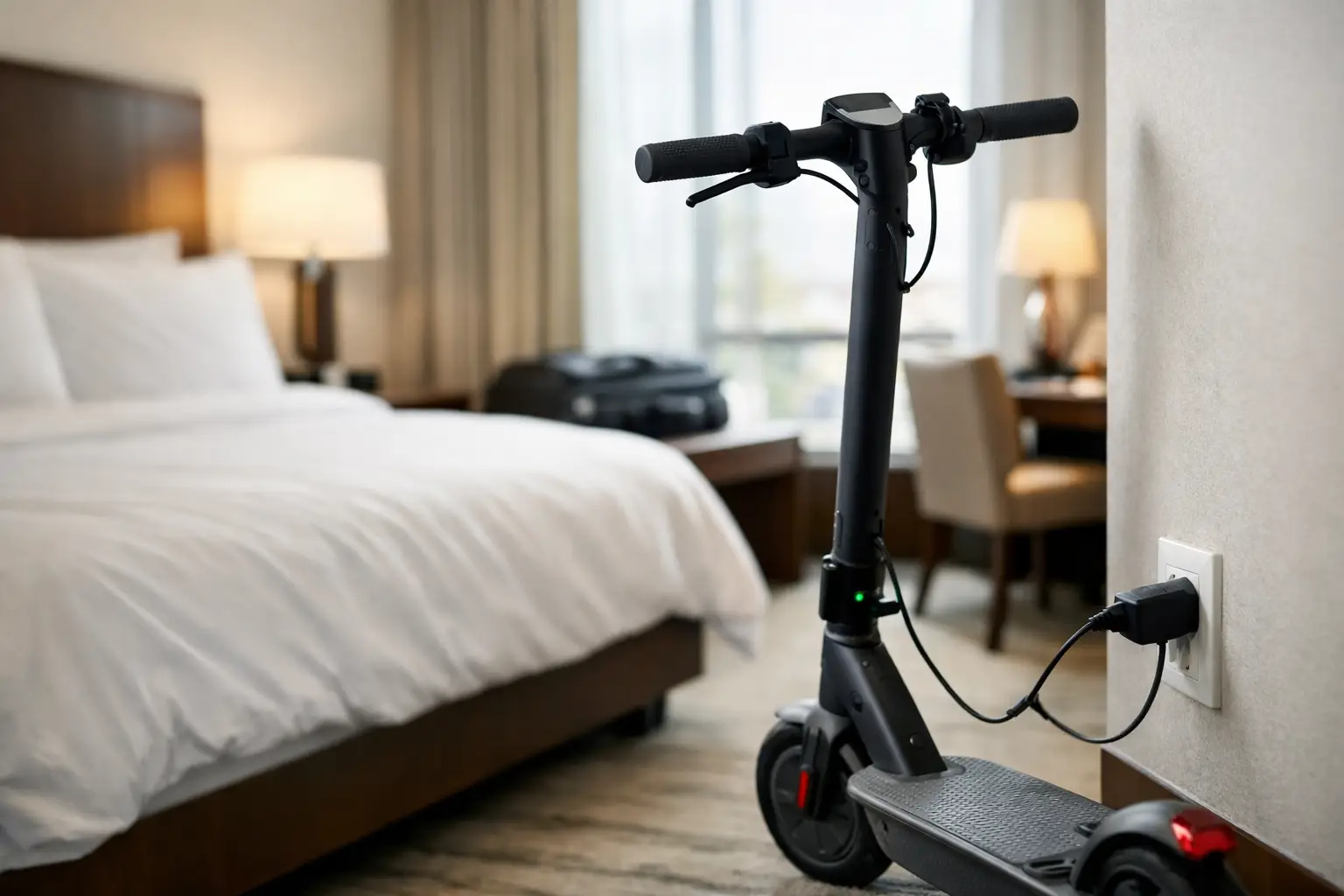
A mobility scooter with a flat battery is not a minor holiday inconvenience. It can mean being stuck in your room, missing a meal, or losing the independence you planned the trip around. So, do hotels allow scooter charging? Often, yes - but never assume the answer is automatically yes, or that the place they offer will actually work for your scooter.
Hotels have very different rules. One may be happy for you to charge in an accessible bedroom; another may insist on a designated storage area; a third may refuse indoor charging altogether because of its fire policy. The only reliable approach is to ask specific questions before you book, then get the answer recorded on your reservation.
Do hotels allow scooter charging in bedrooms?
Many hotels do allow mobility scooters to be charged in bedrooms, particularly when the scooter is needed for a guest’s day-to-day mobility. But permission can depend on the size of the hotel, the layout of the building, the type of battery and the local fire-risk policy.
A ground-floor room with direct outdoor access may make charging straightforward. A compact city-centre hotel with narrow corridors, small lifts and limited bedroom space is more likely to have restrictions. Some hotels also distinguish between storing a scooter in the room and charging it there. They may accept the first but not the second.
Do not be put off by a cautious response from a hotel. A manager who asks about your charger, battery type or scooter dimensions may be trying to find a safe solution rather than refusing you. The problem comes when staff simply say, “It should be fine,” without checking whether there is space, an accessible route or a usable socket.
A plug socket behind a heavy bedside table is not a charging plan. Nor is a socket on the other side of a doorway where the charging cable creates a trip hazard.
Why hotels sometimes say no
The main concern is fire safety. Mobility scooters commonly use sealed lead-acid, gel or lithium batteries, and hotels may have a blanket policy covering all battery-powered mobility equipment. Their insurer, fire officer or management company may require scooters to be charged only in a specific area, supervised storage room or external shelter.
There are sensible reasons for this. Hotels need escape routes kept clear, especially in corridors and lobbies. They also need to prevent damaged chargers, unsuitable extension leads and equipment being left charging where staff cannot identify a problem quickly.
That said, a blanket “no scooters” policy can create a real barrier for disabled guests. If a hotel will not permit charging in a room, it needs to explain what alternative it can offer. A locked shed at the far end of a car park is no good if you cannot get there independently, the route is unlit, or the area is not weatherproof.
The best hotels treat this as an access requirement, not a favour. They discuss a practical arrangement with you before arrival and make sure the duty manager and reception team know about it.
Ask these questions before you book
When you contact a hotel, say that you use a mobility scooter and need to charge it overnight. Avoid asking only whether the hotel is “accessible”. That word is far too vague to tell you anything useful.
Ask whether you can bring the scooter into your allocated room, whether charging in the room is permitted, and whether there is enough clear floor space to park it without blocking the door or bed. If charging must happen elsewhere, ask exactly where, whether it is locked and covered, and whether you can access it whenever you need to.
It is also worth confirming the following details:
- Is there a standard plug socket close enough to the scooter parking position, without running a cable across a walkway?
- Can you reserve an accessible or ground-floor room that suits the scooter’s width, turning circle and weight?
- Are there steps, steep ramps, heavy doors or narrow lifts between your room, reception and the charging location?
- Will the hotel note the agreed charging arrangement on your booking and brief the team before you arrive?
If you are travelling with a powered wheelchair rather than a scooter, the same questions apply. Do not assume a wheelchair will be treated differently, even though it may be essential for moving around your room.
Get the agreement in writing
A quick phone call is a good start, but follow it up by email or through the hotel’s booking message system. Keep the wording simple: confirm that you are bringing a mobility scooter, where it will be parked and where it may be charged.
This prevents the awkward situation where the person you spoke to understands the issue, but the receptionist on the evening shift has been told that no scooters can enter bedrooms. It also gives you something clear to refer to if there is confusion on arrival.
If the hotel cannot confirm its policy, treat that as useful information. You may still decide to stay there, but you are taking a risk with the one piece of equipment that keeps you mobile.
Make charging safer and easier on holiday
Use the charger supplied or approved by your scooter manufacturer. It is tempting to pack a cheap spare charger or borrow one from another scooter user, but the wrong charger can damage a battery and gives a hotel a legitimate safety concern.
Check your cable before travelling. If it is frayed, loose or damaged, replace it. Pack the charger where you can reach it easily, rather than at the bottom of a case, and take your scooter key with you if you will be leaving it in a shared storage area.
Try not to rely on an extension lead. Hotels may prohibit them, and they create hazards in rooms that are already tight for a scooter, luggage and mobility equipment. If the only socket is out of reach, ask whether the hotel can provide a room with a better layout. A longer charging lead from the manufacturer may be a safer option than an extension lead, but check that it is suitable for your equipment.
Charge according to your scooter manufacturer’s guidance. Some batteries benefit from regular overnight charging; others have more specific instructions. If you use a lithium battery, check whether your insurer, airline or ferry operator has separate rules for travel, particularly if the battery is removable.
What to do if the hotel refuses charging
First, ask whether the refusal applies to charging in bedrooms only. There may be a secure alternative that has not been mentioned yet. Ask to speak to the duty manager or accessibility contact, explain that the scooter is your mobility aid, and describe what you need in practical terms.
If there is no safe, accessible alternative, it may be better to change hotels than arrive hoping someone will make an exception. That can feel frustrating, especially if the hotel advertises accessible rooms, but a room is not genuinely accessible if you cannot keep the equipment you rely on powered up.
For a longer break, consider how far you can realistically travel on one charge. Hilly resorts, large holiday parks, cobbled streets and long distances between attractions can drain a battery faster than a familiar trip at home. Your daily range on paper is not always your real-world range with luggage, slopes, cold weather or rough surfaces involved.
International hotel stays need an extra check
Outside the UK, plug types and voltage can complicate scooter charging. Before travelling, check the label on your charger. Many modern chargers are rated for a range such as 100-240V and only need a plug adaptor. Others are designed for UK voltage only and may need a transformer, which adds bulk and is not always ideal.
Do not guess. Confirm the charger specification with the manufacturer if you are unsure, and check the hotel’s charging policy separately. A hotel may be happy for a scooter to be charged, but the socket arrangement, local fire rules or power supply may still affect what is possible.
When planning an accessible trip, charging is as basic as checking whether there is a step-free entrance or an accessible bathroom. It deserves the same attention before you hand over your money. A hotel that answers clearly gives you more than a plug socket - it gives you the freedom to get out the next morning and carry on with your holiday.
0 Comments
Leave a Comment