
Do Airlines Allow Powerchairs on Flights?
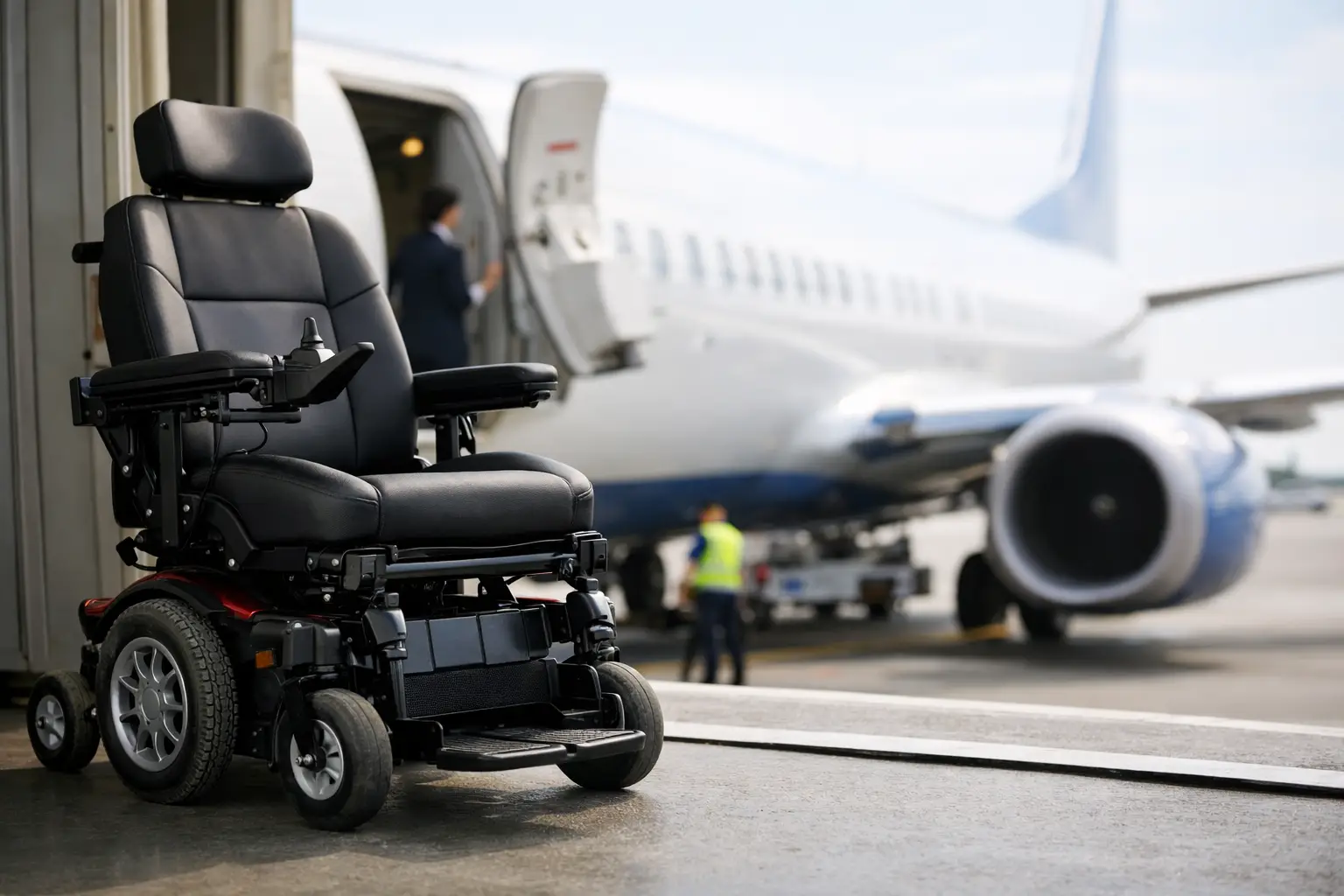
You can get all the way to the airport, have your booking confirmed, and still hit a wall at check-in if nobody has properly recorded your chair. That is why the question do airlines allow powerchairs matters so much. The short answer is yes, many airlines do allow them, but only if the battery, dimensions, weight and handling details meet the airline’s rules and have been cleared in advance.
For powerchair users, this is not a small admin job. It can decide whether a trip happens at all. Airlines are usually set up to carry manual wheelchairs as standard. Powerchairs are different because batteries, loading limits and cargo door sizes all come into play. If you rely on your chair every day, you need more than a vague “it should be fine”.
Do airlines allow powerchairs for all passengers?
In principle, airlines that carry disabled passengers should be able to carry mobility equipment, including powerchairs. In practice, not every aircraft can safely load every chair. The biggest issue is often not permission but compatibility.
A compact folding powerchair may be straightforward on one route and impossible on another if the flight uses a smaller aircraft with a restricted hold door. Some airlines are more experienced than others with powered mobility aids, and that experience makes a real difference. A carrier may technically allow powerchairs, while the staff you speak to still ask basic questions that show they do not deal with them often.
That is why it helps to think in layers. First, does the airline accept powered mobility equipment? Second, does your exact chair fit their battery and safety policy? Third, can the aircraft on your route physically take it? You need all three answers to be yes.
What airlines check before accepting a powerchair
Most airlines will ask for the same core information. They need the make and model, overall dimensions, total weight including batteries, and the battery type. If your chair has removable parts such as a headrest, cushion, joystick or footplates, it is worth noting that as well, because these can affect both measurement and risk of damage.
Battery type matters because airlines treat them differently. Dry cell and gel batteries are generally simpler. Lithium batteries often trigger more detailed checks because the watt-hour rating and how the battery is installed can affect whether the chair is accepted and how it must be prepared for the flight. If you are not sure what battery your chair uses, do not guess. Check the manufacturer label, handbook or supplier paperwork.
Size and weight are where many problems start. Airlines may publish a general baggage policy that sounds generous, but airport loading equipment and aircraft hold dimensions can still create limits. A chair that is accepted on a long-haul wide-body aircraft may not be accepted on a short regional connection. Even on the same booking, different flight legs can have different aircraft.
Why saying “yes” is not the same as being ready
This is the part many travellers learn the hard way. You ring the airline, explain that you use a powerchair, and the answer sounds positive. Then at the airport, the ground team asks for battery instructions or says the chair is too tall to load upright. That is not unusual.
The airline reservation system, airport assistance provider and baggage handling team do not always share information well. A note on your booking helps, but it is not enough on its own. You need confirmation that the chair details have been recorded properly, especially the battery type and exact measurements.
If possible, ask for written confirmation by email or through your booking record. Keep your chair specifications with you when travelling. If staff ask questions on the day, you want facts in your hand, not a stressful debate at the desk.
How to prepare a powerchair for a flight
Preparation depends on the chair, but the aim is always the same: make it as safe and as easy to handle as possible. Joysticks, cushions and side guards are common damage points. If anything can be removed safely and carried in the cabin or protected separately, it usually should be.
Take clear photos of your chair before check-in, including any existing marks. That is basic self-protection if damage happens. Label removable parts with your name and mobile number. If your powerchair has a freewheel mode, know exactly where it is and how to explain it to staff. A printed handling sheet can help, especially if your chair should not be lifted by armrests or control units.
Battery preparation is one area where rules vary. Some airlines want batteries isolated or disconnected. Others require removable lithium batteries to be taken into the cabin if within the permitted limits. Never turn up assuming airport staff will sort that out for you. Know the process before you leave home.
The questions to ask the airline before you book
If you only ask “do airlines allow powerchairs”, you are not asking enough. You need route-specific answers. Start with the aircraft type on every leg, then ask for the maximum accepted dimensions and weight for a powered wheelchair or powerchair on that route.
Ask how the airline wants battery information submitted and whether they need a manufacturer certificate or product sheet. Confirm whether the chair will travel upright or laid down, and whether that affects acceptance. It is also sensible to ask how early you need to arrive and whether the airport assistance team has been notified.
If you are changing planes, ask whether your chair will be transferred automatically or whether there is any risk around short connection times. Not every airport handles assistance smoothly, and tight transfers can become a problem if your chair needs special loading.
Common problems powerchair users face
The biggest one is poor information. One member of staff says the chair is approved, another says the battery is not allowed, and nobody sounds certain. Sadly, that can happen even with major airlines.
The next issue is damage. Powerchairs are expensive, essential and not built to be tossed around like ordinary luggage. Any traveller with lived experience knows this is the fear that sits in the background of every flight. Protective steps help, but they do not remove the risk entirely.
Then there is the issue of dignity and independence. If your chair is delayed, damaged or rejected at the airport, it is not a minor inconvenience. It can affect toileting, pain levels, safety and whether you can continue the trip at all. That is why it is worth being persistent, even if staff make you feel awkward for asking detailed questions.
A realistic answer to do airlines allow powerchairs
Yes, airlines often allow powerchairs, and many disabled travellers fly successfully with them. But there is no blanket rule that makes every powerchair acceptable on every airline or every aircraft. It depends on battery type, size, weight, route and how competent the airline is at recording and handling mobility equipment.
That means the safest approach is to treat every flight as a separate check, not assume approval on one trip means approval on the next. Aircraft swaps happen. Policies change. Ground handling varies by airport. The more precise you are before travel, the fewer nasty surprises you are likely to face.
What to do if the airline gives vague answers
Push for specifics. Ask them to confirm the exact maximum dimensions, the battery policy and whether your chair details are attached to the booking. If the first person cannot answer, ask for the special assistance or accessibility team.
Keep notes of who you spoke to and when. That will not solve every problem, but it gives you a better footing if conflicting advice appears later. If an airline still cannot clearly explain whether your chair is accepted, that is useful information in itself. It tells you how much confidence to place in them.
For many disabled travellers, confidence is everything. You do not need glossy reassurance. You need clear answers, practical handling, and a fair chance of arriving with the equipment that gives you your independence.
Flying with a powerchair is possible, but it works best when you plan like someone who knows the system can be patchy. Ask more questions than feels polite, get the details in writing where you can, and trust your instincts if something sounds off. A well-prepared journey is not about being difficult - it is about protecting your mobility, your holiday and your peace of mind.
0 Comments
Leave a Comment