
Disabled Traveller Packing Checklist
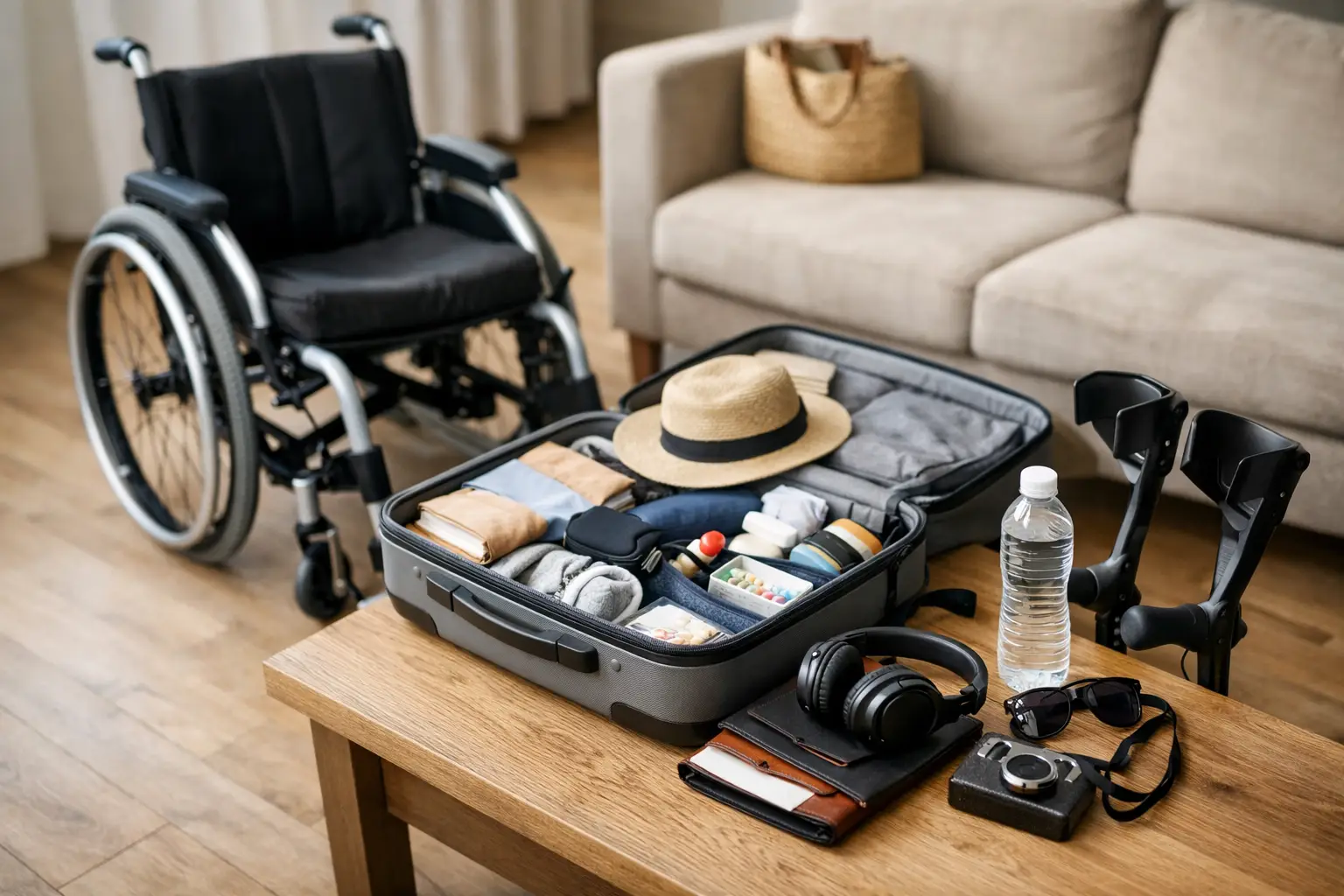
The easiest way to ruin a trip is to assume you will be able to sort things out when you get there. For disabled travellers, that gamble can cost far more than a forgotten T-shirt. A proper disabled traveller packing checklist is not about overpacking - it is about protecting your independence when something goes wrong, gets delayed or turns out to be less accessible than promised.
That matters whether you are heading off for a UK break, flying long haul or taking a cruise. If you use a wheelchair, mobility scooter, walking aid or travel with significant mobility limitations, what goes in your case needs to do more than fill a bag. It needs to keep you moving, comfortable and in control.
Here's a 2023 video covering the selections Andy would make.
What a disabled traveller's packing checklist should really cover
Most generic packing lists focus on clothes, toiletries and chargers. Fine, but they miss the bits that actually make or break accessible travel. Your checklist needs to cover mobility equipment, medication, paperwork, charging, comfort and a back-up plan for when access is poor or staff are unprepared.
That last point matters more than many people expect. Hotels lose booking notes. Airlines mishandle equipment. Attractions describe themselves as accessible when they really mean there is one ramp at the front entrance and not much else. Packing properly gives you options when the real world does not match the brochure.
Start with the equipment you cannot travel without
Begin with the thing that gives you your freedom. If you use a manual wheelchair, powered wheelchair or mobility scooter, build your packing around that first and everything else second. Check tyres, brakes, batteries, controls, chargers and any removable parts several days before departure, not the night before.
If your equipment folds down or breaks into sections, make sure you know exactly how to do it under pressure. Travel day is not the moment to learn. If you use a scooter, pack the key, spare key if you have one, charger, and any basket or bag fittings you rely on. If you use a powered chair, think about joystick protection, charging leads and any transit instructions you may need to give staff.
It is also worth packing a very small repair kit if it is practical for your setup. That might mean an Allen key set, puncture repair items, a spare inner tube, cable ties or a few basic tools. It depends on your equipment and how confident you are in doing minor fixes. The aim is not to rebuild your chair in a hotel room - it is to solve simple problems that could otherwise stop your day.
Don’t forget the parts staff don’t think about
Loose cushions, footplates, lap belts, side guards, rain covers and storage bags are often the first things to get separated from mobility equipment during transport. Label them clearly. A simple luggage tag with your name and mobile number can save a lot of hassle.
If you transfer out of your chair for flights, pack anything that supports safe transfers and comfort afterwards. Pressure relief cushions, transfer boards and support straps are not optional extras if you depend on them at home.
Medication needs its own section on the checklist
This is where being methodical pays off. Always pack medication in your hand luggage if you are flying, and carry more than you expect to need in case of delays. If your medicine is time-sensitive or difficult to replace, split supplies across bags where sensible, so one lost case does not wipe you out.
Keep prescriptions, repeat medication details and a written list of what you take with dosages. If you use refrigerated medication, check your transport and accommodation arrangements well in advance. Some hotel room fridges are decorative rather than properly cold, and some are removed from rooms entirely unless requested.
If you use continence products, stoma supplies, catheters, dressings or skin protection items, pack more than you think is necessary. Travel can throw off routines, and finding the exact product you use abroad is not always realistic. This is one area where light packing is often a false economy.
Documents matter more than people think
A passport and travel insurance documents are obvious, but disabled travel often involves extra paperwork that is easy to miss. Keep confirmations for assistance bookings, accessible room requests, mobility equipment carriage approvals, battery specifications and transfer arrangements in one place.
Printed copies still help. Yes, most of us keep everything on a phone, but phones run out of charge, apps fail and airport Wi-Fi is not always your friend. Having hard copies of your key travel details can cut through arguments quickly when a member of staff says they cannot see the note on the system.
The disabled traveller's packing checklist for paperwork
For many trips, the most useful documents are your passport, insurance details, medical summary, prescriptions, equipment information, assistance confirmations and accommodation booking details. If you are flying with a powered wheelchair or scooter, keep battery type and handling information easy to find.
If you are travelling with a companion or carer, make sure they can access these details too. One person holding all the information can become a problem very quickly.
Power and charging can decide whether your trip works
If your chair, scooter, phone, tablet, medical equipment or hoist relies on charging, power planning is part of packing. Bring all relevant chargers, plus plug adaptors for the destination and an extension lead if you are staying somewhere with awkward socket placement.
That may sound minor until you reach a hotel room and discover the only socket is behind a bed or on the opposite side of the room from where your scooter can park safely. An extension lead can be one of the most useful things in your case.
Power banks are worth having as well, especially for phones used for navigation, translation, tickets or emergency calls. Just check airline rules if you are flying, as battery restrictions vary.
Pack for access problems, not just weather
Weather matters, of course. So do layers, waterproofs and sensible footwear if you walk short distances or transfer. But disabled travellers often need to pack for physical environments that are unpredictable.
That might mean gloves for wheeling long distances, a compact poncho that covers both you and the controls of a powered chair, a small towel for wet seats, or a seat pad if you end up waiting longer than planned. If you know you get pain or fatigue after long airport days, pack the things that genuinely help rather than hoping to push through it.
There is also the dignity factor. Spare clothes in hand luggage are not only useful if checked baggage goes missing. They are helpful after spills, delays, continence issues or bad weather. A clean change can rescue a rough day.
Think carefully about what stays with you on travel day
One of the best habits is treating your travel day bag as a survival kit, not just a handbag or rucksack. Anything essential for the first 24 hours should stay with you if possible. That includes medication, chargers, documents, continence supplies, a basic wash kit, snacks, a water bottle if allowed, and anything you need to manage pain, fatigue or personal care.
If your main luggage is delayed, this bag is what keeps the trip on track. The same applies to items that are hard to replace quickly, especially specialist medical or mobility accessories.
Clothes still matter, but function comes first
Pack what works in your chair, scooter or day-to-day mobility routine, not what looks good folded neatly in a case. Seams, fit and fabric can make a big difference when you are seated for long stretches. If something rubs, slips or becomes uncomfortable after a few hours at home, it will not improve on a travel day.
That also applies to footwear. If you transfer, stand briefly, or manage slopes and uneven ground, your most reliable shoes win every time. Holidays are not the place to break in something new.
One final check before you zip the case
A good disabled traveller packing checklist is less about quantity and more about avoiding single points of failure. If one charger breaks, one bag goes missing or one hotel room turns out to be badly laid out, can you still manage? That is the question worth asking.
At Andy Wright Travel, that is often what accessible travel comes down to in the real world - not perfect conditions, but planning that gives you enough control to keep going. Pack for the trip you hope to have, yes, but also for the problems that crop up when access is patchy and information is poor. That is not pessimism. It is how you protect your freedom to travel well.
0 Comments
Leave a Comment