
Disabled Tourism Should Not Be a Leap of Faith
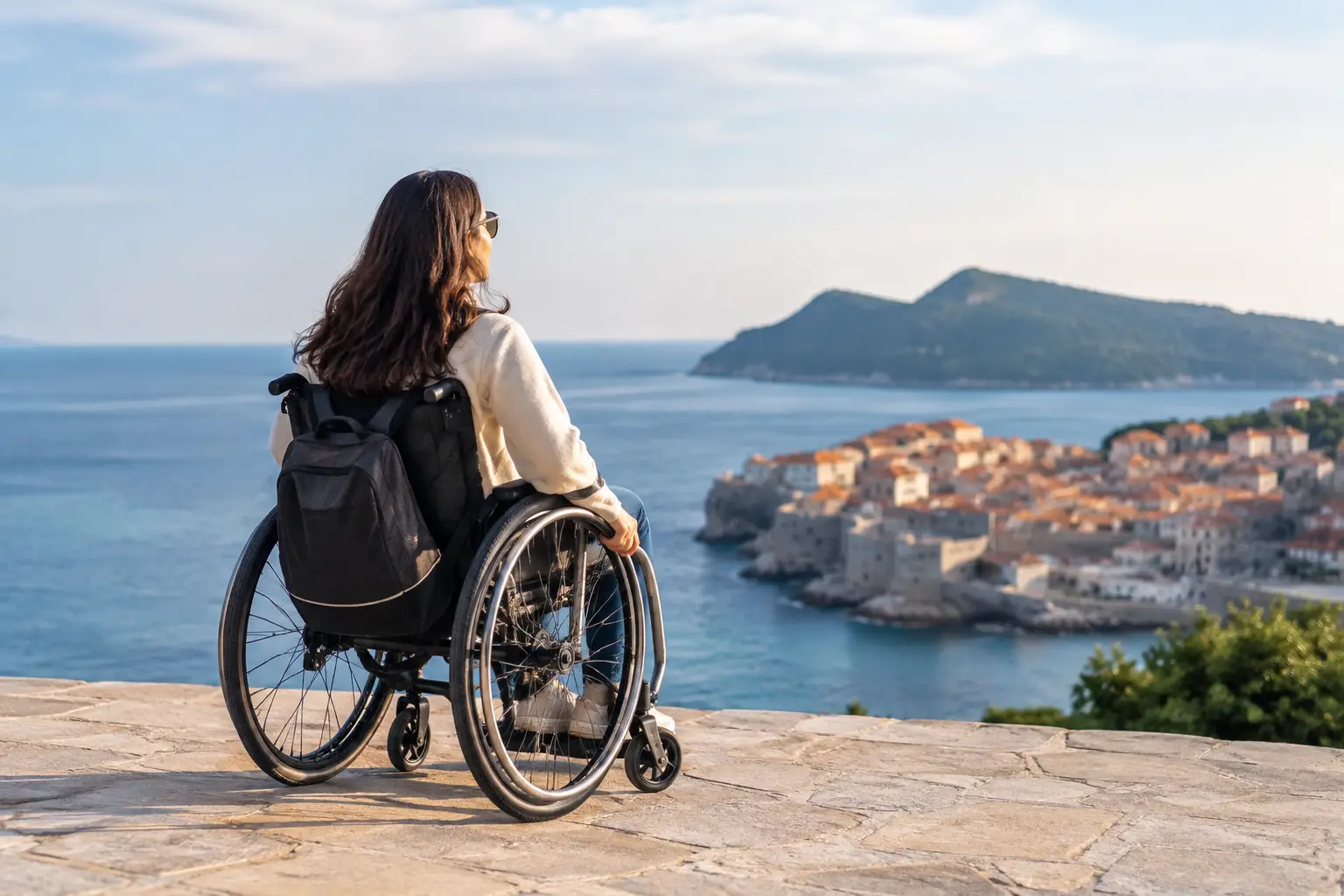
A hotel can call itself accessible and still put the adapted room at the end of a long, carpeted corridor with a heavy fire door in the way. A resort can advertise a beach holiday without mentioning the soft sand between the promenade and the sea. These are not small details when you use a wheelchair or mobility scooter. They are the difference between a proper holiday and spending it working around barriers.
Disabled tourism should not mean accepting less, travelling only to familiar places, or feeling grateful for the bare minimum. It means being able to make informed choices, keep your independence and enjoy a destination without gambling on whether the basics will work when you arrive.
What disabled tourism should look like in practice
The phrase can sound broad, but the real test is always practical. Can you get from the airport to your accommodation without being manually lifted into a vehicle? Is the room genuinely usable, including the bathroom? Can you leave the hotel under your own steam and reach the shops, promenade, attractions or beach?
A destination does not need to be perfectly flat or fully modern to be worth visiting. Some of the best places have cobbles, hills, older buildings and unpredictable pavements. The key is knowing what you are taking on before you book, then choosing accommodation, transport and daily plans that make those challenges manageable.
That is why generic accessibility labels are not enough. "Wheelchair friendly" may mean there is a ramp at reception. "Accessible bathroom" may mean grab rails but no space to turn a chair. "Close to the centre" may mean a short distance on foot for an able-bodied visitor, but an uphill route with broken paving for a scooter user.
Good disabled tourism information deals in specifics. It tells you where the dropped kerbs are, whether lifts are reliable, if taxis can take a folded wheelchair or a larger powered chair, and whether a transfer vehicle has a ramp or simply a large boot. It also says when something is not suitable. Honest limitations are far more useful than glossy reassurance.
Plan disabled tourism around the journey, not just the destination
The destination may be excellent, but the journey there can still be the hardest part. Start planning from your front door and work through each stage: getting to the station or airport, check-in, boarding, the flight or train journey, arrival, baggage and the onward transfer.
For mobility scooter users, confirm the airline's battery rules before booking. Airlines need accurate details about battery type, watt-hour rating where relevant, dimensions and weight. Never assume that because a scooter flew with one airline before, it will be accepted in the same way by another. Get approval recorded and carry a copy of the equipment specifications with you.
If you use a wheelchair, consider what will happen once it is handed over at the aircraft door. A manual chair can often be returned at the door, but that is not guaranteed unless arranged. Powered chairs need extra care, especially if controls, removable parts or battery cables need securing. Photograph your equipment before travel and label any instructions clearly. It is not pessimistic. It is sensible protection for something you rely on every day.
Rail can be a brilliant option, particularly for UK breaks, but assistance needs booking and station access still varies. Check both ends of the journey, not just the main station. A step-free interchange can add time, and a station marked accessible may have limited lift hours or a gap that makes boarding difficult without staff support.
Transfers deserve the same scrutiny as flights. Ask whether the vehicle has a lift or ramp, whether you can remain seated in your wheelchair, and whether your scooter travels upright and secured. A standard minibus is not automatically accessible just because it has space in the back.
Book the room, then check the route through it
An accessible room is not a single feature. It is a chain of features that must all work together. The approach from the car park or taxi drop-off matters. So do the entrance, lift, corridor width, bedroom layout, bathroom, balcony threshold and route to breakfast or the pool.
Before booking, ask for current photographs of the actual accessible room, not stock images. Look at the bed height, clearance around it, turning space beside the door and whether furniture can be moved. A room may technically meet an accessibility standard but still be awkward for a large powerchair or a mobility scooter.
Bathrooms are often where descriptions become least reliable. Find out whether the shower is level access, the size of the shower area, whether there is a fixed seat or one that can be requested, and where the grab rails sit. If you need a shower chair, hoist, bed rails or a fridge for medication, get the request confirmed in writing.
Think about charging as well. A mobility scooter or powered wheelchair needs a safe, convenient socket. If the only point is behind a heavy desk or across a narrow route to the bathroom, it can become a nightly nuisance. For longer stays, it is worth asking whether a secure storage or charging area is available if you do not want equipment in the room.
The street outside matters more than the hotel brochure
A lovely hotel cannot rescue a poor location. Before booking, use maps, street-level images where available and recent traveller reports to check the immediate area. Look for steep gradients, pedestrian crossings, paving quality and the distance to the nearest accessible public transport stop.
Coastal resorts are a good example. A seafront promenade may be ideal for a scooter, while the old town behind it is steep and tightly packed. That does not make the resort a bad choice. It simply means the right hotel is probably on the promenade, not in the historic centre. You may also need to decide whether beach access matters more than being near restaurants and evening entertainment.
Attractions should be checked individually. A city may have accessible buses but a museum with steps at its only entrance, or an accessible entrance that is around a different street and requires staff to unlock it. Ask about accessible toilets, seating, lift dimensions and whether mobility scooters are permitted indoors. Some venues accept manual wheelchairs but restrict scooters because of space or evacuation rules.
Build in room for plans to change. Weather, lift failures, uneven surfaces and fatigue affect everyone differently. A realistic itinerary has one main activity rather than four rushed ones, accessible toilet stops known in advance, and an alternative nearby if the original plan does not work out.
Ask better questions before handing over your money
The most useful questions are specific enough that the answer cannot be vague. Rather than asking whether a hotel is accessible, ask whether there are steps from the taxi drop-off to reception, whether the bathroom doorway is wide enough for your chair, and whether the pool has a hoist.
Rather than asking whether a tour is suitable for disabled visitors, ask about boarding, the terrain, toilet access and how long you will be seated or standing at each stop. If somebody cannot answer, that is useful information in itself. It may mean they need to check, or it may mean the service has not considered disabled guests properly.
Keep key replies together in one folder on your phone and, where possible, print the most important confirmations. Include hotel accessibility requests, mobility equipment approval, transfer arrangements and insurance details. When you are tired after a journey, having the information ready saves a lot of stress.
Travel insurance is another area where honesty matters. Declare your medical conditions and equipment accurately, then check what cover applies to mobility aids, delays, damage and replacement hire. The cheapest policy can be expensive if it leaves you without practical support when your chair or scooter is delayed.
Independence is the point
Accessible travel is not about proving you can cope with poor access. It is about choosing places and services that let you spend your energy on the parts of a holiday that matter: the view from the promenade, a meal out, a landmark you have wanted to see, or simply the freedom to go out when you choose.
There will always be compromises. A fully accessible modern hotel may be further from the old town. A direct flight may be less convenient at the airport but avoid a difficult connection. The best option depends on your equipment, confidence, support needs and what you want from the trip.
Do the checking, ask the awkward questions and trust detailed evidence over marketing language. The right preparation does not make every barrier disappear, but it gives you far more control over where you go next.
0 Comments
Leave a Comment