
Disabled Parking Permit Guide for UK Travel
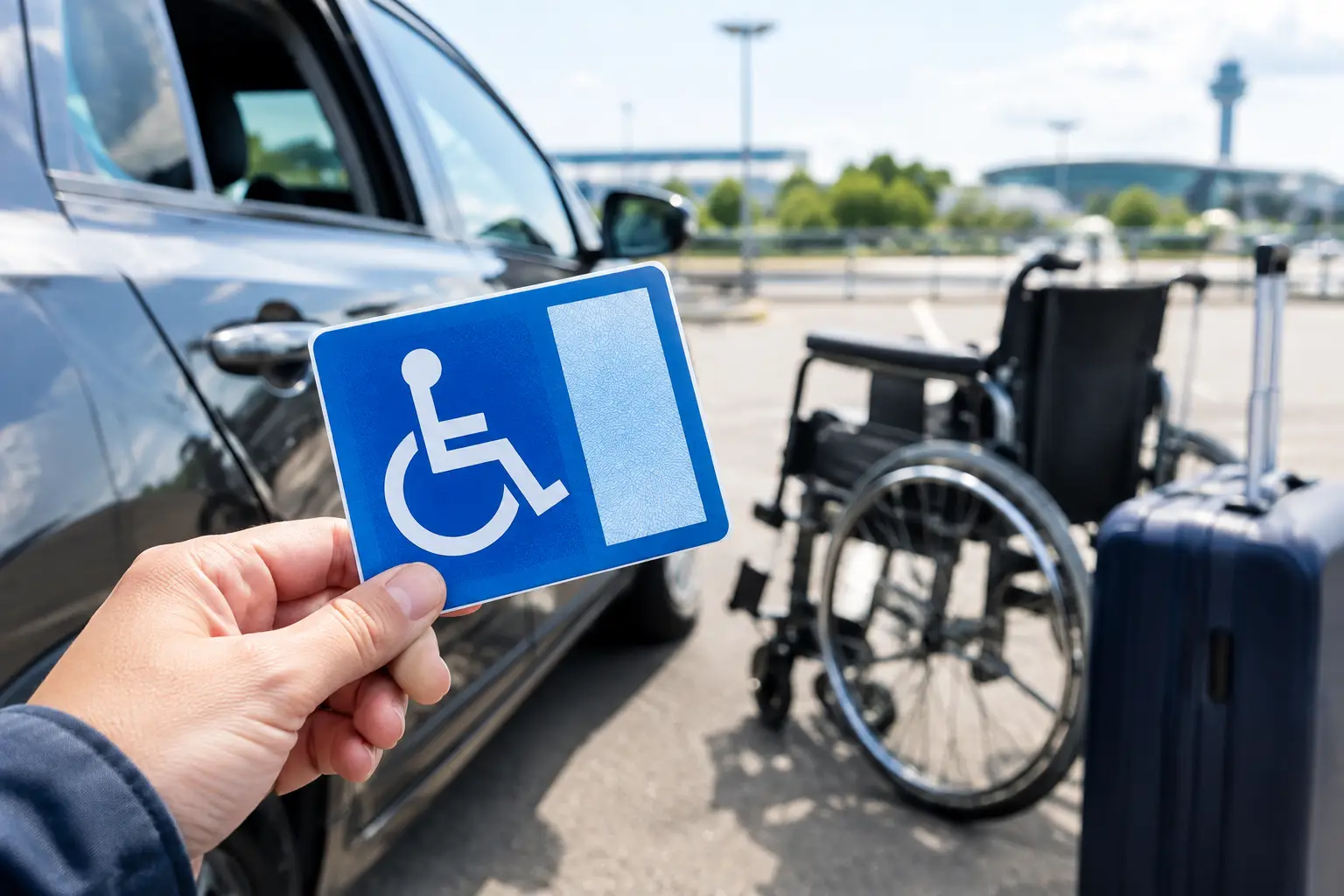
A Blue Badge can turn a difficult day out into a manageable one, but it is not a magic pass to park anywhere. That distinction matters most when you are travelling somewhere unfamiliar, with a wheelchair, mobility scooter, luggage and a timetable that does not leave room for a long detour. This disabled parking permit guide focuses on the practical questions: what the badge does, where the rules change, and how to avoid arriving at an attraction only to find the nearest usable parking is nowhere near the entrance.
What a disabled parking permit means in the UK
In most of the UK, the disabled parking permit people mean is the Blue Badge. It is issued to an eligible individual, not to a particular vehicle. You can use it when you are driving or when you are travelling as a passenger, provided the journey is for you and you need the parking concession.
That is particularly useful for wheelchair and scooter users who rely on a partner, relative, carer or taxi driver. The vehicle may change, but the badge stays with its holder. What must not change is the purpose of the trip. Lending it to somebody so they can park closer while shopping without you is misuse, even if they are family.
A Blue Badge usually gives access to disabled bays and can allow parking on single or double yellow lines for up to three hours where there is no loading ban. You must display the badge correctly, and where required use the parking clock to show your arrival time. The badge does not override kerb markings, loading restrictions, clearways, bus stops, pedestrian zones or signs that specifically prohibit parking.
Local authorities set many of the details. London, for example, has restrictions that differ from other areas, while central zones, event venues and historic town centres can have their own arrangements. Always read the sign beside the bay rather than assuming the familiar Blue Badge rules apply.
Who can apply for a Blue Badge?
Eligibility is based on how a disability affects mobility and access, not simply on having a diagnosis. Some people qualify automatically, such as those receiving certain disability benefits or with a registered severe sight impairment. Others may qualify following an assessment because they cannot walk, find walking very difficult, face serious risk when walking, or cannot make a journey without considerable psychological distress.
For travel planning, the key point is not to put off applying because you think you are ‘not disabled enough’. If getting from a distant car park to an entrance leaves you in pain, exhausted, unsafe or unable to use your mobility aid properly, it is worth checking the criteria with your local council.
Applications are normally made through your local authority. You will usually need identification, proof of address, a suitable photograph and supporting information about your mobility or benefits. Be honest and specific. Explain what happens on a real journey: the distance you can manage, whether you need to stop, whether slopes or uneven pavements cause problems, and whether you use a wheelchair or mobility scooter. Vague statements can make it harder for an assessor to understand the barrier you deal with.
Processing times vary, so do not leave an application until the week before a holiday. If a badge is due to expire, begin the renewal process early as well. An expired badge is not valid, however understandable the delay may feel.
The disabled parking permit guide for day trips
A Blue Badge helps, but it is only one part of accessible parking. Before setting off, check the destination itself rather than just searching for ‘disabled parking’ on a map. A site may have marked bays, yet those bays can be too narrow to deploy a ramp, on loose gravel, at the wrong side of a steep hill, or a long push from an entrance.
Call ahead when the details are unclear. Ask where the accessible bays are located, whether there is step-free access from the bay to reception, whether the route is level, and whether spaces can be reserved. If you travel in a larger adapted vehicle, ask about height barriers and bay width. A standard disabled bay is not always practical for a vehicle with a rear lift or side ramp.
For a mobility scooter user, charging is another consideration. Do not assume a car park has a charging point or that staff will allow a lead through a doorway. Take enough battery for the outward and return route, including the distance around the attraction. Parking close to the entrance is useful, but it does not solve a flat battery at the far end of a large zoo, seafront or stately home.
Private car parks are a common trap. Supermarkets, retail parks, hospitals, hotels and visitor attractions may provide disabled bays but operate their own conditions, cameras or registration systems. Some offer free parking to Blue Badge holders only after you validate your stay at reception. Others still require payment. Keep the badge visible, follow the signs and retain receipts or booking confirmation if there is any dispute later.
Airports, stations and ferry terminals
Transport hubs need more planning than an ordinary car park because the distance from bay to check-in can be considerable. Airport drop-off zones often charge, and Blue Badge concessions vary by airport. Book accessible parking or assistance in advance where possible, especially during school holidays and busy sailing days.
Tell the operator if you are travelling with a wheelchair or scooter. They need to know the dimensions, weight, battery type and whether the equipment can be folded or must travel in the hold. Parking is just the first link in the chain. A close bay is no use if the shuttle bus cannot take your scooter, or if the route from car park to terminal includes kerbs and steep crossings.
At rail stations, accessible parking may be limited and often sits in a separate area from the main station car park. Check the route to the platform, lift availability and staff assistance arrangements before you commit to driving there. If one lift is out of service, a supposedly simple journey can become impossible.
Taking your Blue Badge abroad
Do not assume a UK Blue Badge will be recognised overseas. There is no single international disabled parking permit that works everywhere, and recognition can vary by country, city and even municipal car park. Some places accept a UK badge as evidence of disability, while others require a local permit, advance registration or payment regardless of the badge.
Before travelling, contact the tourist office, local municipality, accommodation or car-hire company for written guidance. Ask precise questions: Can a UK Blue Badge holder use marked accessible bays? Is an additional parking disc needed? Is roadside parking allowed? Are there low-emission or traffic-restricted zones that require registration? Can the vehicle reach the hotel entrance?
This matters in old city centres where narrow streets, bollards and restricted driving zones are more likely to stop you than the lack of a marked bay. It also matters at beaches and rural attractions. A car park labelled accessible may still be surfaced with deep shingle or have a long, sandy approach that is difficult for many wheelchairs and scooters.
Take clear photographs or copies of your badge details for reference, but keep the original secure and do not leave it permanently displayed in an unattended vehicle. A visible badge can advertise that a disabled traveller may be returning to the car with equipment or medication. Use it when parked, then store it safely.
Use the badge confidently, not casually
A disabled parking permit is about independence and safe access, not special treatment. Use it when the badge holder is genuinely benefiting from the journey, display it properly and respect restrictions that protect other road users. If a bay is blocked, too narrow or inaccessible, take a photograph and report it to the venue or council. Specific feedback can lead to a better layout, clearer signs or an enforcement visit.
The best trips are not built on hope that a blue symbol on a sign will solve everything. They are built on checking the route, asking the awkward questions and giving yourself enough time to change plan. That preparation leaves more energy for the part of travelling that matters: being out there, on your own terms.
0 Comments
Leave a Comment