
Car Hire for Wheelchair Users Made Practical
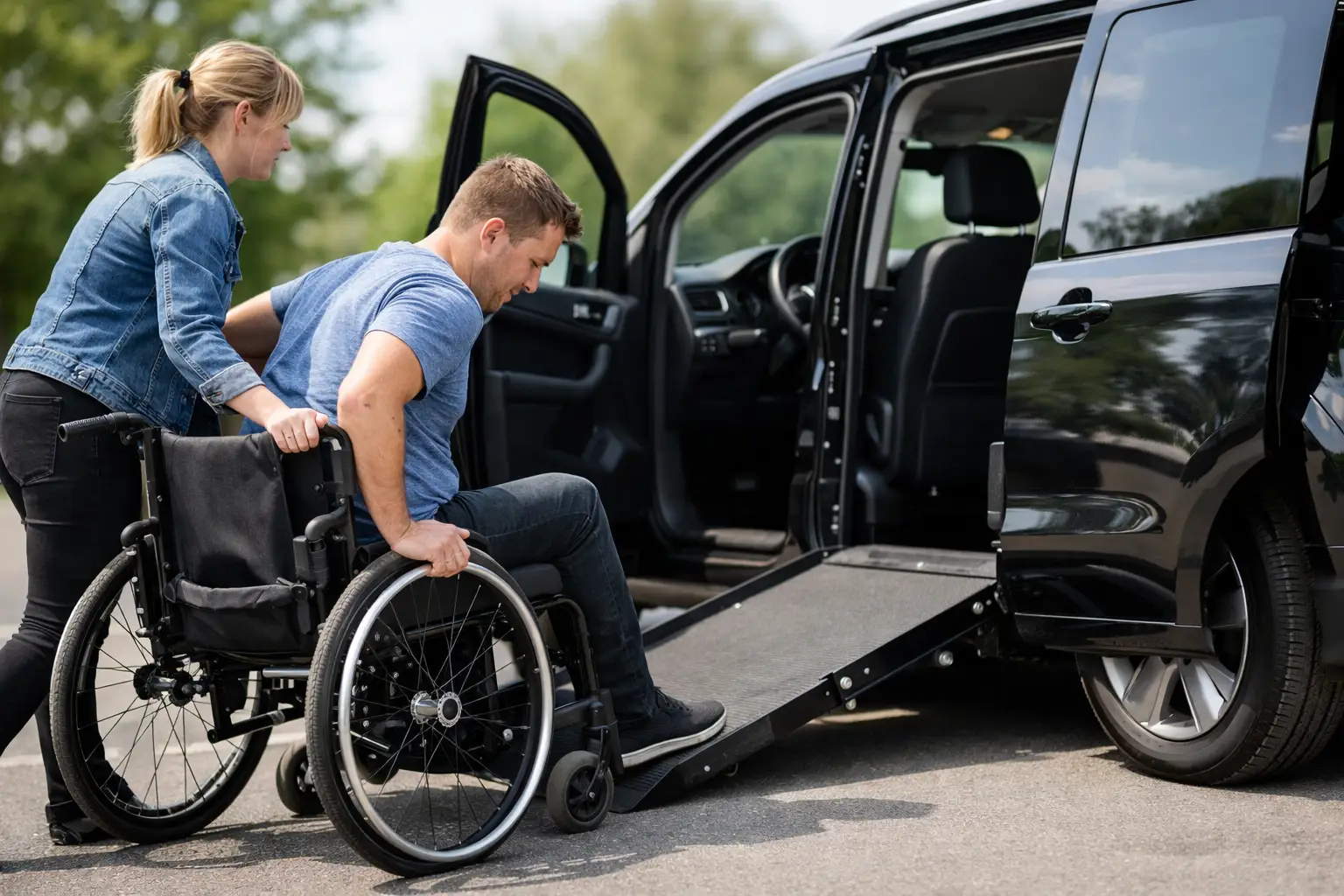
A hire car can be the difference between seeing a destination properly and being limited to wherever public transport happens to go. But car hire for wheelchair users is rarely as simple as ticking an ‘accessible’ box. The useful details are the ones that decide whether the vehicle works in real life: the ramp angle, the boot opening, the wheelchair weight limit, where it can be parked, and whether the driver can operate the controls safely.
The right option depends on whether you travel in your wheelchair, transfer into a standard seat, use a folding chair, or take a powerchair or mobility scooter. There is no one vehicle that suits everyone. A little blunt preparation before paying can save a very expensive problem at the airport or car hire desk.
Start with how you will travel, not the car category
Many people begin by looking for the biggest car available. That can help, but size alone tells you very little. A large SUV may have a high boot lip that makes lifting a manual wheelchair difficult. A people carrier may have plenty of room but no safe anchorage for a wheelchair passenger. A small estate car can sometimes be the better choice for a folding chair and a traveller who can transfer.
If you transfer to a passenger or driver seat, focus on three things: the seat height, the door opening and the space beside the vehicle for transferring. Low sports-style seats can be awkward even if the car looks roomy. A powered seat adjustment may help, but only if it can be positioned at a useful height and far enough back. Do not assume that an automatic vehicle will be easier either. It often is, particularly for drivers with limited leg movement, but access and transfer space still matter.
For a rigid manual chair, powerchair or mobility scooter, a wheelchair accessible vehicle, often called a WAV, is usually the realistic answer. These vehicles normally have a rear ramp or lift, wheelchair restraints and a lowered floor. They are designed to carry a wheelchair user as a seated passenger, and some can be adapted for wheelchair users to drive from their chair.
That wording matters. A ‘wheelchair accessible’ vehicle does not automatically mean you can drive it from your wheelchair. Ask exactly how the vehicle is configured before booking.
What to confirm before booking car hire for wheelchair users
A booking form rarely asks enough questions. Ring the supplier or use email so you have a written record of what has been agreed. Explain the type of wheelchair or scooter you use, whether you will remain seated in it during the journey, and whether you require adaptations to drive.
The key measurements are not glamorous, but they are essential. Give the supplier the overall length, width and height of your chair, plus its weight with batteries fitted and any luggage you expect to carry. Powerchairs and scooters can be much heavier than staff expect, and a ramp or lift will have a stated safe working load. Do not rely on a vague answer such as ‘it should fit’.
Ask for confirmation of the following:
- the ramp or lift weight limit, and whether staff can demonstrate it at collection;
- the internal doorway height, usable floor length and width between any restraints;
- the type of wheelchair tie-downs and passenger belt supplied;
- whether the vehicle has a winch, and whether it is suitable for your chair;
- the exact driving adaptations, if you need hand controls, a left-foot accelerator, steering aid or transfer board.
A winch can be helpful on a slope, but it is not a substitute for checking that the ramp is manageable and that the wheelchair can be secured properly. Likewise, four-point tie-downs are common, but staff should know how to use them and the occupant belt should fit across you correctly rather than around the chair in an unsafe position.
Photos can help, especially for boot access, but ask for recent photos of the actual model or conversion where possible. Hire fleets change. The picture used online may show a different ramp layout, seating arrangement or door height.
Driving adaptations need more than a quick request
If you are driving, book adaptations early. Specialist vehicles and hand controls are not always held at the same depot as ordinary hire cars. They may need to be fitted by an approved supplier, which can take days rather than minutes.
Hand controls vary considerably. Some are push-pull brake and accelerator controls; others use a different lever or electronic system. If you normally use a particular arrangement, say so. A control that is technically available may still be unfamiliar or unsuitable for your strength, range of movement or driving style.
You should also check whether the hire company requires an adaptation assessment, a particular licence code, or evidence that you are insured to use the controls. For UK travel, take your photocard licence and any relevant paperwork. For travel abroad, check the rules in the country you are visiting and whether an International Driving Permit is needed. Requirements can vary even within a larger car hire group.
Never let the first time you try unfamiliar hand controls be on a busy road outside an airport. At collection, take time in a quiet area to adjust the seat, mirrors and controls, practise braking, and make sure you can reach everything without straining. If the setup is wrong, raise it before leaving the depot.
The collection desk is where plans are tested
The hardest part of accessible car hire is often not the driving. It is getting the vehicle you booked, in the condition you were promised, when you are tired after a journey.
Give the company your arrival time, flight number where relevant, and a contact number that works at your destination. Ask where the accessible vehicle will be collected. Some airports have a remote hire compound reached by shuttle bus, and not every shuttle can take a wheelchair user or mobility scooter. If the vehicle is off-site, the supplier needs a plan that works for you, not a suggestion that you somehow reach the office first.
At handover, inspect the ramp or lift before signing. Check that it deploys fully, has grip in wet weather, and that there is enough room to load your chair without removing equipment you depend on. Test the restraints and make sure any removable seats are actually removed if that was agreed.
Take photographs and a short video of the vehicle, ramp, tie-downs and existing damage. This is sensible for any hire car, but especially for a converted vehicle with specialist equipment. Record the fuel level or battery charge as well. If a problem appears later, you have a clear record of the starting condition.
Do not overlook parking, charging and luggage
A suitable vehicle can still become frustrating if the rest of the journey has not been thought through. A rear-entry WAV needs space behind it for the ramp. Standard parking bays may be too short, particularly when another car parks close behind. Blue Badge bays are useful but do not guarantee enough clear space in every car park, hotel or attraction.
If your mobility scooter or powerchair needs charging, confirm that your accommodation has an accessible socket near where the vehicle or chair will be stored. Avoid charging from an extension lead trailing across a walkway. On a road trip, think about how far the chair can travel between charges and whether it must be removed from the vehicle each night.
Luggage is another common surprise. Once a powerchair is inside a WAV, there may be very little room left for suitcases. Soft bags can be easier to place around a chair than hard cases, but they must never interfere with the restraints or block an emergency exit. Travelling with fewer, smaller bags is not glamorous advice, but it can make an accessible vehicle genuinely usable.
Be realistic about cost and availability
Specialist accessible vehicles often cost more and are available in smaller numbers than standard hire cars. That is frustrating, but it is better to know the true cost early than book a cheap standard vehicle that cannot carry your chair. Airport collection, one-way hire, additional drivers, young-driver fees and out-of-hours returns can all add to the final figure.
Insurance deserves the same scrutiny. Check the excess, what happens if the ramp or lift is damaged, and whether personal mobility equipment is covered while inside the vehicle. Your wheelchair or scooter may need its own cover through home, travel or specialist mobility insurance. Do not assume the car policy protects it.
For holidays abroad, build in more contingency than you would at home. Local depots may have limited knowledge of adaptations, replacement WAVs may be many miles away, and roadside assistance needs to understand that towing a vehicle with a wheelchair user aboard is not straightforward. Keep the hire company’s assistance number, your accommodation details and any mobility equipment information easily available.
The car should give you more freedom, not another barrier
A good accessible hire car is not defined by a label or a glossy photograph. It is one that lets you get in safely, secure your equipment properly, drive or travel comfortably, and reach the places you came to see. Be clear about what you need, get the detail in writing and do not be embarrassed to ask the same question twice. Independence on the road starts long before you turn the key.
0 Comments
Leave a Comment