
Can You Take Scooters on Trains?
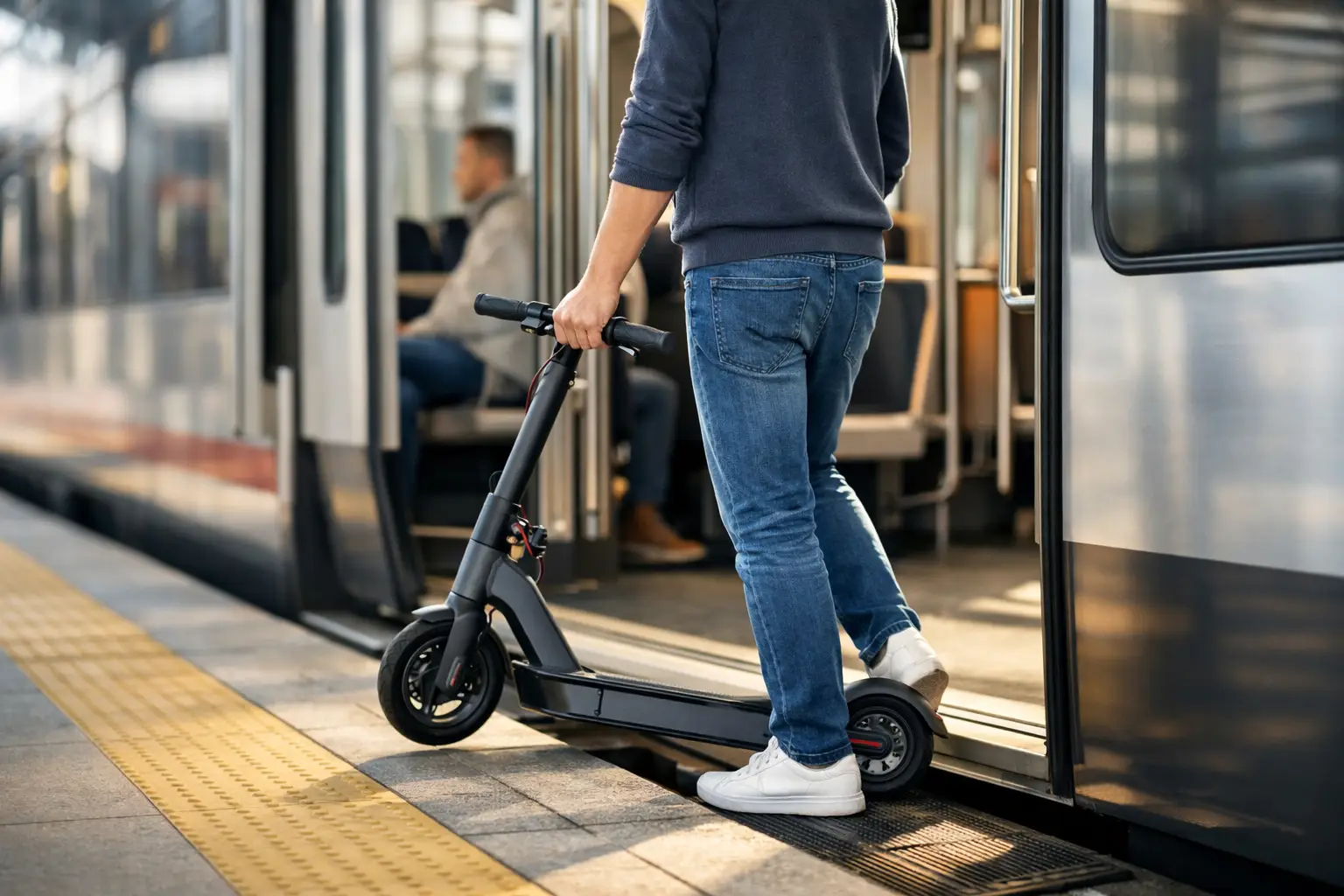
You can turn up at a station with a mobility scooter, a valid ticket and every intention of travelling independently - and still be stopped at the platform. That is why the question can you take scooters on trains matters so much. The short answer is yes, sometimes, but it depends on the train company, the size and type of scooter, the station, and whether staff can board you safely.
That uncertainty is the frustrating part. For disabled travellers, the issue is rarely willingness. It is whether the rules on paper match what happens on the day. If you use a mobility scooter, it is worth knowing that rail travel can be possible, but it is not as simple as assuming every train that takes wheelchairs will also take scooters.
Can you take scooters on trains in the UK?
In the UK, many train operators do allow some mobility scooters, but not all of them. Most companies set limits around size, weight and turning space. A scooter may be accepted if it fits within the operator’s wheelchair dimensions and can be boarded using the available ramp. If it is too long, too wide, too heavy or has poor ground clearance for the ramp, staff may refuse it.
That is where confusion starts. Some scooters are classed by users as compact travel scooters, but still fall outside a train company’s permitted dimensions. Others may technically fit the measurements but become a problem at stations with sharp ramp angles, curved platforms or older rolling stock.
So if you are asking can you take scooters on trains, the honest answer is this: some scooters on some trains, with some operators, from some stations. It depends.
Why train companies say no to some scooters
The restrictions are not always there to be awkward. In many cases, they come down to space and safety. Train wheelchair bays are limited, and those spaces are designed around certain dimensions. A larger scooter can block gangways, create evacuation issues or fail to turn into the designated area.
Boarding is another sticking point. The ramp may have a safe working limit, but the real problem is often the angle between platform and train. A scooter with low clearance can ground out. A heavier scooter may also be difficult to control on a steep ramp, especially in wet weather.
Then there is station design. Not every station has step-free access from entrance to platform. Some do, but only on one side. Others rely on staff-operated lifts, barrow crossings or long routes that can complicate a straightforward journey. A train company may permit your scooter in principle, but the station you are using may still create a barrier.
The difference between a wheelchair and a scooter on trains
This catches people out all the time. Wheelchair access policies do not automatically mean scooter access policies. Rail operators often treat them differently because scooters vary more in shape, handling and stability.
Powered wheelchairs are usually designed with tighter turning circles and dimensions that align more closely to rail accessibility guidance. Mobility scooters can be longer, bulkier and harder to manoeuvre in narrow train spaces. That does not make scooters unreasonable. It simply means they are assessed differently.
If you transfer easily, some operators may suggest folding or storing a small scooter and travelling in a seat instead. That can work for a lightweight boot scooter, but it is obviously not a realistic option for everyone. If you rely on your scooter throughout the journey, you need to know whether you can remain on it or whether the operator expects another arrangement.
What to check before you book
The most useful thing you can do is check the operator’s scooter policy before travel, not at the station gate. Start with the train company you will be using, because each one can set its own criteria.
You will usually need the make and model of your scooter, plus its overall length, width, weight including batteries, and turning radius if available. If you do not know these details, look them up from the manufacturer or measure the scooter yourself. Guessing is risky, because staff may compare what they see against policy limits.
Also check whether the route involves a change. A journey that works perfectly on one operator may fall apart when the second company has stricter rules. The same applies to replacement transport. If part of the route is covered by a rail replacement coach, your scooter may not be carried at all.
Booking assistance makes a real difference
If you use a scooter, pre-booking assistance is usually the safest approach. It gives staff advance notice, helps confirm station accessibility and reduces the chances of a last-minute argument on the platform.
Assistance teams can tell you whether your departure and arrival stations are step-free, whether a ramp can be provided, and whether there are any known access issues on the day. They can also note that you are travelling with a mobility scooter, which matters because staff are often dealing with limited space and tight dispatch times.
It is still wise to allow extra time. Even with assistance booked, things can go wrong. Staff can be delayed, trains can be altered, and platform changes can create problems if lifts are out of order. The more breathing room you build into the journey, the less pressure there is when one part does not run smoothly.
Practical issues on the day of travel
Even where scooters are accepted, real-world travel can be awkward. Busy commuter services are harder than quieter off-peak trains. A wheelchair bay may already be occupied. Some trains have a larger accessible area than others, and older trains are often less forgiving.
Battery level matters more than people think. If you are navigating a large station, tackling long step-free routes and waiting around for assistance, you do not want to be watching the charge indicator drop. It also helps to carry your scooter’s key, charger if practical, and any dimensions or documentation in case staff ask questions.
If your scooter has a freewheel mode, know where it is and how it works. In the unlikely event that staff need to help reposition the scooter, that knowledge can save time and stress. The same goes for removable armrests, baskets or accessories that increase width.
When a compact travel scooter is your best bet
If train travel is going to be a regular part of your life, a compact travel scooter often gives you the best chance of being accepted. Smaller scooters are easier to board, easier to turn and more likely to fit standard wheelchair spaces.
That said, compact does not always mean suitable. Some smaller scooters have limited battery range, reduced comfort and less stability outdoors. If you travel mainly by train but also need long days out over uneven ground, you may end up balancing rail compatibility against practical everyday use.
This is one of those areas where independence is rarely about the perfect device. It is about choosing the compromise that creates the fewest barriers for the journeys you actually take.
What to do if staff refuse your scooter
A refusal at the station can feel personal, especially when you have planned carefully. In reality, it is often down to staff following the policy in front of them or making a judgement based on safety. Staying calm gives you the best chance of finding another option.
Ask exactly why the scooter is being refused. Is it the weight, the size, the ramp angle, the train type or the station layout? A clear answer helps you challenge bad information if necessary and plan better next time. If the problem is uncertainty rather than policy, politely ask staff to check with their control team or accessibility support.
If you cannot travel, make sure you record what happened. Note the time, station, service and the reason given. That matters if you need to complain or request clearer guidance from the operator later. Honest feedback is one of the few ways these systems improve.
A realistic way to think about train travel with a scooter
Rail travel with a mobility scooter is possible in the UK, but it still demands more planning than it should. The answer to can you take scooters on trains is not a neat yes or no, and pretending otherwise does disabled travellers no favours.
What does help is treating each journey as an access check, not just a ticket purchase. Check the operator, check the scooter dimensions, check the stations, and book assistance early. That bit of groundwork can be the difference between rolling straight onto the train and being stranded on the platform.
For many disabled travellers, that preparation is simply part of travelling well. It is not ideal, but it is manageable - and the more you know before you leave home, the more confidently you can keep moving.
0 Comments
Leave a Comment