
Can Mobility Scooters Use Taxis?
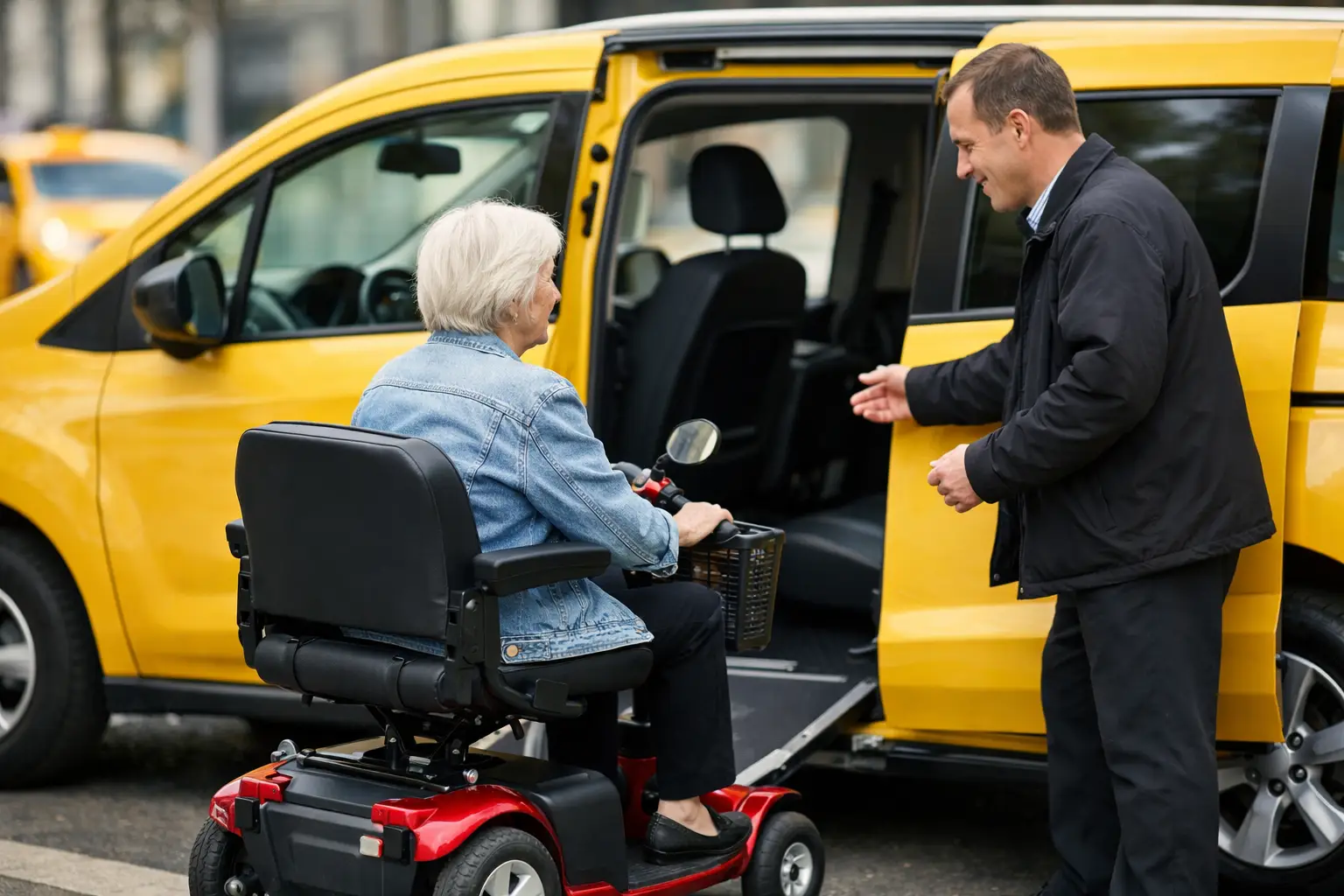
You are packed, the hotel is booked, and then the awkward bit appears - can mobility scooters use taxis when you actually need one? The honest answer is yes, sometimes, but not by default. That is where many disabled travellers get caught out. A taxi might be legally licensed, accessible on paper, and still be no use at all if your scooter is too large, too heavy, or cannot be secured safely.
This is one of those travel questions where vague advice is worse than no advice. If you use a mobility scooter, you need to know not just whether a taxi company says "accessible", but what that means in practice. For some people, a standard saloon taxi will work if the scooter folds and fits in the boot. For others, the only realistic option is a wheelchair accessible vehicle with a ramp and enough interior space. And even then, some drivers will carry the scooter but not allow you to remain seated on it during the journey.
Can mobility scooters use taxis in practice?
In practice, mobility scooters can use taxis if the vehicle can carry the scooter safely and the driver or operator agrees to take it. That sounds simple, but there are several moving parts. The size and type of scooter matter, the design of the taxi matters, and local operator policies matter as well.
A small boot scooter is usually the easiest. If it separates into lighter pieces or folds down, many private hire cars can manage it, provided the driver is happy to load it and there is enough boot space left for any other luggage. A pavement scooter or road scooter is a different story. Those are often too bulky for ordinary cars and may need a larger accessible taxi or adapted minibus.
The key point is this: taxis do not all work the same way. One company may be excellent with scooters, while another may say no purely because the vehicle on dispatch is too small or the driver has not been trained to handle mobility equipment.
The difference between a folded scooter and travelling in it
This is where confusion often starts. A lot of people ask whether they can take a mobility scooter in a taxi, but what they really mean is one of two different things.
The first is taking the scooter as luggage, folded or dismantled. That is often possible in an ordinary taxi or private hire vehicle if it fits. The second is boarding the taxi while remaining seated on the scooter. That is much more limited and usually not allowed unless the scooter has been approved and secured in line with the vehicle's safety systems. In many cases, even in wheelchair accessible taxis, the answer will be no.
Most accessible taxis are designed for wheelchairs rather than mobility scooters. That distinction matters. A wheelchair user may be able to travel while staying in their chair if the chair and tie-down setup are suitable. A mobility scooter is often treated differently because of its shape, turning circle, weight distribution and safety considerations in a moving vehicle.
If you use both a wheelchair and a scooter depending on the journey, it is worth asking specifically which one the taxi can accommodate. Never assume that "wheelchair accessible" automatically means "mobility scooter accessible".
What usually decides whether a taxi will take your scooter
The biggest factor is size. Drivers and booking staff need to know the scooter's length, width and height, especially if it needs to go into the back of a vehicle or through a ramped entrance.
Weight matters just as much. A scooter may physically fit, but if it is too heavy to lift safely, that can end the conversation straight away. This is particularly common with larger pavement and road scooters. If your scooter breaks into parts, tell the operator the weight of the heaviest section, not just the total weight.
Battery type can also come up, especially on longer-distance trips or airport transfers where operators are more cautious about equipment. Ground clearance and turning space matter too in accessible taxis, because a scooter that looks compact on paper may still be awkward to manoeuvre up a ramp and into position.
Then there is the human factor. Some drivers are confident and helpful. Others are not used to scooters and will avoid the booking rather than risk damage or delay. That is frustrating, but it is better to know before the car arrives than at the kerb.
How to book a taxi when you use a mobility scooter
The best approach is to book by phone if possible, especially for the first journey with a company. Apps are convenient, but they usually do a poor job of handling accessibility details beyond basic notes.
Tell the operator exactly what you use. Saying "mobility scooter" is not enough on its own. Give the make and model if you know it, whether it folds or dismantles, and whether you transfer to the vehicle seat or need to remain in a wheelchair instead. If the scooter has a removable battery or separate tiller, say so. Those details can turn a doubtful booking into a workable one.
It also helps to ask the right question. Instead of asking, "Do you take mobility scooters?" ask, "I have a folding scooter measuring this size and I transfer into the car seat. Which vehicle can carry it safely?" That pushes the conversation towards practical solutions rather than a quick yes or no.
If it is an important trip - airport, cruise terminal, theatre, hospital, railway station - ask for the booking note to include the scooter details. On return journeys, try to use the same company if the first leg goes well.
Black cabs, private hire and accessible vehicles
In the UK, black cabs and other wheelchair accessible taxis can be a good option, but they are not automatically suitable for every scooter user. They tend to offer more space, ramps and easier entry than standard cars, which helps if walking is difficult or if your scooter is compact enough to roll in. But again, many are set up around wheelchair carriage rather than scooter transport.
Private hire firms vary wildly. Some have larger estate cars or MPVs that can swallow a folded scooter with no fuss. Others mainly run standard saloons, which can make things awkward even with a small boot scooter.
Specialist accessible transport providers can be the most reliable for bigger scooters, but they often need more notice and may cost more. That extra cost can be worth it if it removes the usual uncertainty and gets you to the airport, port or hotel without a fight.
Common problems people run into
One of the most common problems is booking an "accessible" taxi online and finding a vehicle that is accessible only in the broadest possible sense. It may have more room, but not enough for your particular scooter.
Another issue is drivers refusing larger scooters at pickup because they were not told what was coming. That is why detail matters. If your scooter is substantial, a vague booking note will not protect you.
There is also the problem of return journeys. You might manage the outward trip because a helpful driver makes it work, then struggle later because the next driver has a different vehicle or a different attitude. When travelling, reliability matters more than one lucky ride.
For holidays and city breaks, think beyond the taxi itself. If you are heading to a railway station, can the scooter be unloaded safely at the drop-off point? If you are arriving at a hotel, is there step-free entry from the taxi rank? A workable taxi journey can still be a poor transfer if the pavement, kerb or entrance lets you down.
Practical advice before you travel
Measure your scooter and keep the dimensions in your phone. Include folded dimensions if that applies. Also note the total weight and the weight of the heaviest part if it dismantles.
Take a quick photo of the scooter folded or separated. Some operators understand instantly once they see it. It saves time and reduces misunderstandings.
Build in backup options. If you are travelling somewhere unfamiliar, identify at least one alternative taxi firm and check whether local accessible transport schemes exist. For airport runs or cruise departures, I would always book ahead rather than assume something will be available on the day.
If you travel regularly, keep a short script ready with your scooter model, size and what assistance you need. It makes every booking easier and cuts down on the exhausting back-and-forth that many disabled travellers know too well.
So, can mobility scooters use taxis without hassle?
Sometimes yes, but the hassle depends on the scooter, the vehicle and how well you prepare. Smaller folding scooters usually have the best chance. Larger scooters often need specialist planning. There is no shame in being blunt when booking - you are not asking for special treatment, you are making sure the journey is possible.
That is really the heart of it. Good travel with a mobility scooter is rarely about luck. It is about asking specific questions early, refusing vague promises, and setting yourself up so the taxi works for you rather than becoming another barrier. A bit of planning can protect a lot of independence.
0 Comments
Leave a Comment