
Can Mobility Scooters Go on Planes?
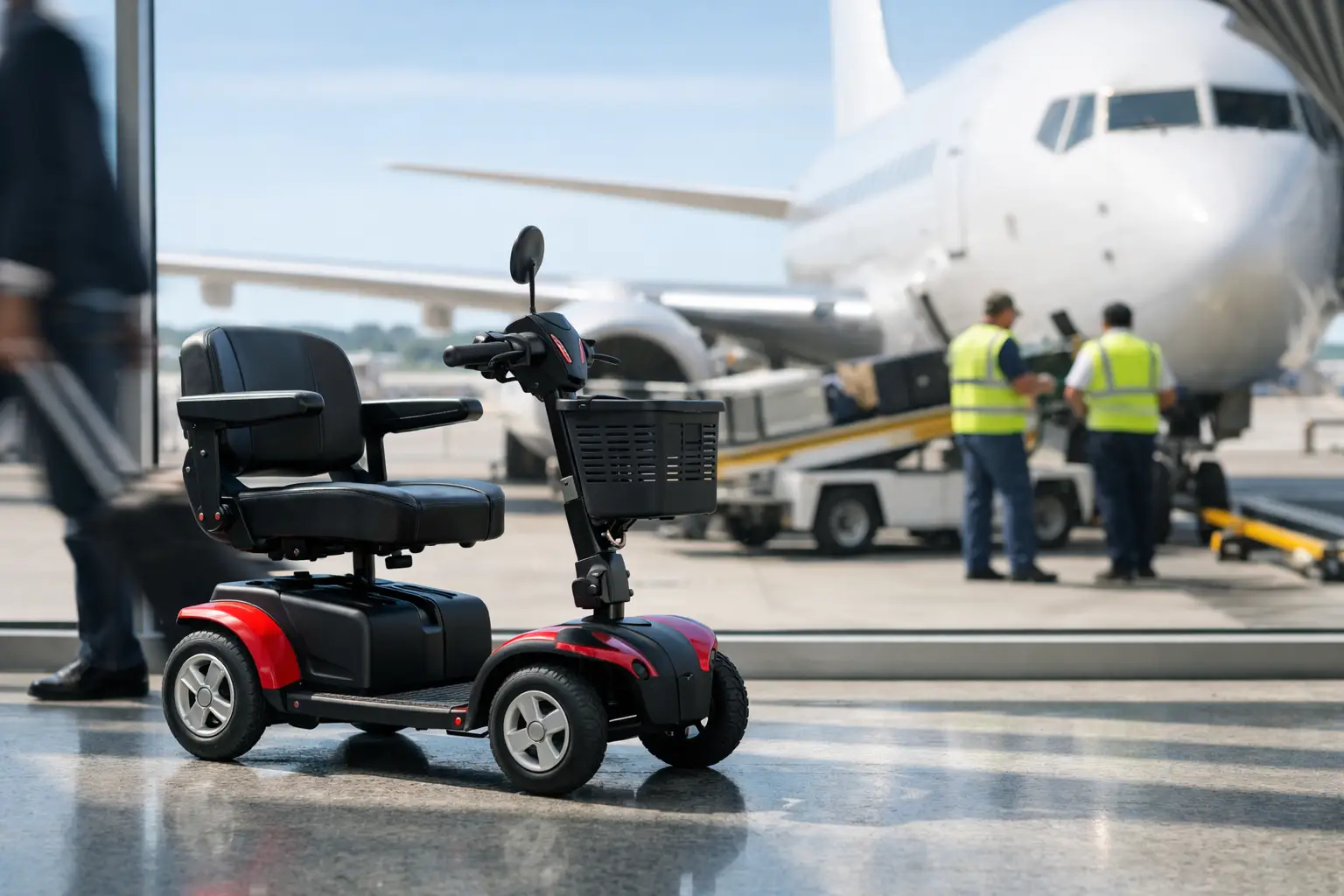
If you are asking can mobility scooters go on planes, the honest answer is yes, often they can. The less comforting answer is that flying with one depends on battery type, airline policy, aircraft size and how well the ground staff handle mobility equipment on the day. That is why this is one part of accessible travel where good planning makes a huge difference.
I have found that the biggest problem is not usually whether a scooter is allowed in principle. It is whether the airline understands its own rules, whether the airport team records the right details, and whether your scooter fits both the safety requirements and the hold space on the aircraft. Those are very different things.
Can mobility scooters go on planes without problems?
Sometimes yes, but I would never promise a hassle-free experience. Many airlines do carry mobility scooters in the hold as mobility equipment, and they should not treat them like ordinary luggage. Even so, scooters are more complicated than manual wheelchairs because of their weight, batteries and the risk of damage during loading.
Short-haul flights on smaller aircraft can be the most awkward. A scooter that is accepted for a long-haul route on a larger plane may be refused on a regional aircraft simply because the cargo door is too small or the hold layout cannot take it safely. This catches people out because they assume the airline's general policy applies to every route. It does not always work like that.
The practical point is simple. Never book first and ask later. Confirm your scooter's full specifications before you pay, and get the airline to note them on your booking.
The details airlines usually ask for
Airlines and special assistance teams usually want the same core information. They need the make and model, overall dimensions, weight, whether it folds or comes apart, and the battery type. If your scooter has removable parts, say so. If the tiller folds down, mention that as well. A few centimetres can be the difference between accepted and refused.
Keep these details written down on your phone and on paper. I would also keep a clear photograph of the manufacturer's plate or manual page showing the battery and dimensions. When staff are unsure, having the information in front of you can stop an argument before it starts.
Battery rules matter more than most people expect
For air travel, the battery is often the deciding factor. Most airlines are far more comfortable with sealed gel or dry batteries than with lithium batteries, although lithium is now common on travel scooters. The issue is safety regulation, not convenience.
If your scooter uses lithium batteries, check the watt-hour rating. Airlines usually have limits, and some will only accept batteries below a certain threshold, especially if they are removable and must travel in the cabin. Others may allow one set but require the terminals to be protected and the battery to be carried in a certain way. You cannot safely assume that because one airline accepted your scooter last year, another will do the same now.
Non-spillable batteries are often simpler, but they still need to be declared. Ground staff may ask whether the scooter can be switched fully off, isolated or placed in freewheel mode. If you do not know, learn before you travel. Airport staff are not there to work out your scooter for you.
Before you book, ask the right questions
When you contact the airline, do not just ask, "Can I take a mobility scooter?" That question is too broad and often gets a careless yes. Ask whether your exact scooter model, with your exact dimensions and battery type, can be carried on your exact flight.
Also ask whether all legs of the journey are operated by the same airline. Codeshare and partner flights can cause problems because the booking airline may say yes while the operating airline has different limits. The same issue comes up on connecting routes where one aircraft is much smaller than the other.
If possible, ask for written confirmation by email or live chat transcript. Verbal reassurance from a call centre is better than nothing, but written evidence is far more useful if you meet confusion at check-in.
Preparing your scooter for the flight
A mobility scooter going into the hold needs preparing properly. This is not being over-cautious. Baggage handlers are working fast, and your scooter will not get special treatment just because it matters to you.
Take off anything that can detach easily, such as baskets, mirrors, cushions, bags, cup holders or phone mounts. Keep the key with you. If the battery is removable and the airline requires it to be carried separately, pack it exactly as instructed. If your scooter can be folded down or partially dismantled, do that if it reduces the risk of damage and makes loading easier.
I strongly recommend attaching a simple instruction sheet to the scooter. Include your name, mobile number, flight number and a few clear points such as how to switch it off, how to release freewheel mode and where the lifting points are. Staff may still ignore it, but many do read it, and it gives your equipment a better chance.
At the airport: what usually happens
Most airports will let you use your scooter up to check-in or through to the gate, depending on the airport and airline arrangements. In many cases, that is the best option because it keeps you mobile for longer and avoids an early handover.
Once the scooter is taken, you will usually transfer to an airport wheelchair and use special assistance for the rest of the journey to the aircraft door. That means you need to be ready for waiting. Assistance can be excellent or painfully slow, and the quality varies a lot between airports.
Give yourself more time than the airline's minimum check-in advice. For disabled travellers, cutting it fine is rarely worth it. Delays at bag drop, security and assistance handover can build up quickly.
Damage and loss are real risks
This is the part nobody likes talking about, but it matters. Mobility scooters do get damaged in air travel. Controls can be bent, armrests snapped, body panels cracked and batteries mishandled. Even when the damage looks minor, it can leave the scooter unsafe or unusable when you land.
Take photographs of the scooter from all sides before travel. If anything is damaged, report it before leaving the airport if you can. Do not assume you can sort it later from home. Make staff record it properly, and keep copies of every document.
It is also worth carrying whatever you need to manage if the scooter is delayed or unusable for a while. That might mean medication, a small seat cushion, charger, walking aid or having a back-up plan with whoever is meeting you.
Travel scooters are often easier than larger models
If you fly regularly, a lighter travel scooter can make life easier. That is not to say everyone should switch. Larger scooters are often more comfortable, more stable and better outdoors. But for flying, lighter folding or dismantling models usually create fewer problems with weight limits and hold access.
There is always a trade-off. The scooter that works brilliantly around your local area may be a poor fit for air travel. On the other hand, the most flight-friendly scooter may be less comfortable on rough pavements or longer days out. Independence is about choosing the right tool for the trip, not forcing one solution to do everything.
What if the airline says no?
If an airline refuses your scooter, ask why. The answer matters. If it is a battery issue, there may be a compliant way to carry it or a different battery option approved by the manufacturer. If it is an aircraft size issue, another route or another airline may solve the problem.
If the refusal sounds vague, push for clarity. You are not being difficult by asking for the exact restriction. Generic replies like "health and safety" are not useful. Real planning depends on specifics.
For some travellers, the best answer is choosing a different destination, a different airport or another form of transport. That is frustrating, but it is better than turning up and being stranded at check-in.
Final checks before you travel
A few days before departure, contact the airline again and make sure the assistance request and scooter details are still on the booking. I would do the same for the return flight. Systems fail, notes disappear and assumptions cause trouble.
Flying with a mobility scooter is absolutely possible, and many disabled travellers do it every year. The key is not luck. It is getting ahead of the awkward bits before they become airport problems. When you know your scooter, know the battery rules and get everything confirmed in writing, you give yourself the best chance of starting the trip with confidence rather than stress.
0 Comments
Leave a Comment