
How to Book Accessible Train Assistance in Britain
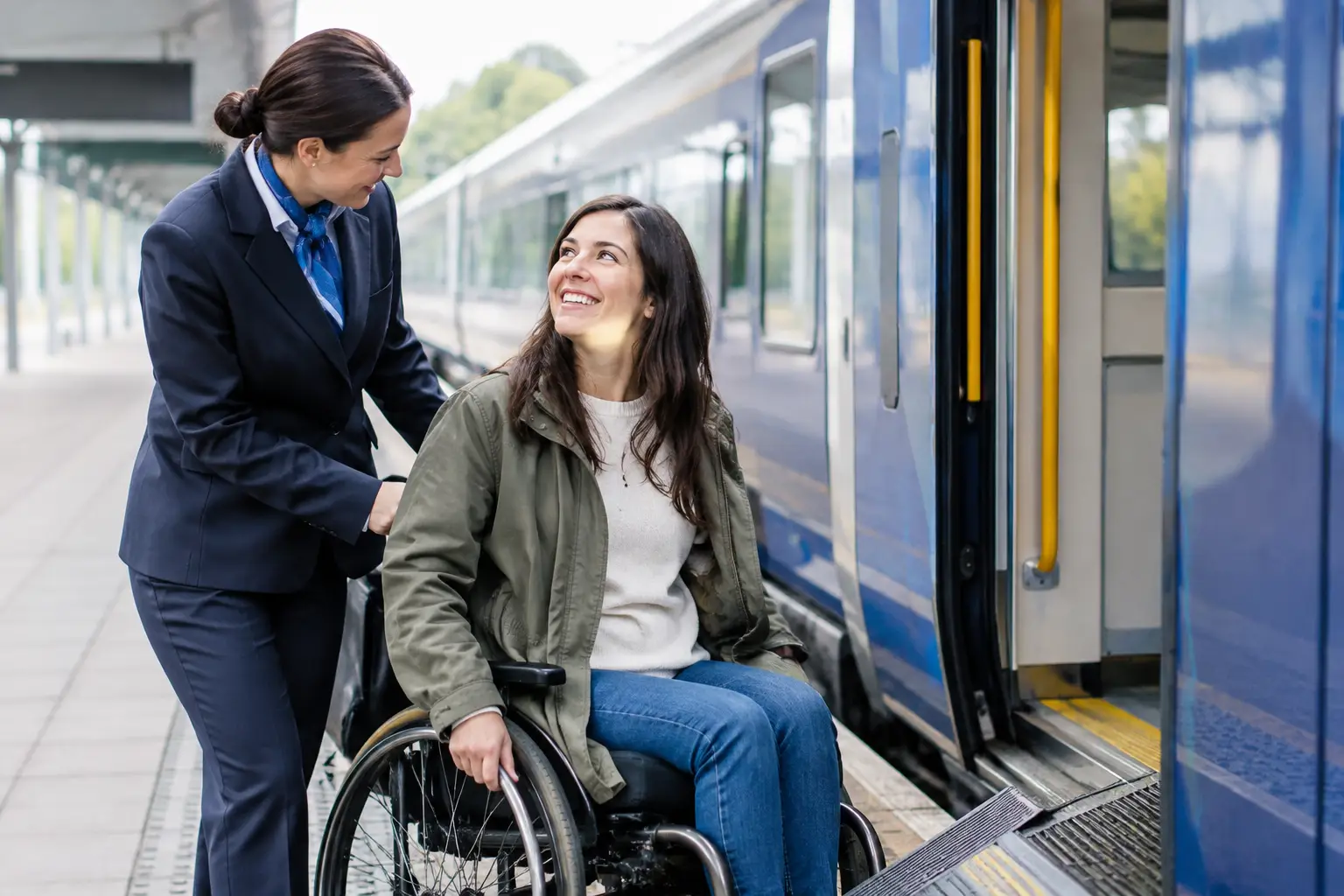
A train journey can look simple on a booking screen, then become complicated the moment there is a platform change, a steep ramp or a connection with only a few minutes to spare. The good news is that you can book accessible train assistance for much more than getting on and off the train. Used properly, it is a practical way to make rail travel more independent, whether you use a wheelchair, mobility scooter or need support through a large station.
The key is not just making the booking. It is giving the right information, checking the parts that assistance cannot fix, and allowing enough time for the journey to go off plan.
What accessible train assistance actually covers
In Great Britain, Passenger Assist is the system used by train companies to arrange help for disabled passengers. Depending on the station and service, this can include meeting you at a designated point, helping you to the platform, providing a boarding ramp, guiding you between trains and helping you leave at your destination.
It can also be useful when you can physically travel on the train but need certainty at unfamiliar stations. Large interchanges can involve long distances, lifts hidden at the far end of a platform and staff-controlled gates. Asking for assistance is not giving up your independence. It is planning around a system that is still inconsistent from one station to another.
Assistance does not automatically mean a seat reservation, a wheelchair space reservation or permission to take a mobility scooter. These are separate issues and need checking before you travel. That distinction catches people out far too often.
How to book accessible train assistance
You can usually arrange Passenger Assist through the train company you are travelling with, the Passenger Assist service, or the retailer where you bought your ticket if it offers assistance booking. You do not have to buy a ticket from the same company that runs every train on your route.
Book as early as you can, especially for a long journey, a weekend, a bank holiday or a route with several operators. Assistance can generally be arranged closer to departure, but earlier booking gives staff more time to plan and gives you time to sort out a problem before you are at the station.
When you make the booking, give your full itinerary rather than only the first train. That means the departure station, every change, the final destination and both outward and return journeys. A booked ramp at the first station is no help if nobody is expecting you at the connection.
Be clear about what you use and what you need. Say whether you are travelling in a manual wheelchair, powered wheelchair or mobility scooter; whether you can transfer to a seat; whether you are travelling alone; and whether you need a ramp at every stage. If a companion is travelling, mention that too, particularly if they are carrying luggage or need to stay with you during assistance.
Before ending the call or online booking, check the confirmation carefully. Make sure the date, stations and train times are right. Keep the booking reference on your phone and, if you prefer, written down as well. Phone batteries fail at exactly the wrong moment.
Questions scooter users should ask before booking
If you travel with a mobility scooter, do not assume that because a station can provide a ramp, the train can carry your scooter. Different train companies have different rules on scooter dimensions, turning circles, weight and whether the model can be folded. Some services permit only scooters that meet set limits or have a permit; others may require the scooter to be folded and stored.
Ask the operator about the specific trains on your route, including replacement buses if engineering works are planned. Confirm whether there is a dedicated space, whether it needs reserving, and whether your scooter can be secured safely. A scooter that fits through the station gate may still be too long for the train doorway or unable to turn into the accessible area.
Battery type matters too. Most modern mobility scooters use sealed batteries, but it is worth knowing what is fitted to yours and carrying the relevant details. Keep the scooter charged before leaving home. Railway staff can assist with boarding, but they cannot solve a flat battery halfway through a journey.
Check the journey, not just the train
A direct service from a step-free station to another step-free station is usually the lowest-stress option, even if it takes a little longer. One connection can add a lot of risk when lifts are out of service, trains are delayed or platforms change at short notice.
Before travelling, check that every station you will use has the access you need. “Step-free” is useful wording, but it does not always mean step-free from street to train. At some stations, it may mean step-free access only to certain platforms, via a long route, or only when staff unlock a gate. At smaller stations, assistance may need to be arranged in advance because there are not always staff present.
Think about the route through the station as well. Can your taxi drop you near the accessible entrance? Is there an accessible toilet before boarding? Is there a lift at the platform you need, and is it working today? These are the operational details that turn a theoretically accessible journey into a manageable one.
Allow extra time at your starting station. Arriving 20 to 30 minutes before departure is sensible for many journeys, particularly if you need to find a meeting point or travel with a scooter. At a station you do not know, build in more time rather than racing across a concourse while staff are trying to locate you.
On the day: make the booking easy to deliver
When you arrive, go to the agreed meeting point or speak to a member of staff as soon as possible. Do not wait quietly on the platform and assume everyone has seen the booking. Stations are busy places, staff can be pulled in different directions, and a polite check-in gives everyone the best chance of getting it right.
Keep your ticket, assistance reference and train details ready. If you have a wheelchair or scooter, remove loose bags before boarding where possible. A bag dangling from the back can catch on a doorway or make positioning in the accessible space harder.
Once on board, make sure you are in the correct accessible area and that staff know your destination if they have not already confirmed it. If you are travelling through several operators, ask whether the onward assistance has been passed on. It should be, but asking is far easier than discovering a missed handover on an unfamiliar platform.
Delays, missed connections and platform changes
This is where preparation earns its keep. If your train is delayed and you will miss a connection, tell the guard or on-board staff early. Show them your assistance reference and explain what you need at the next station. They may be able to contact station colleagues, advise on the next suitable service or arrange help before you arrive.
If a platform changes, do not feel pressured to keep up with the crowd. Ask staff for the accessible route. The quickest route for walking passengers may involve stairs, a footbridge or a lift that is already full. You need the route that works for you, not the one shown by the rush of people around you.
Replacement rail buses are a particular warning sign for wheelchair and scooter users. Accessible vehicles may be available, but capacity and boarding arrangements can vary greatly. If engineering works are on the route, check alternatives before setting off. Sometimes a different train route or travelling on another day is the more realistic choice.
If booked assistance does not turn up, speak to station staff immediately and keep a note of what happened, including times and names where possible. You should not be left to solve an access failure alone. Still, having the booking reference, a charged phone and a little time in hand puts you in a far stronger position.
A practical checklist before you leave
For a journey involving assistance, have four things sorted: your confirmed full itinerary, your assistance reference, confirmation that your wheelchair or scooter is accepted on each service, and a backup plan for a missed connection. The backup might be a later train, a direct route with fewer changes, or the number of someone who can help if plans change.
It is also worth carrying water, medication, charging leads and a light waterproof layer within reach rather than buried in luggage. Delays are irritating for everybody; they are far more difficult when you cannot easily leave the platform or find an accessible shop.
Rail travel is not barrier-free everywhere, and pretending otherwise does nobody any favours. But with the right booking and a realistic plan, it can be a reliable way to get out, see more of Britain and keep control of your journey. Start with the information staff need, leave room for the unexpected, and do not let a complicated station be the reason you stay at home.
0 Comments
Leave a Comment