
Best Wheelchair Friendly Hotels London
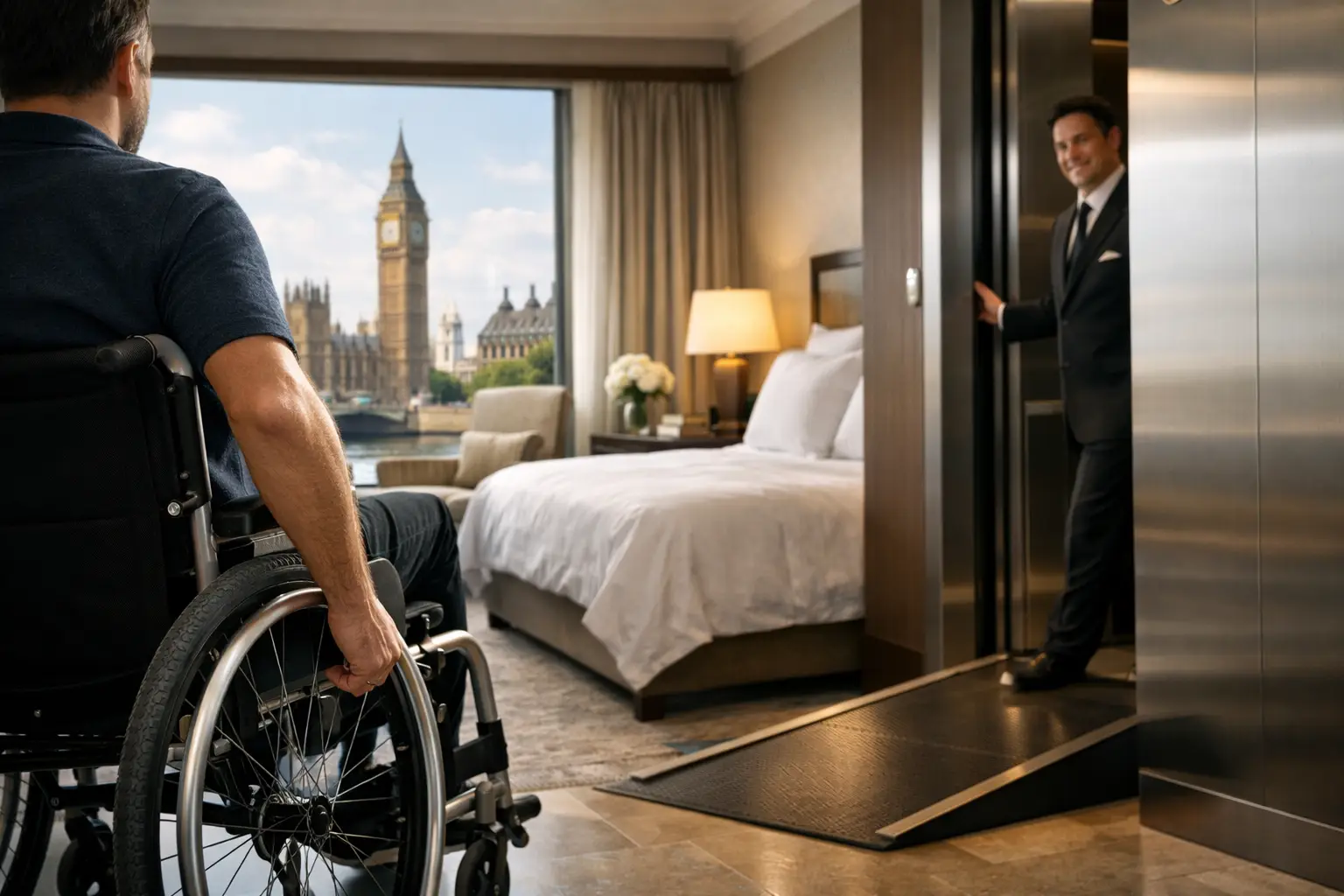
London can be brilliant in a wheelchair, but only if your hotel works properly from the minute you arrive. That is why finding the best wheelchair friendly hotels London has to offer is not about star ratings or fancy photos. It is about level access, lifts that actually fit your chair or scooter, wet rooms that are usable, and a location that does not leave you battling steep kerbs or awkward Tube stations before breakfast.
The hard part is that plenty of hotels say they are accessible when what they really mean is they have one adapted room and a reception desk with a portable ramp somewhere out the back. For wheelchair users, mobility scooter users, carers and family members, that is not good enough. You need to know what the room is like, how easy the entrance is, whether the bathroom gives proper turning space, and whether the surrounding area helps or hinders your trip.
What makes the best wheelchair friendly hotels in London?
A genuinely accessible London hotel gets the basics right first. Step-free access from the street matters more than a stylish lobby. Automatic doors, sensible flooring, accessible toilets in public areas, and lifts large enough for a powerchair all make a real difference. If you are using a scooter, charging space in the room is another practical point that gets overlooked far too often.
Bathrooms are where many supposedly adapted rooms fall down. A proper roll-in shower, grab rails in the right place, a shower seat that feels secure, and enough room to transfer safely matter far more than whether the taps look expensive. Bed height is worth checking as well. Some modern hotels have beds that are too high for an easy transfer, which can turn an otherwise good room into a tiring one.
Location also matters, but not in the usual tourist brochure sense. Being near a famous landmark is useful, but being near step-free transport is often more important. A hotel in Zone 1 with poor station access can be less practical than one slightly further out with reliable step-free rail links and flatter streets.
Best wheelchair friendly hotels London travellers should consider
Park Plaza Westminster Bridge
If you want to stay central and keep sightseeing straightforward, this is one of the strongest options. The location is hard to beat for wheelchair users who want to see big-ticket London without endless travel. You are close to Westminster, the South Bank and plenty of places that are easier to navigate than older parts of the city.
The hotel is known for having accessible rooms that are generally more spacious than average for central London. That extra room matters when you are turning a wheelchair, parking a scooter or travelling with a carer. Public areas tend to be easier to move around than in many older London properties, and the entrance setup is usually better than the cramped access you get at some boutique hotels.
The trade-off is price. It is not the cheap option, especially at busy times, but if you want central access with less compromise, paying more can save stress.
Premier Inn hub and standard Premier Inn properties
Premier Inn is not glamorous, but for many disabled travellers it can be a sensible choice because the chain is usually clearer than luxury hotels about what is and is not available. Not every London property will suit every wheelchair or scooter user, and the smaller hub rooms are often too tight, but standard accessible rooms in the right branch can offer decent value and predictable basics.
The key here is not to book blind. One Premier Inn can be far easier than another depending on building age, entrance layout and room shape. If you are considering this route, ask direct questions about door widths, bed clearance, shower setup and whether your scooter can be stored and charged safely.
This is a good example of where budget and accessibility sometimes meet, but only if you do the checking first.
Novotel London Canary Wharf and Docklands area hotels
Canary Wharf can work surprisingly well for wheelchair users. The area is more modern, pavements tend to be wider, and the general layout is often easier than parts of the West End. Hotels like Novotel in this part of London are worth looking at if you prefer practical access over old-world character.
Modern business-focused hotels often have better lifts, more consistent room layouts and less awkward access at the front entrance. That can make a real difference after a long journey. The Docklands Light Railway and Elizabeth line connections can also make travel easier, though you still need to check the exact stations and routes you plan to use.
The obvious downside is that you are not staying right in the middle of the classic tourist zone. For some travellers that is no problem. For others, it means more planning each day.
citizenM Tower of London
citizenM gets attention for smart design and good locations, but it is a mixed bag depending on your needs. Its accessible rooms are worth a look because the buildings are modern and the layouts are usually more thoughtful than many converted London hotels. If you need a contemporary setup with straightforward circulation space, it can suit.
However, this is one where details matter a lot. Standard rooms are compact, and even accessible design does not automatically mean ideal for every wheelchair user or anyone travelling with larger mobility equipment. It is a better fit for some manual wheelchair users than for those with big powerchairs or scooters.
If you like the location and modern feel, check measurements rather than relying on the brand's general accessibility claim.
Hilton London Bankside
This is one of the more reliable upscale options for accessible travel in London. Bankside is a practical area with decent pavement quality in many parts, and you are near the river, Tate Modern and routes that can be easier to manage than the crowded West End.
Hilton properties often do a better job than average in clearly listing accessible features, and this hotel has a stronger reputation than many for adapted rooms that feel properly planned rather than added as an afterthought. Public areas are generally spacious, which helps when you are moving through reception, breakfast areas and lifts at busy times.
Again, the trade-off is cost. If you are travelling for a special occasion or want a bit more comfort without sacrificing practicality, it is one to keep on the shortlist.
Areas of London that are easier for wheelchair users
If your main goal is a smoother stay, hotel area can matter as much as the hotel itself. Westminster and the South Bank are good for central sightseeing, but they can be busy and expensive. Bankside is often a little calmer while still keeping you close to major attractions.
Canary Wharf and parts of Docklands are often easier from an access point of view because the infrastructure is newer. Wider walkways, newer buildings and better station design can make a short break feel less like an obstacle course. The downside is that it may feel less atmospheric if you want old London on your doorstep.
Kensington can be appealing because of museums and parks, but accessibility varies street by street and station by station. Covent Garden and Soho may sound tempting on paper, yet older buildings, narrow pavements and crowding can make them more awkward than they first appear.
Questions to ask before booking
Even among the best wheelchair friendly hotels in London, the same room type can differ from one property to another. That is why a quick phone call or email can save a lot of frustration. Ask whether the room has true step-free access from the street, not just from reception once you are inside. Confirm whether the shower is roll-in or over-bath with a seat, because some hotels use the word accessible very loosely.
It is also worth asking for the width of the bathroom door, the space beside the bed, and whether there is room for a hoist if you use one. If you travel by mobility scooter, check whether the lift takes your scooter comfortably and whether charging in the room is allowed. Some hotels are fine with it. Others become awkward when you arrive, which is the worst time to find out.
Breakfast rooms and bars are another practical point. A room may be adapted, but if the breakfast setup is packed with tightly spaced tables, the stay becomes harder than it needs to be.
London hotel access is not one-size-fits-all
One truth worth saying plainly is this: the best hotel for one wheelchair user may be the wrong one for another. A manual chair user doing a theatre break has different needs from a powerchair user staying several nights with a carer. A mobility scooter user may need more turning space and charging flexibility than a hotel assumes.
That is why honest accessibility research matters more than glossy rankings. When a hotel works, London opens up. When it does not, even a short city break can become exhausting very quickly. Practical details beat marketing every time.
If you are planning a trip, focus on the combination of room setup, entrance access and transport links rather than chasing the trendiest postcode. The right base gives you energy for the parts of London you actually came to enjoy, and that is what makes a stay worth booking in the first place.
0 Comments
Leave a Comment