
10 Best Wheelchair Friendly Beaches to Plan For
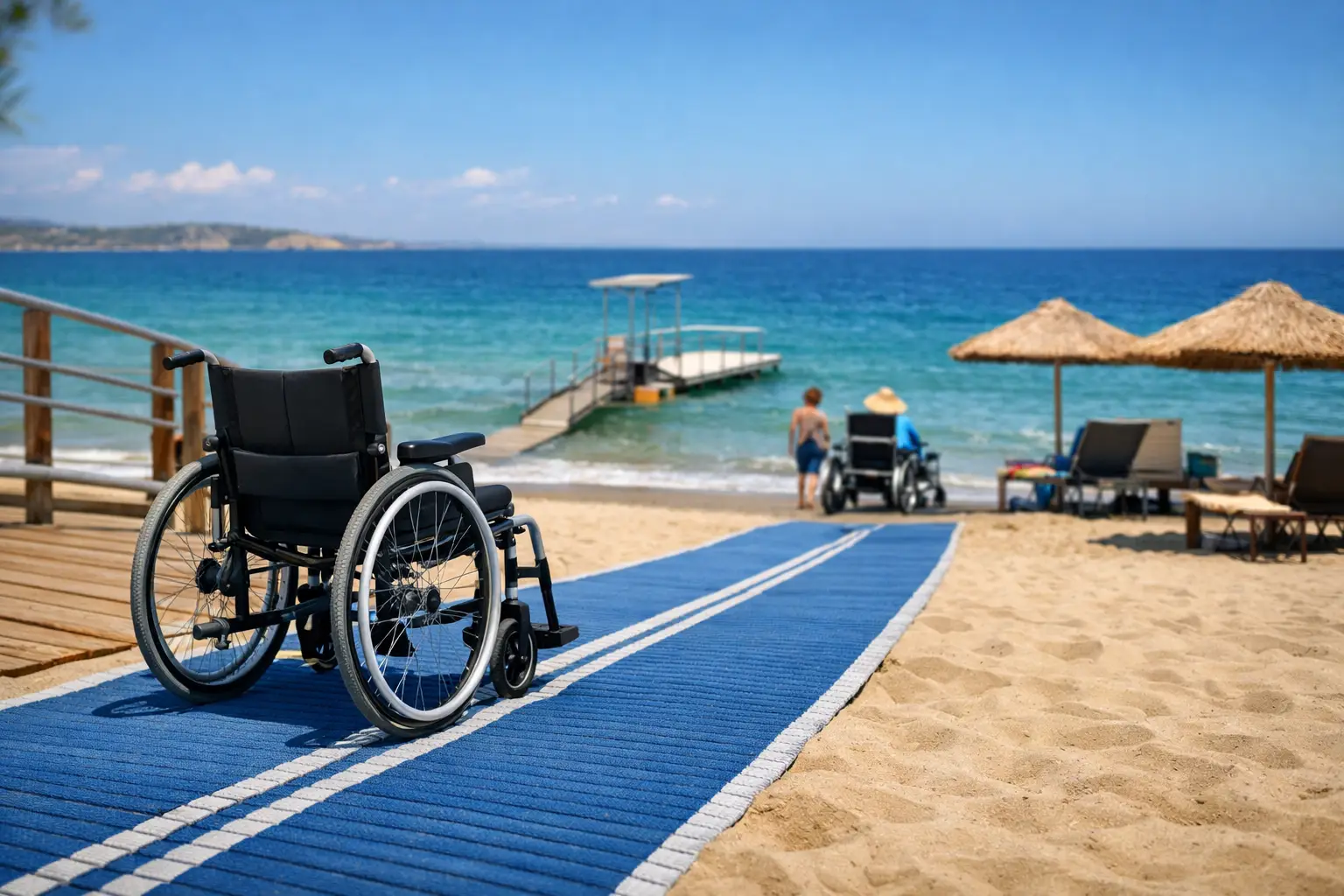
A beach can look accessible on a tourism website and still stop a wheelchair or mobility scooter at the first patch of soft sand. The best wheelchair friendly beaches are not simply the ones with a ramp to the promenade. They are the ones where the whole day works: parking, dropped kerbs, accessible toilets, a firm route towards the sea, somewhere to sit, and a realistic way back when you are tired.
For disabled travellers, the difference between a brilliant beach day and a frustrating one is rarely the view. It is the operational detail. Facilities can be seasonal, beach mats can be removed after bad weather, and a promised beach wheelchair may need booking well ahead. Treat every beach as a chain of access rather than a single tick-box.
What makes the best wheelchair friendly beaches work
A genuinely usable beach normally has a hard-surfaced promenade or boardwalk from the car park, accessible toilets close by, and either a beach access mat, a firm path or a beach wheelchair scheme. A Changing Places toilet is a major advantage for some visitors, but its presence does not replace the basics. You still need enough room to transfer, shade if you need it, and a sensible route to the water.
The tide matters as much as the facilities. At low tide, the distance across sand can become enormous. At high tide, a mat may end well short of the water or a sheltered section of beach may disappear altogether. If you use a mobility scooter, do not assume it will cope with sand because it is advertised as off-road. Salt, soft ground and hidden slopes can leave you stuck a long way from solid ground.
The following beaches are strong options to investigate when planning a UK or overseas holiday. They are not a promise that every facility will be operating on your travel date. Contact the local council, beach operator or tourist office before booking, and ask direct questions rather than asking whether the beach is simply “disabled friendly”.
10 wheelchair-friendly beaches worth planning around
1. Bournemouth, Dorset
Bournemouth is a practical choice because the long, level seafront gives you options. The promenade is useful for wheelchair and scooter users, with plenty of places to stop for food, toilets and sea views without needing to tackle the sand. During the main season, some sections have beach access provision and beach wheelchair availability.
The key is to choose your base carefully. A hotel near the clifftop can still mean a steep journey down unless there is a lift or you are close to an accessible route. Check exactly which beach office manages the equipment and whether advance booking is required.
2. Weymouth, Dorset
Weymouth’s wide bay and level esplanade make it one of the easier traditional British seaside towns to navigate. You can enjoy the harbour, cafés and seafront without constantly crossing cobbles or steep hills, and seasonal beach wheelchair schemes have made the sand more achievable for many visitors.
It is particularly good for a family day out because there is plenty to do within a short roll of the beach. The trade-off is that it gets busy in school holidays. Arrive early for accessible parking and do not leave toilet access until the last minute.
3. Sandbanks, Poole
Sandbanks has a reputation for smart properties, but the useful bit for disabled visitors is its managed, compact seafront. Promenade access is generally straightforward, and the beach is often included in local accessible beach provision during summer.
This is a better option for someone who wants a quieter, more contained seaside stop than the full bustle of Bournemouth. Parking can be expensive and spaces are in demand, so it works best if you plan your arrival time rather than turning up at midday in peak season.
4. Southport, Merseyside
Southport is not the place to visit if your main aim is rolling straight into the sea. Its beach is vast, and the water can be a very long way out. But for a wheelchair-friendly seaside atmosphere, the promenade, pier area, gardens and broad paved routes give it real value.
It is a good example of why “beach access” needs defining. Southport can offer a proper coastal day with far less effort than a remote sandy cove, even if the shoreline itself is not close. Check local seasonal equipment and events before going.
5. Portobello Beach, Edinburgh
Portobello gives you an urban beach with a long promenade, level access and Edinburgh’s public transport options nearby. That combination can be more useful than a beach reached only by car. You can take in the sea air, find cafés and return to the city without making the whole day dependent on one accessible parking space.
The sand is still sand, so this is primarily a promenade beach unless temporary access equipment is in place. Wind and Scottish weather can change the feel of the day quickly, but on a good day it is a straightforward coastal break from the city.
6. Playa de Las Vistas, Tenerife
Tenerife is popular with mobility travellers for good reason: warm weather, adapted hotels and resort promenades can make daily life simpler. Playa de Las Vistas in Los Cristianos is often one of the more practical beach choices, with level seafront routes and seasonal assisted bathing or amphibious chair services.
Do not assume the service runs all year or all day. Ask whether assistance is available on your dates, whether it must be pre-booked, and whether a companion is required to help with transfers. The resort itself is largely manageable, although some surrounding streets have slopes.
7. Levante Beach, Benidorm
Benidorm is not everybody’s idea of a quiet escape, but it earns its place for accessibility. The long, flat promenade around Levante makes it possible to enjoy the beach scene without being forced onto sand, while organised accessible bathing points are commonly available during the season.
For scooter users, the density of hotels, shops and restaurants is a genuine benefit. You can travel short distances on mostly level ground. The downside is crowds, especially in summer, so choose accommodation near the section of promenade you expect to use most.
8. Alcúdia Beach, Mallorca
Alcúdia’s long, shallow bay is a strong contender for families and anyone wanting calmer water. The resort areas tend to have broad pavements and relatively gentle terrain, while accessible beach services and walkways are often provided in the busier months.
Because the beach is so long, being “in Alcúdia” is not specific enough. Ask your hotel which entrance is nearest, where the accessible parking is, and how far the mat or boardwalk is from the toilet. A few hundred metres on sand can be a deal-breaker.
9. Miami Beach, Florida
Miami Beach has invested in accessible beach routes and beach wheelchair provision in several areas, making it a realistic option for an American city break with sea time included. Firm walkways, accessible public facilities and a dense local area can reduce the amount of complicated transport planning.
However, heat and humidity are serious considerations, particularly for people with fatigue, respiratory conditions or equipment that dislikes high temperatures. Plan the beach for early morning or later afternoon, carry drinking water, and protect controls and batteries from blowing sand.
10. Glenelg Beach, Adelaide
Glenelg is a useful Australian option because the beach sits beside a lively, navigable seafront with tram access from Adelaide. When beach matting and all-terrain chair programmes are operating, it can offer far more than a view from the promenade.
The practical question is whether equipment is available at your exact access point. Australian beach programmes are often run by councils, volunteers or specific clubs, so the detail can vary. Confirm opening days, transfer arrangements and whether booking is essential before you travel across the world expecting to use it.
Questions to ask before you set off
Ask where the nearest Blue Badge or accessible parking bay is, whether there is a step-free route from it to the beach, and how far that route actually is. Ask for the toilet location and opening hours, not just whether an accessible toilet exists. If a beach wheelchair is offered, ask about the chair type, weight limits, booking process, deposit, staff assistance and whether it can enter the water.
Also ask what happens after rain, high winds or storms. Access mats are sometimes lifted for safety, and this can turn an otherwise excellent plan into a promenade-only visit. That is not a reason to stay away. It is a reason to have a Plan B nearby, such as an accessible café, pier, aquarium or seafront drive.
Make the beach fit your day, not the other way round
A beach day does not have to mean proving you can get onto every inch of sand. For some people, the win is reaching a shaded spot with the sea in front of them. For others, it is using an amphibious chair to get into the water for the first time in years. Both count.
Plan hard, ask specific questions and give yourself permission to change course if the conditions are poor. The right beach is the one that lets you spend your energy enjoying the coast instead of fighting it.
0 Comments
Leave a Comment