
Best Wheelchair Accessible Day Trips UK
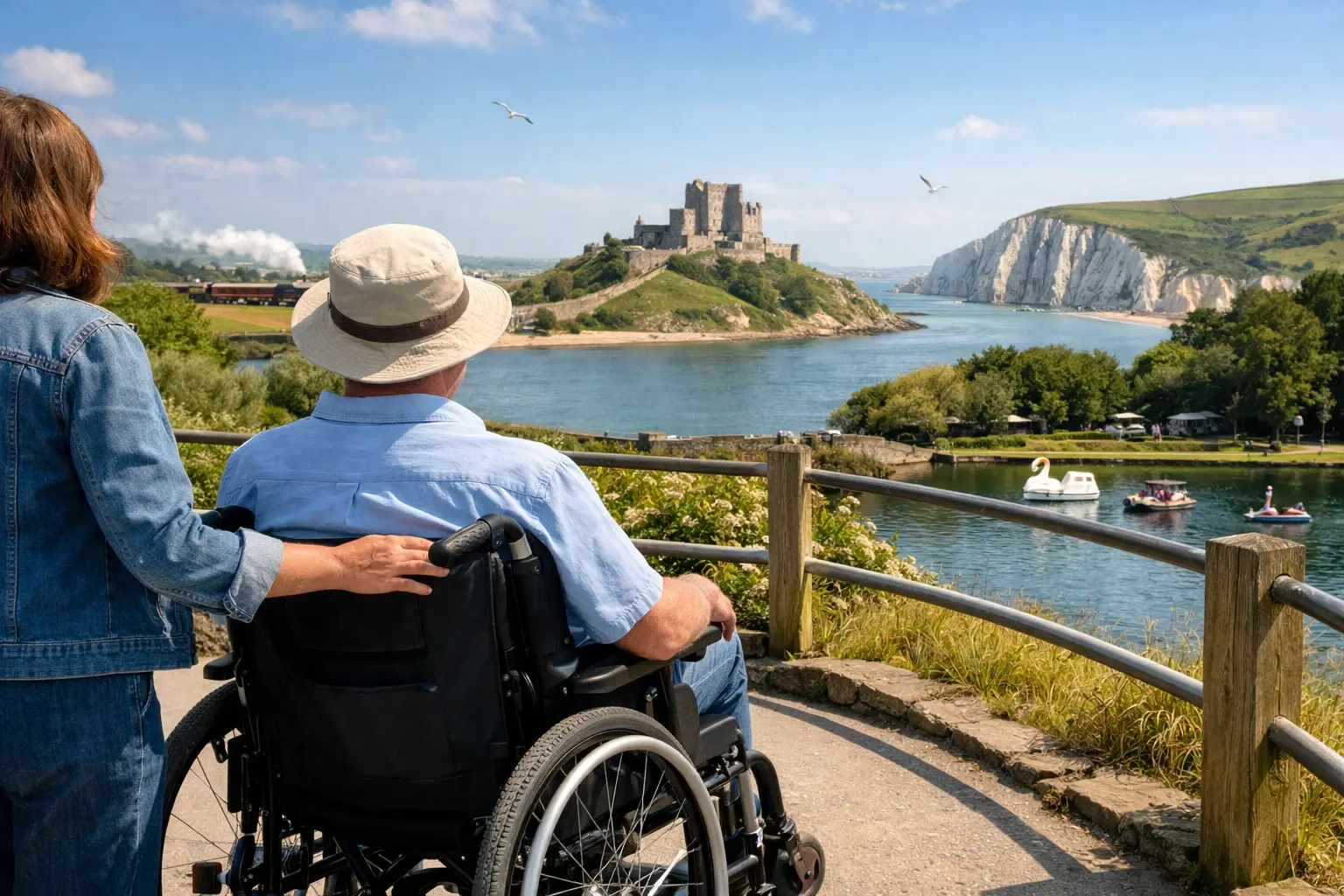
Some day trips look brilliant on paper, then fall apart the moment you hit a gravel car park, a steep ramp or a station with no working lift. That is why planning wheelchair accessible day trips UK style needs more than a list of nice places. You need to know how the journey works, what the surface is like, whether toilets are genuinely usable, and how much effort the day will actually take.
The good news is that a strong day out does not have to mean complicated travel or a perfect accessibility setup. In practice, the best trips are often the ones that get the basics right - reliable parking, step-free routes, decent facilities, and enough room to move without feeling like you are battling the place all day. If that sounds obvious, it is because it should be, yet too many attraction guides still skip the details that matter most.
You may wish to watch the YouTube playlist Days Out or UK Places for inspiration, and to see what the places are like before you go!
What makes a good wheelchair accessible day trip in the UK
A day trip is only as good as its weakest point. A brilliant attraction can still be a poor choice if the route from the car park is rough, the nearest accessible toilet is too far away, or the return journey leaves you exhausted. For wheelchair users, mobility scooter users and anyone travelling with support, the full chain matters.
Start with distance. A two-hour drive each way might be fine if the destination is easy once you arrive, but it can be too much if you also need long transfers, uneven routes or lengthy queues. The same goes for rail travel. A direct train with booked assistance can be manageable, while a shorter journey with multiple changes may be far more stressful.
Then look at the terrain. Many UK attractions describe themselves as accessible when they really mean partially accessible. A historic site may offer ramped entry but still have cobbles, narrow doorways or steep paths. Country parks and coastal spots often have excellent facilities in one area and major access issues ten minutes later. That does not mean they are off the list. It just means you need to know where the accessible part begins and ends before you leave home.
Wheelchair accessible day trips UK travellers can plan with confidence
If you want consistency, start with places built around modern visitor access rather than places trying to retrofit it. Larger museums, newer waterfront developments, major zoos, well-run piers and selected heritage railways often work well because they have thought through arrival, circulation and facilities.
Seaside towns can be excellent, but choose carefully. A flat promenade with accessible parking, Changing Places toilet provision and step-free cafés can make for an easy, enjoyable day. A pretty harbour town with steep lanes and limited disabled parking can turn into hard work very quickly. In simple terms, do not choose solely by photos. Choose by layout.
City-based day trips are often stronger than people expect. Places such as major museums, galleries and riverside developments tend to offer level access, lifts and better toilet provision than rural attractions. They are also easier to adapt if one venue does not work out. If a museum is busier than expected, you can move on to a nearby accessible café or another attraction without writing off the entire day.
Wildlife parks and zoos are another solid option, especially for mixed groups with family members of different ages. The trade-off is size. Good access on paper does not always mean an easy day if the site is huge and hilly. In those cases, look at whether mobility scooter hire is available, whether there is a land train or shuttle, and how much of the main route is surfaced properly.
The best types of day trips for different needs
Not every accessible traveller wants the same thing from a day out. Some want as little friction as possible. Others are happy to put up with a few awkward bits if the destination is worth it. Being honest about your own energy levels makes the decision much easier.
For the easiest, lowest-stress day
Go for a modern museum, aquarium, shopping and dining district, or a large visitor attraction with clear access information. These places usually offer the best combination of step-free entry, indoor shelter, accessible toilets and predictable surfaces. They also tend to be better if the weather changes, which matters more in the UK than many guides like to admit.
For scenery without too much risk
Look at accessible promenades, pier areas, lakeside paths, adapted gardens and country houses with mobility vehicle provision. The setting can still feel special without forcing you onto rough ground for hours. Some of the best scenic trips are the simple ones where you can enjoy the view, stop for lunch and not spend the whole day managing obstacles.
For families or mixed mobility groups
Choose places where people can split up briefly and reconnect easily. Zoos, large museums and accessible seaside fronts work well because one person is not trapped doing a route that does not suit them. If some of the group can tackle extra steps or trails, there is still enough for everyone else to enjoy without compromise.
How to check if a day trip is genuinely accessible
This is where a lot of planning goes wrong. Official accessibility pages are useful, but they can be vague or overly generous. "Accessible" might mean there is one ramp at the entrance, not that the full site works well for a wheelchair or scooter.
Check the arrival first. Is there disabled parking close to the entrance, and is it likely to fill early? If travelling by train, can you pre-book assistance both ways, and is the destination station reliably step-free? If using buses, do not assume every route is equally practical for larger powered chairs or scooters.
Next, check the route through the venue. Look for details on gradients, surface types, lift access, narrow sections and whether all key areas can be reached. If a place only says "most areas accessible", treat that as a prompt to ask exactly which bits are not.
Toilets matter just as much as entrances. An accessible toilet on site is one thing. Toilet Watch might help you decide or give you information on availability, size, and location. A good accessible toilet with enough turning space, grab rails in the right place, and an easy approach is another. If you need a hoist or adult changing bench, a standard accessible loo is not enough, so confirm whether there is a Changing Places toilet nearby.
Finally, think about the practical rhythm of the day. Can you sit indoors if the weather turns? Is food available on the accessible route, or will you need to detour? Are there enough dropped kerbs around the area? Real access is not one feature. It is how smoothly the whole day runs.
Transport can make or break wheelchair accessible day trips UK wide
A destination may be excellent once you get there, but if the transport is unreliable, the day becomes a gamble. For many people, driving remains the easiest option because it gives control over arrival times, equipment and rest stops. It also removes the uncertainty of broken station lifts or last-minute assistance problems.
That said, train travel can still work well for day trips if you keep things simple. Direct routes are usually best. Book assistance early, allow extra time, and have a backup plan if the return leg changes. It is not about expecting the worst. It is about making sure one problem does not ruin the whole day.
If you rely on a mobility scooter, check battery range and charging needs before setting off. Larger attractions can involve far more distance than expected, especially if parking is not as close as advertised. Bring what you need for comfort too - waterproofs, cushions, medication, and anything that reduces fatigue over a long day out.
A better way to choose your next trip
When comparing day trip ideas, stop asking only "Is it accessible?" and start asking "Is it worth the effort for me?" That one change makes decisions much clearer. A place can be technically accessible and still not be a good fit for your energy, equipment or travel style.
The strongest choices are often the ones that offer a high reward for low stress. A smooth trip with decent access, simple parking and an enjoyable atmosphere will usually beat a more ambitious outing where every stage needs managing. There is nothing timid about that. It is smart planning, and it gives you more confidence to keep travelling.
That is the approach behind practical, accessible travel advice, including the kind of first-hand guidance Andy Wright Travel is known for. Real detail beats glossy promises every time.
If you are picking your next day out, choose somewhere that lets you enjoy the day rather than fight through it. Independence is not about proving a point. It is about going further because the planning was honest from the start.
0 Comments
Leave a Comment