
10 Best Step Free European Destinations
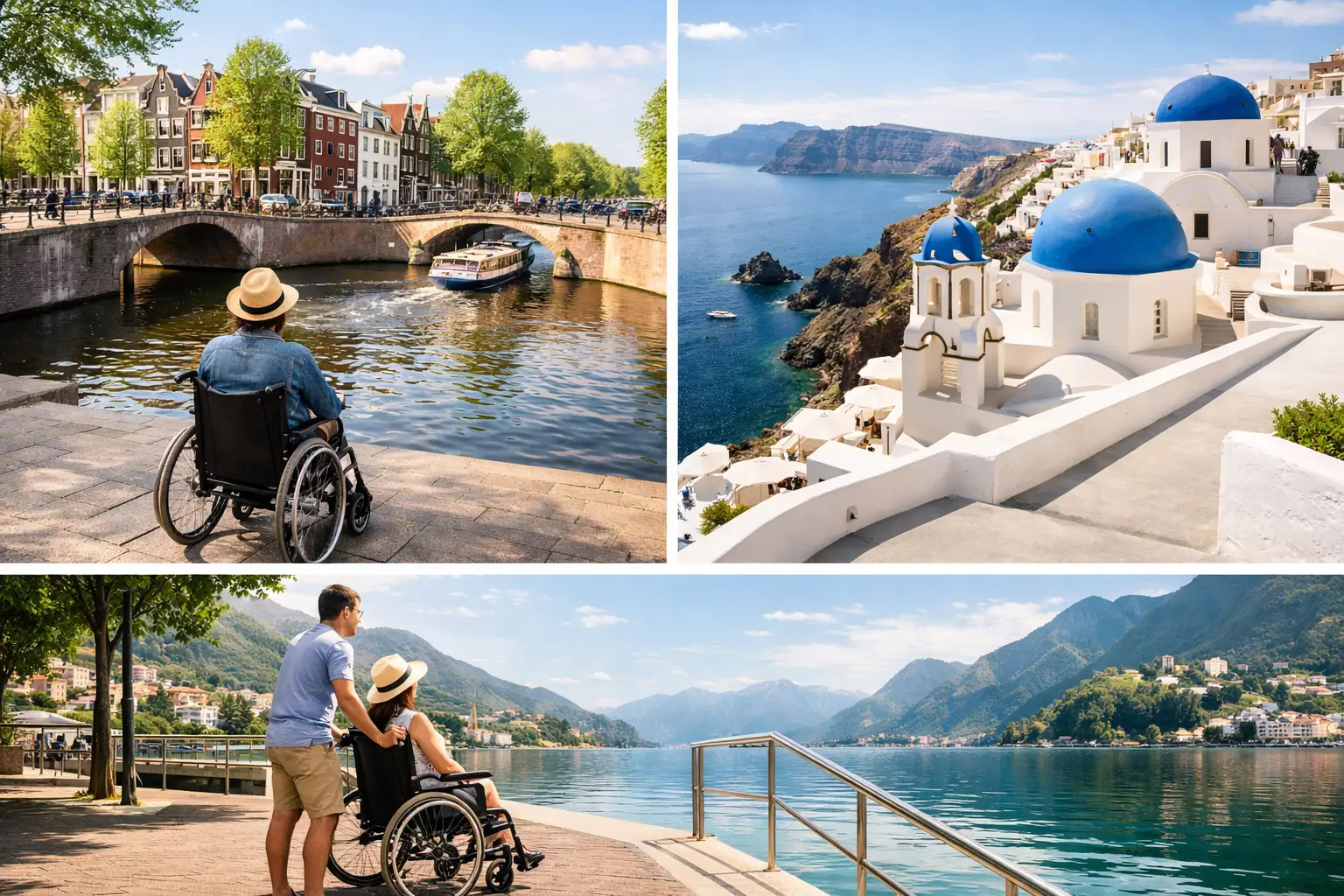
If you use a wheelchair or mobility scooter, choosing a city break is rarely about pretty photos. It is about whether you can get from the airport to the hotel without a battle, whether pavements are usable, and whether the main sights are actually step free rather than “accessible” in name only. That is why the best step free European destinations tend to have a few things in common - reliable public transport, modern promenades, decent dropped kerbs, and attractions that have thought beyond the front door.
This is not a fantasy list of places that claim to be perfect. No destination is. Cobbles, steep streets, awkward hotel bathrooms and old stations still turn up across Europe. But some places make independent travel far more realistic than others, especially if you plan properly and book with access in mind.
What makes the best step free European destinations?
For most disabled travellers, step free access is about more than ramps. You need a destination where the whole journey works together. A flat seafront is helpful, but less useful if the transfer vehicle cannot take a scooter. A city might have accessible museums, but if the pavements between them are broken or heavily cambered, the day becomes hard work.
The places worth shortlisting usually offer a combination of step free transport, wide pedestrian areas, level promenades, accessible toilets in central areas, and hotels with genuinely usable rooms. For scooter users, charging arrangements, lift sizes and turning space matter just as much as entrance access. For manual wheelchair users, surface quality and gradients can matter even more.
10 best step free European destinations worth considering
Barcelona, Spain
Barcelona remains one of the strongest all-round options for accessible city travel in Europe. The city has a lot going for it - step free Metro stations on many lines, wide pavements in modern districts, accessible buses, and a seafront that is far easier to manage than many historic city centres.
It is not completely straightforward everywhere. The Gothic Quarter can be awkward because of older streets and tighter spaces, and some stations are better than others. But if you base yourself sensibly, Barcelona gives you a realistic mix of beach, city and sightseeing without feeling boxed in by barriers.
Benidorm, Spain
Benidorm earns its place because it works in practical terms. The promenades are broad and level, many hotels are used to guests with mobility needs, and the town is easier to navigate than plenty of more fashionable resorts. If your priority is a holiday where getting out and about does not feel like a military operation, Benidorm is hard to ignore.
The trade-off is that it is a resort first, not a culture-heavy city break. Some travellers will love that simplicity. Others may prefer somewhere with more historic interest. Still, for straightforward independent movement, it is one of the safest bets.
Malaga, Spain
Malaga often gets overlooked in favour of bigger names, but it deserves serious attention. The waterfront, central shopping streets and regenerated port area are generally very manageable, and the city combines beach access with a compact centre that is easier to understand than many larger European destinations.
Like much of southern Europe, older pockets can still throw up awkward surfaces. Yet as a base for a relaxed accessible break, it often strikes a good balance between practicality and atmosphere.
Berlin, Germany
Berlin is one of the better choices if you want a proper city break with strong transport links. It is relatively spacious, many public buildings take accessibility seriously, and the layout makes moving between districts more manageable than in older, denser capitals.
It is still a large city, so distance can become the issue rather than steps. Not every station is equally convenient, and some routes require more planning than you would like. But if you want museums, history and a city that generally feels workable, Berlin is a solid pick.
Copenhagen, Denmark
Copenhagen is often good for wheelchair users because of its flat profile, sensible urban design and good public spaces. The centre is easier to roll around than many capitals, and the city’s modern feel helps when it comes to pavements, crossings and general street navigation.
The obvious downside is cost. Hotels, taxis and eating out can sting. If budget matters, that may push Copenhagen below Spanish destinations. If you can manage the price, though, it is one of the cleaner, simpler cities to navigate.
Valencia, Spain
Valencia suits travellers who want a city with space. The Turia Gardens create a long, accessible green corridor through the city, and the newer areas around the City of Arts and Sciences are far easier for mobility users than cramped historic centres elsewhere.
As with many Spanish cities, the old town can be more mixed. But Valencia gives you options. You can enjoy a proper city break without spending every hour fighting terrain, and that makes a real difference over several days.
Lisbon, Portugal
Lisbon may seem a strange inclusion because it is famously hilly, but it can still work for some travellers if approached carefully. Why mention it at all? Because parts of the city, especially around the riverfront and certain modern districts, are far more manageable than its reputation suggests, and accessible transport has improved in places.
That said, this is very much a destination where it depends on your equipment, confidence and willingness to use taxis or adapted transfers. For many scooter and wheelchair users, Lisbon is not the easiest option on this list. It can still be enjoyable, but only with realistic expectations and careful route planning.
Amsterdam, Netherlands
Amsterdam offers good accessible transport in parts and a compact centre with plenty to do. The issue is not usually formal accessibility provision. It is the urban fabric itself. Narrow pavements, busy crossings, canal bridges and crowding can wear you down quickly.
Even so, many travellers find it manageable if they stay in the right area and avoid assuming every picturesque street will be easy. It is one of those destinations that can be excellent for some and frustrating for others.
Vienna, Austria
Vienna is often a good option for travellers who want a more polished city experience. Public transport is generally well regarded, key attractions are used to international visitors, and the city has enough space in the central areas to avoid that hemmed-in feeling you get elsewhere.
The challenge can be the sheer scale of some stations and public buildings. Step free does not always mean quick or simple. But if you want culture without constant compromise, Vienna is a smart contender.
Las Palmas, Gran Canaria
If you are open to island travel, Las Palmas deserves attention. It offers an urban beach setting with long promenade stretches, warm weather and a city that is easier to use than many old resort towns. It is especially appealing if you want a winter sun break without giving up independence.
As always, accommodation choice matters. A good accessible room in the wrong location can still spoil the trip. But the combination of seafront access and usable streets makes Las Palmas one of the more practical warm-weather options.
How to choose the right destination for your mobility needs
The best step free European destinations for one traveller may be the wrong choice for another. If you use a larger mobility scooter, transport and lift dimensions should be near the top of your checklist. If you are a manual wheelchair user travelling solo, gradients and surface quality may matter more than whether every single Metro station has a lift.
Think about the style of trip you actually want. A beach resort with a strong promenade might give you more freedom than a famous historic city packed with cobbles. Equally, if museums and landmarks are the whole point of the holiday, a flatter but less interesting resort may not satisfy you.
It also helps to be honest about stamina. Some destinations are technically accessible but tiring. Long distances between stations, steep ramps, rough paving and constant crowds can turn an otherwise good day into a draining one.
Practical checks before you book
Before paying for anything, check the transfer, not just the flight. A destination can look excellent until you discover the airport transfer will not take your scooter. Then check hotel access in detail - entrance, bathroom layout, bed height, lift size and whether the accessible room is genuinely step free throughout.
Look closely at the immediate area around the hotel as well. A good room is only half the job. If the nearest crossing has no dropped kerb or the pavement outside is badly sloped, independence disappears fast.
This is where first-hand accessible travel content matters. Generic tourism sites often stop at broad claims. Real-world reviews usually tell you what actually happens on the ground, which is far more useful when you are trying to avoid expensive mistakes.
Europe is full of places that can work for disabled travellers, but the best trips usually come from being selective rather than optimistic. Pick the destination that matches how you travel, not just where you fancy seeing, and you give yourself a much better chance of a holiday that feels free rather than hard work.
0 Comments
Leave a Comment