
Best Mobility Scooter Rain Covers for Travel
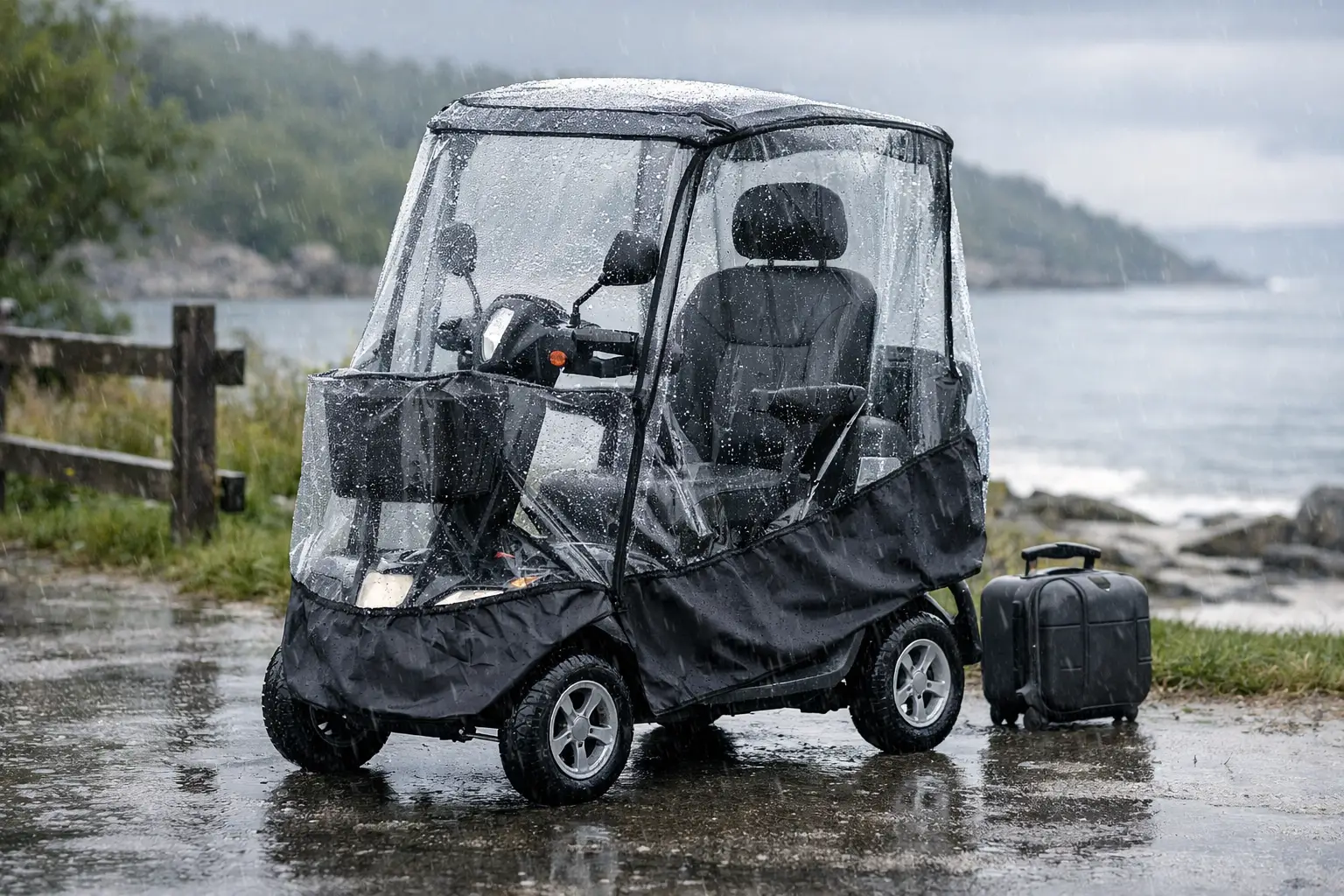
A shower that starts halfway between the hotel and the station can turn a straightforward day out into a wet, uncomfortable struggle. The best mobility scooter rain covers are not simply the ones that claim to be waterproof. They need to keep you dry without hiding the controls, blocking the lights, catching in the wheels or making it awkward to get on and off your scooter.
For travel, that distinction matters. A cover that is fine for a quick run to the local shops may be a nuisance on a city break, where you are folding it away outside a museum, boarding accessible transport or trying to keep your mobile phone, tickets and charging cable dry. The right choice is the one that suits your scooter, your route and how independently you need to manage it.
What makes the best mobility scooter rain covers?
There is no single cover that is best for every rider. A compact boot scooter, a road-going Class 3 scooter and a powered wheelchair all have different shapes, seating positions and control layouts. Be wary of any so-called universal cover that offers no measurements, no photos of how it fits around the tiller and no clear explanation of what remains visible.
A good travel rain cover should protect the rider and the scooter's important electrical areas while leaving the controls usable. It should also allow you to see properly and be seen. If the cover obscures front lights, indicators, reflectors or your view of the pavement, it is not a sensible option for travelling in poor weather.
Look closely at the material as well. Waterproof fabric with taped seams gives better protection in sustained rain than thin, water-resistant nylon. However, heavier material takes longer to dry and can be harder to pack. A clear front panel can help with visibility, but it needs to be positioned well. Poor-quality plastic windows can mist up, crease, reflect lights at night or become difficult to see through after repeated folding.
Rider covers and parked-scooter covers are different
This catches people out. A full storage cover is designed to protect a scooter when it is parked outside or transported on a trailer. It is not intended to be used while you are sitting on the scooter. Do not try to adapt one for riding. It may restrict steering, cover lights and mirrors, or become tangled in moving parts.
For riding, you are normally choosing between a fitted scooter cape, a longer poncho-style cover or a full canopy system. A cape tends to attach around the tiller and drape over your legs. It is usually the most practical option to keep in a bag during a holiday. A poncho offers more upper-body coverage but can move about in wind and needs careful positioning around the wheels. A canopy gives the greatest protection from persistent rain, but adds bulk, cost and another item to think about when transporting the scooter.
Choose a cover for the journeys you actually make
Before buying, measure your scooter rather than relying only on the model name. Measure the width of the seat, the distance from your chest to the front of the tiller, and the height and width of any mirrors or headrest. Check whether a cover can sit over your hands without pulling tight when you turn. A tight cover is more likely to tear, and it can put pressure on the throttle or controls.
The best mobility scooter rain covers for a UK break are often those that can be put on while seated, without requiring you to stand beside the scooter in the rain. If balance is an issue, avoid designs that need you to step over a large sheet of wet fabric or reach behind the seat to fasten multiple straps. A simple fastening may sound like a small detail, but it makes a real difference when you are outside a railway station with a suitcase and the weather has turned.
Think about these practical points before spending your money:
- Control access: You need to reach the speed control, key, horn, lights and indicator switch without fighting the fabric.
- Leg and footplate coverage: Rain running down your knees and into your shoes is a common weak point with short covers.
- Visibility: The front and rear lights, indicators and reflectors must remain clear, especially on a Class 3 scooter used near roads.
- Wind security: Adjustable straps or elasticated edges help, but they must not sit close to wheels, suspension or the steering column.
- Pack size: For holidays, check whether it will fit in your day bag once wet, or whether it comes with a proper storage pouch.
Do not assume a larger cover is safer. Excess material can flap in the wind, catch on armrests or drag close to the ground. A fitted cover that gives you a clear line of sight is generally better than a huge one that covers everything but makes riding feel enclosed.
When a full canopy is worth considering
A canopy can be a very good investment if you regularly travel through the wetter months, use your scooter as everyday transport or live somewhere exposed to wind and driving rain. It protects more of your upper body and can make a long seafront promenade or a day around an outdoor attraction far more comfortable.
The trade-off is transport. Canopies add weight and height, and some need to be removed before a scooter can go into a vehicle, taxi or accessible minibus. They may also affect whether the scooter fits through a hotel doorway, lift or the designated wheelchair space on public transport. Check those measurements before you travel, not at the hotel entrance.
For occasional holidays, a quality cape paired with a waterproof coat is often the more realistic setup. Keep a small microfibre cloth in the bag for wiping the seat, controls and clear panels. It is far easier to deal with a few drops before entering a restaurant than to carry a large wet canopy around for the rest of the day.
Rain, batteries and safe scooter use
Most mobility scooters can cope with normal rain, but that does not mean every part should be left soaked. The controls, charging socket and battery compartment need attention. A rider cover helps reduce exposure, but it is not permission to drive through deep standing water or leave the scooter outside overnight in a storm.
If water gets into the charging port, dry it thoroughly before connecting the charger. Never charge a scooter if you suspect moisture has entered the electrics. If the display behaves strangely, the scooter loses power or a warning light appears after heavy rain, stop using it and seek advice from the supplier or a qualified mobility engineer.
Rain also changes the surface beneath you. Painted crossings, metal drain covers, smooth paving, fallen leaves and boarding ramps can become slippery. Slow down before turns, allow more braking distance and avoid cambered paths where water collects at the edge. A rain cover keeps you drier, but it cannot make a poor surface safe.
A simple travel routine that prevents hassle
Put the cover somewhere you can reach before leaving the hotel. The bottom of a suitcase is the wrong place for it. On a day out, a rear bag, under-seat pouch or accessible backpack works better. If rain looks likely, fit it before setting off rather than trying to wrestle with it after the first downpour.
When you arrive indoors, remove the cover if possible and shake off excess water outside. Do not leave damp fabric bunched around the tiller for hours. At the end of the day, hang it up to dry fully. This prevents mildew, keeps clear panels clearer and means you are not packing a cold, wet cover for the next journey.
It is also worth practising at home. Sit on the scooter, put the cover on, turn both ways and operate every control. Try it wearing the coat you normally travel in. That five-minute test can reveal whether the neck opening pulls, the hand section is too short or the fabric interferes with your mirrors.
Common questions about scooter rain covers
Can I use a mobility scooter rain cover in heavy rain?
You can use a properly fitted rider cover in heavy rain, provided you can see clearly, the controls remain accessible and your scooter manufacturer does not advise otherwise. But heavy rain brings poor visibility, flooding and slippery surfaces. If conditions are worsening, waiting under cover or using accessible transport may be the safer choice.
Will a rain cover fit over a bag on the back of my scooter?
Some will, some will not. A rear bag is useful for travel, but it can pull a cape backwards and expose your knees or leave a gap at the seat. Check the cover's dimensions and, if possible, test it with the exact bag you use. A separate waterproof bag cover is sometimes the tidier answer.
Are clear rain covers better?
Clear sections are useful where they improve your view of the controls or pavement, but an entirely clear cover is not automatically better. Clear plastic can steam up and can feel restrictive. Many riders are better served by an opaque, breathable cover with well-placed clear panels and an open enough front to maintain a proper view.
A rain cover should give you more freedom to keep going, not make you feel trapped or unsafe. Choose one that you can manage independently, practise with before your trip, and treat it as one more piece of travel kit that helps bad weather stay a delay rather than a barrier.
0 Comments
Leave a Comment