
12 best attractions for disabled travellers
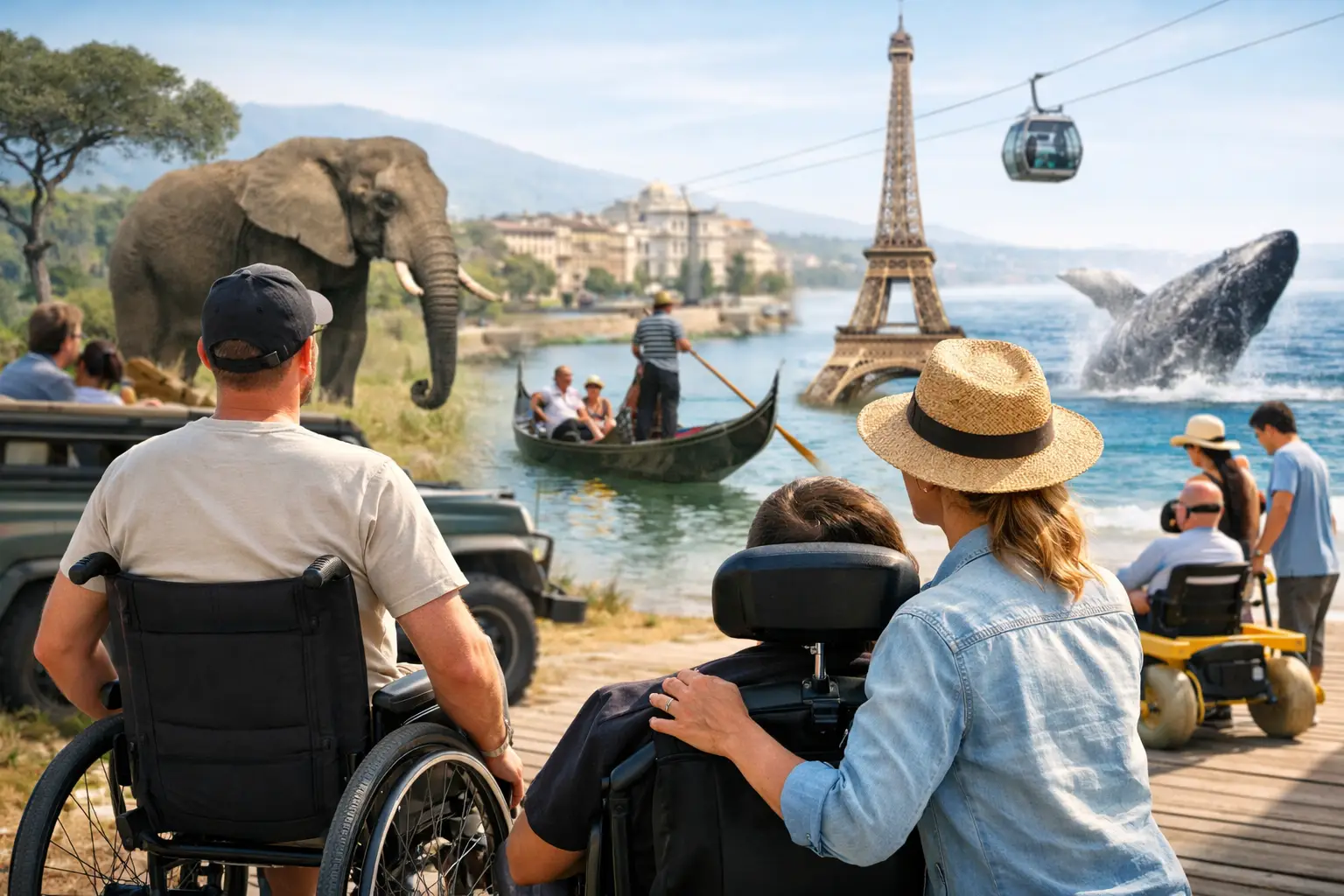
Some attractions look brilliant on paper, then fall apart the moment you arrive and find a gravel car park, a steep ramp or an accessible toilet being used as a store cupboard. That is why finding the best attractions for disabled travellers is not really about famous names. It is about whether you can get in, get around, use the facilities properly and enjoy the day without needing a rescue mission every half hour.
For wheelchair users, mobility scooter users and anyone travelling with limited mobility, a good attraction is one that removes friction. It does not need to be perfect. It does need to be honest, practical and properly thought through. The places below stand out because they tend to offer the kind of access that makes independent travel feel possible rather than stressful.
What makes the best attractions for disabled travellers?
Before naming places, it helps to be clear about what actually matters. Step-free entry is the obvious starting point, but it is only one part of the picture. A site can have a ramp at the front door and still be hard work once you are inside.
The best attractions for disabled travellers usually get the basics right all the way through the visit. That means level or manageable surfaces, lifts that actually work, accessible toilets in sensible locations, staff who know the access procedures, and enough space to turn or pass comfortably. If you use a larger powerchair or scooter, width matters just as much as ramps.
Transport and parking are just as important. A brilliant museum is less useful if the nearest dropped kerb is half a mile away or if the station lift is out of service. Good access starts before the ticket desk and ends when you get back to your hotel.
There is also a trade-off worth mentioning. Some historic attractions are fascinating but come with unavoidable limits because of age, layout or listed-building restrictions. That does not mean they are not worth visiting. It means you need to know in advance whether partial access still makes the trip worthwhile for you.
Attractions that tend to work well in real life
Large modern museums
Modern museums are often among the safest bets. They usually have step-free entrances, lifts between floors, accessible toilets and clearer circulation space than older tourist sites. If you want a day out with fewer surprises, this category is hard to beat.
Places such as the National Museum of Scotland in Edinburgh or the Riverside Museum in Glasgow are good examples of attractions where space, layout and facilities tend to make a real difference. Wide galleries and smoother flooring reduce the stop-start frustration that can ruin a visit. Better still, museums often provide seating, cafés and slower-paced experiences, which matters if fatigue is part of the equation.
The thing to check is scale. Large museums can mean a lot of distance. If you are using a manual wheelchair or travelling with someone who tires easily, map out priority galleries before you go rather than trying to do everything.
Big aquariums and wildlife centres
Aquariums can be excellent for disabled travellers because the experience is usually built around indoor routes, controlled lighting and clearly defined paths. Flat floors and lift access are common, and there is less pressure to tackle uneven terrain than at many zoos or outdoor parks.
That said, not every wildlife attraction is equally accessible. Zoos can vary wildly. Some have accessible trains, adapted toilets and good tarmac routes, while others involve hills, rough surfaces and long gaps between facilities. If you are choosing between the two, aquariums often offer the more predictable day out.
For families, this matters even more. A venue where everyone can move together without splitting up is worth a lot. Accessibility is not just about entry. It is about avoiding the situation where one route works for buggies and walkers but not for scooters or wheelchairs.
Botanical gardens and well-managed outdoor estates
Outdoor attractions can be brilliant if they have invested properly in paths, shuttle transport and toilets. Botanical gardens are often better than people expect because they are designed for slower wandering rather than forced marches over rough ground.
Kew Gardens is the sort of place that often works well because there is space, structure and support. Wide paths, step-free sections and planned visitor facilities make it far more manageable than a country estate that simply says it is accessible because part of the gift shop has a ramp. When an outdoor site also offers mobility vehicle hire or accessible transport around the grounds, that is a huge advantage.
Still, outdoor access is always more weather dependent. Even good paths can become awkward in heavy rain, and distances can be significant. On paper, a route may be step-free. In practice, it may still be too long or too exposed for a comfortable day.
River cruises and accessible boat trips
This one depends heavily on the operator, but accessible sightseeing cruises can be one of the least stressful ways to see a city. You get views, commentary and a sense of place without dealing with cobbles, steep streets or repeated transfers.
The catch is boarding. Tide levels, gangway gradients and older vessels can all create problems. A company may describe a cruise as wheelchair accessible, but that might only apply at certain times or from certain piers. It is always worth checking whether boarding is level, ramped or assisted, and whether accessible toilets are available on board.
When the access is properly set up, though, these trips can be excellent for travellers who want to see more without exhausting themselves in the process.
The types of attractions to approach carefully
Castles and historic houses
These are often high on wish lists and low on practicality. The problem is not just steps. It is thresholds, narrow doors, uneven courtyards, long distances from parking, and rooms linked by staircases that cannot easily be altered.
Some historic sites do a very good job with accessible visitor centres, ground-floor exhibitions and virtual tours of upper levels. If the story of the place matters more to you than reaching every corner, that can still make for a worthwhile visit. But if full independent access is essential, these attractions need more scrutiny than modern venues.
Beachfront attractions
A seafront can be fantastic or deeply frustrating. The difference usually comes down to parking, promenades, surface quality and whether there is proper beach access equipment. A destination that looks accessible from the pier can become very awkward once you leave the flat front and try to reach cafés, arcades or toilets tucked behind steps.
This is where lived-experience travel content matters. Generic accessibility labels do not tell you whether the pavement is broken, whether the ramp is too steep for a scooter, or whether the accessible loo needs a radar key.
How to judge an attraction before you book
Photos often tell you more than a facilities page. Look for entrance shots, toilet images, café layouts and any mention of lifts or route changes. If an attraction is proud of its accessibility, it usually shows it clearly. If the details are vague, there may be a reason.
Phone calls still help. Ask direct questions. Is the route fully step-free? Are there slopes? What is the floor surface? Can a larger mobility scooter get through all public areas? Is there accessible parking close to the entrance? Where is the nearest accessible toilet in relation to the main exhibits?
Try to avoid yes-or-no questions because they invite vague reassurance. A better answer comes when staff have to describe the actual route. You can usually tell within a minute whether they know the site properly or are reading a generic script.
Planning around energy, dignity and independence
The best day out is not always the one with the longest list of things to see. It is the one that leaves you feeling in control. For many disabled travellers, that means choosing attractions where the access setup reduces dependence on staff or companions.
That might be a museum with reliable lifts and plenty of space rather than a famous landmark with one awkward platform lift. It might be a well-designed garden with accessible transport rather than a clifftop viewpoint with a spectacular photo and a terrible approach. There is no shame in choosing the option that gives you a better day.
This is also why mixed-access trips can work well. Pair one ambitious attraction with one easy one. If the morning site involves more effort, make the afternoon somewhere flatter, simpler and easier to leave if needed. Good planning is not about lowering expectations. It is about protecting the trip.
A practical shortlist to keep in mind
If you are building future trips, the most reliable categories are usually major museums, larger aquariums, well-managed botanical gardens, some river cruises and modern visitor centres. They tend to offer the best balance of access, facilities and predictability.
By contrast, castles, old town attractions, caves, heritage railways and rural estates can still be worth doing, but they require more checking and a more flexible mindset. Sometimes partial access is enough. Sometimes it is not. Being honest about that before you travel saves disappointment later.
Andy Wright Travel exists for exactly this reason - to cut through vague promises and focus on what access looks like in real life. Because once you know what to look for, the world opens up a lot faster.
The right attraction is not simply the most famous one. It is the one that lets you enjoy the experience with confidence, comfort and as much independence as possible.
0 Comments
Leave a Comment