
7 Best Accessible Theme Parks for UK Travellers
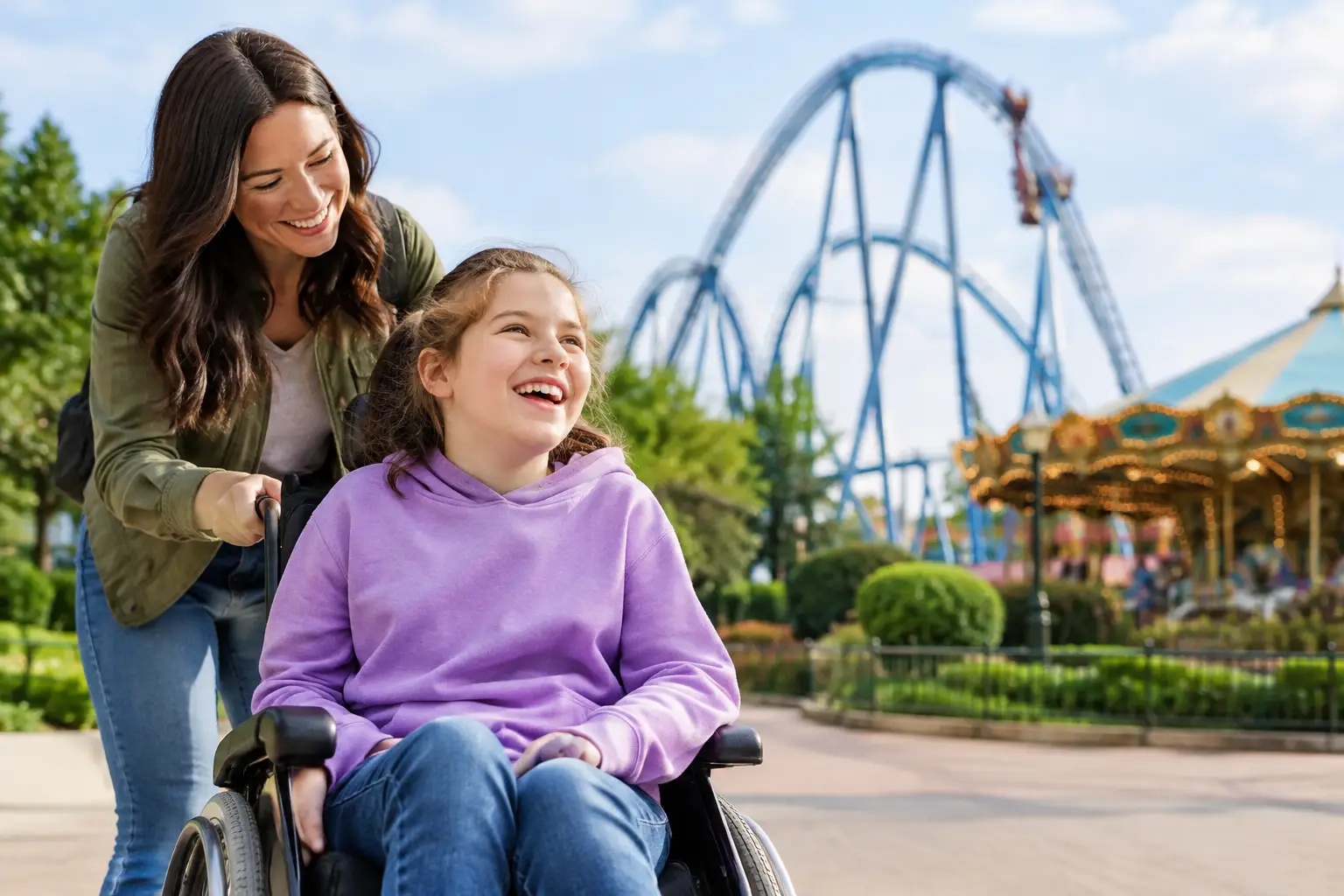
A theme park can be a brilliant day out or an exhausting obstacle course. The best accessible theme parks do more than offer a disabled toilet and call it a day. They make it possible to get from the car park to the rides, manage queues, charge equipment, find somewhere suitable to eat and leave with enough energy to enjoy tomorrow as well.
For wheelchair and mobility scooter users, the right park depends on far more than a glossy accessibility page. Gradients, surface quality, ride transfer rules, accessible parking and the availability of quiet places all matter. Here are seven parks worth considering, with the practical questions you should ask before committing to tickets, travel and an overnight stay.
What makes a theme park genuinely accessible?
A park does not need every ride to be wheelchair accessible to be a good choice. The real test is whether you can have a full day without being constantly blocked, separated from your group or forced into awkward workarounds.
Look first at the basics: step-free entry, wide routes, reliable accessible toilets, clear signage and parking close enough to avoid a punishing journey before the fun begins. Then look at the details. Can you take your own mobility scooter into the park? Are there charging points or somewhere safe to recharge? Is hire equipment available, and can it be booked in advance? What happens if rain makes paths slippery or your scooter has a problem?
Ride access is more personal. Some guests can transfer independently, some with assistance and some cannot transfer at all. A useful access guide should spell this out ride by ride, including evacuation requirements. If the information is vague, contact the park before booking. “Accessible” is not enough of an answer.
1. Walt Disney World Resort, Florida
For many disabled travellers, Walt Disney World remains one of the strongest all-round options. Its scale is enormous, but it is built around wide routes, accessible transport and a culture of assisting guests with different needs. Buses, monorails, boats and Skyliner gondolas can all be part of the experience, although boarding arrangements vary by vehicle and location.
Most attractions have clearly stated transfer requirements, and many queues are designed to accommodate wheelchairs and scooters. The Disability Access Service may help guests who cannot tolerate a conventional queue, but eligibility and procedures can change, so never rely on old social media advice.
The trade-off is obvious: Florida holidays are expensive, hot and demanding. Distances around the resort are substantial, and an accessible room close to transport can make a much bigger difference than a small saving on accommodation. If you use a scooter, plan charging every night and carry rain protection that actually fits it.
2. Disneyland Paris
Disneyland Paris is often the most achievable Disney trip from the UK. It is reachable by rail, car or flight, and the two parks sit close together, which makes it easier to pace yourself than a sprawling Florida holiday.
The resort has an accessibility scheme for disabled guests, with cards and ride arrangements determined by your circumstances and supporting documentation. Check the current requirements before travelling, as the process is not something to leave until the gate. Some attractions permit guests to remain in a wheelchair, while others require a transfer or have restrictions based on evacuation arrangements.
The cobbled areas around the resort can be uncomfortable on smaller scooter wheels, especially in wet weather, but the main park routes are generally manageable. Choose your hotel carefully. Being able to return to your room for an hour can save the day, particularly if you are travelling with pain, fatigue or medication needs.
3. Alton Towers, Staffordshire
Alton Towers is one of the UK’s biggest names, and it can work well for disabled visitors who prepare properly. Its Ride Access Pass system is intended for guests who cannot queue conventionally, but it is not a fast-track free-for-all. You may still receive return times, and you should expect to show accepted evidence when applying.
The challenge is the landscape. Alton Towers is large, hilly and spread across gardens and valleys. That makes a mobility scooter more than a convenience - for many people, it is essential. Do not underestimate the distance from one area to another, and factor in battery range, especially if you have a compact hired scooter.
There are accessible toilets, changing facilities and mobility equipment hire, but availability can be limited on busy days. Book what you need early. Also study the ride information before you arrive, because transfer ability and body-position requirements vary greatly between coasters, dark rides and family attractions.
4. Blackpool Pleasure Beach
Blackpool Pleasure Beach offers something different: a traditional seaside amusement park where you can combine rides with the promenade, tower and nearby attractions. Its relatively compact footprint can be useful compared with huge resort parks, though busy paths and older infrastructure mean you should check individual ride access rather than assume modern standards everywhere.
This is a sensible choice for a shorter break, especially if you can find suitable accommodation on or near the seafront. The tram network can be useful for getting around Blackpool, but check accessible stops and service arrangements for the section you intend to use.
As with many older parks, the question is not simply whether an attraction has steps. Ask whether your chair or scooter can be parked nearby, whether companions can assist, and whether you can rejoin your party after using an alternative entrance. A clear plan avoids standing at a ride entrance while staff try to work it out.
5. LEGOLAND Windsor Resort
LEGOLAND Windsor is designed primarily for families, but that does not mean it is only for children. Grandparents, adult fans and families travelling with a disabled adult can all enjoy it, particularly when the aim is a gentler day than a major thrill-ride park.
The park provides accessibility information and a ride access arrangement, while many of the attractions are more manageable for guests who can remain in a wheelchair or make a supported transfer. However, Windsor’s hills are real. The route between areas can be steep, and a manual wheelchair user may need assistance on longer gradients.
Hire mobility equipment in advance if required, and do not schedule every show, ride and character meet in one day. This park rewards a slower approach. Pick a few priorities, keep a dry layer handy and build in proper stops rather than treating lunch as the only break.
6. Paultons Park, Hampshire
Paultons Park, home of Peppa Pig World, is regularly a good option for families who want a cleaner, calmer and more manageable park day. It is smaller than the biggest UK resorts, which can be a strength if long distances, sensory overload or fatigue make giant parks difficult.
The park offers disabled access guidance, accessible toilets and ride access arrangements. As always, check current documentation rules and ride-specific restrictions before you go. The best fit is likely to be visitors travelling with younger children, or adults who prefer family rides, gardens and a less frantic layout.
A smaller park does not automatically mean an easy one. School holiday crowds can still make paths, food areas and accessible toilets busy. Arrive early, get familiar with the layout before the queues build, and identify a quieter spot for a break.
7. Efteling, Netherlands
Efteling is a strong European option for visitors who want a theme park with character rather than wall-to-wall rollercoasters. It has a fairy-tale setting, substantial indoor attractions and a more relaxed feel than some large resorts. For UK travellers, it is practical by ferry and car, or by flying into the Netherlands and arranging onward transport.
Its accessibility arrangements include guidance for disabled guests and companion access, but individual rides have their own boarding and evacuation conditions. That is particularly relevant if you use a powered chair or scooter and cannot transfer. Check whether your device can enter an attraction, where it must be left and how you will be reunited with your group.
The weather is the main planning issue. Dutch rain can arrive quickly, and outdoor paths may be wet for much of the day. A waterproof leg cover, poncho and a way to protect controls are not optional extras if you rely on powered mobility.
Planning a better accessible park day
The best accessible theme parks still require a bit of groundwork. Buy tickets only after reading the current access guide, applying for any required pass and confirming equipment hire. Take screenshots or print key confirmations, as mobile signal and battery life are not guaranteed when you need them.
Charge your scooter fully the night before, then carry the charger if you will be away for a long day. A small puncture repair kit, medication, spare continence supplies, drinks and a power bank are also worth having. It sounds obvious, but many park days go wrong because people pack for the rides and forget the practicalities.
Finally, give yourself permission not to do everything. A successful accessible theme park day is not measured by the number of attractions ticked off. It is measured by whether you were able to join in, make your own choices and get back to your hotel with good memories rather than a flat battery and a flare-up.
0 Comments
Leave a Comment