
Best Accessible Hotels in Thailand
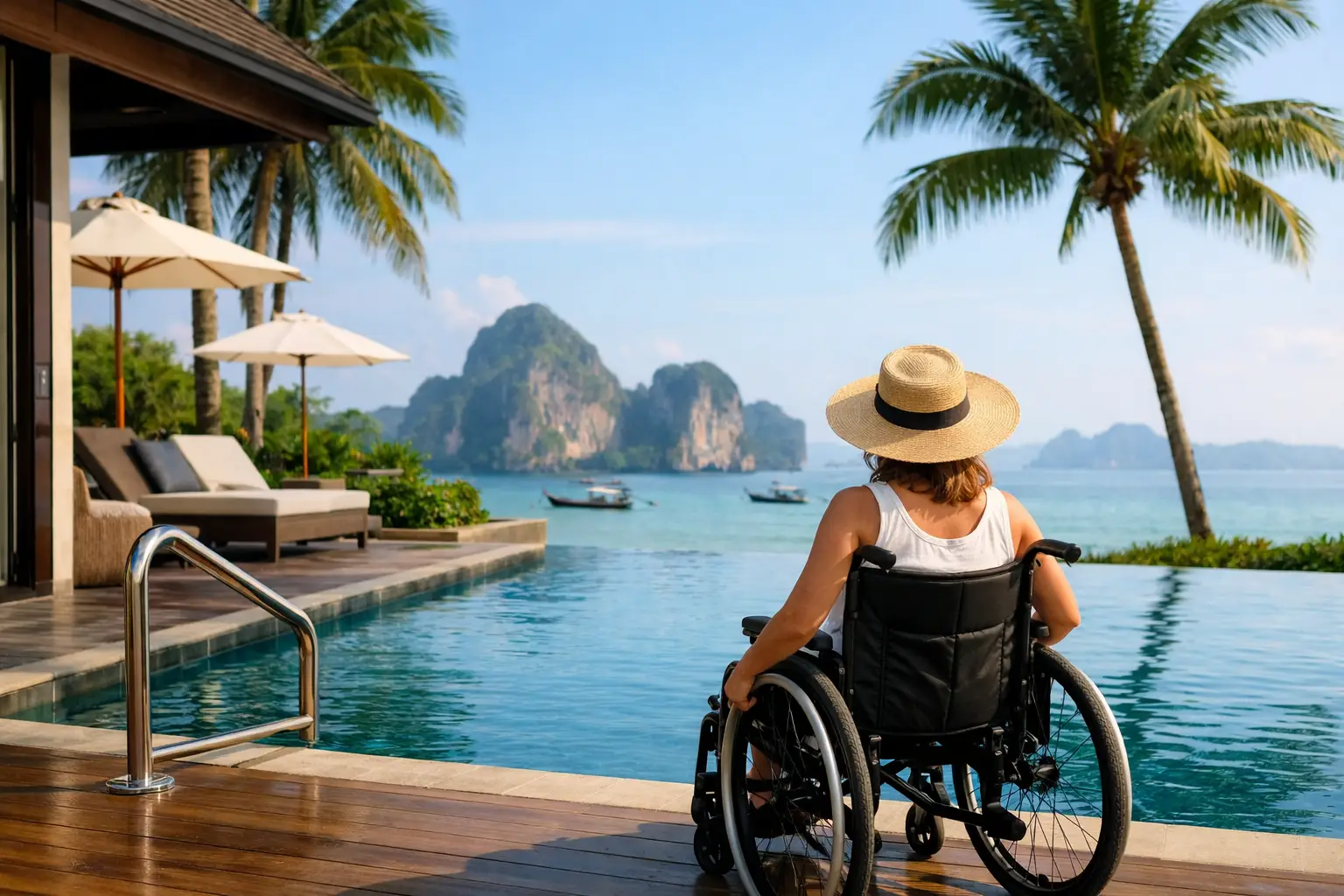
Thailand can be a brilliant trip for wheelchair users and mobility scooter travellers, but only if you get the hotel right. When people search for the best accessible hotels in Thailand, what they usually need is not glossy photos or a vague promise of disabled-friendly facilities. They need to know whether they can get through the front door, use the bathroom properly, move around the room without a wrestling match, and leave the hotel without the pavement becoming the real barrier.
That is why hotel choice matters more in Thailand than in some other destinations. A good accessible room can give you real independence. A bad one can trap you in a space that technically ticks a box but is awkward in all the ways that count.
What makes the best accessible hotels in Thailand
The first thing to say is that accessibility in Thailand is inconsistent. You can find excellent modern hotels with step-free entrances, generous lifts and proper wet rooms. You can also find luxury places where the bedroom is large but the bathroom has a bath you cannot use, or where a small step at the entrance ruins an otherwise easy stay.
For most travellers with mobility needs, the best hotel is not always the most expensive one. It is the one that gets the basics right. You want step-free access from the street or car park, a reliable lift if you are not on the ground floor, enough floor space to turn a wheelchair or scooter, and a bathroom that is genuinely usable. Grab rails, a roll-in shower, a shower seat or at least space for your own, and a toilet with transfer room all matter far more than fancy décor.
Location also needs to be treated as part of accessibility. A hotel can have a decent accessible room and still be hard work if it sits on a steep road, has broken pavements outside, or is a long way from suitable transport. In Thailand, that outside environment can make or break the trip.
Where to find the best accessible hotels in Thailand
Bangkok is usually the safest place to start if accessibility is your top priority. Newer international hotels tend to have better lifts, smoother entrances and a more consistent approach to accessible rooms. The city is not perfect by any means, but if you stay near modern shopping centres, major roads and accessible skytrain stations, getting around becomes much easier.
Phuket has some strong hotel options as well, especially in larger resorts. The trade-off is that resort accessibility and local accessibility are not the same thing. You may have a step-free room, accessible pool access and staff willing to help, but the beach, surrounding streets or local restaurants can still be patchy. If your plan is mostly hotel-based relaxation with a few organised outings, Phuket can work very well.
Pattaya often deserves more attention from disabled travellers than it gets. It has flatter areas than some Thai beach destinations, a broad range of hotels, and generally easier day-to-day movement in certain parts. As always, it depends exactly where you stay, but it can be a practical option if you want a coastal break without battling hills and awkward access every day.
Chiang Mai is appealing for culture and atmosphere, but many smaller hotels and older properties are not ideal for wheelchair users. There are accessible options, though you need to check details carefully and not rely on booking sites using the word accessible as shorthand for almost nothing.
Bangkok hotels worth shortlisting
In Bangkok, larger chain hotels are often your best bet because they tend to understand what an accessible room is supposed to include. Properties connected to shopping complexes or located near main transport routes are especially useful. The easier it is to reach a taxi, shopping centre, restaurant or rail station without dealing with kerbs and rough surfaces, the more energy you save for enjoying the trip.
If you are comparing hotels in Bangkok, ask for photos of the accessible bathroom and the route from the entrance to the room. A wide bedroom with a tiny bathroom is no good. Equally, a proper bathroom is less useful if there is a heavy door, a narrow turn into the room, or a lip into the shower.
Phuket and resort-style stays
Phuket suits travellers who want more time on-site and less need to navigate busy urban streets. Bigger beachfront or near-beach resorts are more likely to have ramps, lifts and staff who can arrange assistance. The catch is beach access itself. Some hotels are near the sand but not realistically beach-accessible unless they provide a mat, beach wheelchair or a reasonably smooth route.
When choosing a resort, ask how far the accessible room is from reception, restaurants and the pool. Thai resorts can be spread out. A room may be accessible on paper but involve a long journey over sloped paths. That may be fine for some scooter users, but it is worth knowing before you book.
Pattaya for straightforward mobility
Pattaya can be a sensible choice if your priority is practical movement rather than postcard scenery. Some areas have better pavements, easier access to malls and seafront stretches, and plenty of larger hotels with lifts and level entrances. It is still essential to check bathrooms and room layout, but the destination itself can be less tiring than hillier resort areas.
For anyone travelling with a partner, carer or family member, Pattaya can also offer that useful balance where one person wants easy logistics and another still wants restaurants, nightlife or sea views nearby.
Questions to ask before booking
This is where many trips are won or lost. Never assume that accessible means wheelchair-friendly in the way you need it to be. Contact the hotel directly and be specific.
Ask whether the entrance is completely step-free and whether there is a ramp if not. Ask for the bathroom layout, including whether the shower is roll-in, whether there are grab rails, and whether there is space beside the toilet for transfer. Ask for door widths if you use a larger powerchair or mobility scooter. Ask whether the bed height is fixed and whether furniture can be moved.
It is also worth asking about the route from the drop-off point to reception. Some hotels have a fine accessible room but make you start with steep ramps or decorative stone surfaces. If you are bringing a scooter, ask whether there is convenient charging in the room and whether the lift can take both you and the scooter comfortably.
The trade-offs nobody mentions enough
One honest point about Thailand is that staff are often kind and willing to help, but goodwill does not replace infrastructure. A porter may help with a small step, and hotel staff may fetch a portable ramp, but that is different from independent access. For some travellers, occasional assistance is perfectly acceptable. For others, especially if dignity and self-sufficiency are the priority, that setup may not be good enough.
There is also a difference between a hotel that is accessible inside and one that supports an accessible holiday overall. If you are happy to spend time by the pool, use hotel dining and take pre-arranged transport, your options widen. If you want to head out independently every day, use local pavements and explore at your own pace, you need to be much stricter about location.
Price can cut both ways too. Mid-range international hotels sometimes offer better practical accessibility than boutique luxury properties because they were built with more standardised layouts. Do not let star rating make the decision for you.
A smarter way to choose
If you are trying to narrow down the best accessible hotels in Thailand, think in layers. Start with destination, then the street, then the building, then the room. Too many travellers start with the room photos and forget the route outside the hotel.
Look for newer buildings, recognised hotel groups, and locations close to shopping centres or hospitals, as these areas often have better surrounding access. Read reviews carefully, but remember that many non-disabled guests describe a room as accessible simply because there was a lift somewhere in the building. That is not enough.
The most reliable approach is still direct contact backed up by current photographs. If a hotel answers clearly and confidently, that is usually a good sign. If it replies with vague phrases about being suitable for all guests, keep looking.
Thailand is absolutely possible for wheelchair users and mobility scooter travellers. The key is not chasing perfect marketing. It is finding a hotel that supports the way you actually travel, because once that base is sorted, the whole country becomes far more manageable and a lot more enjoyable.
0 Comments
Leave a Comment