
7 Best Accessible Destinations in Thailand
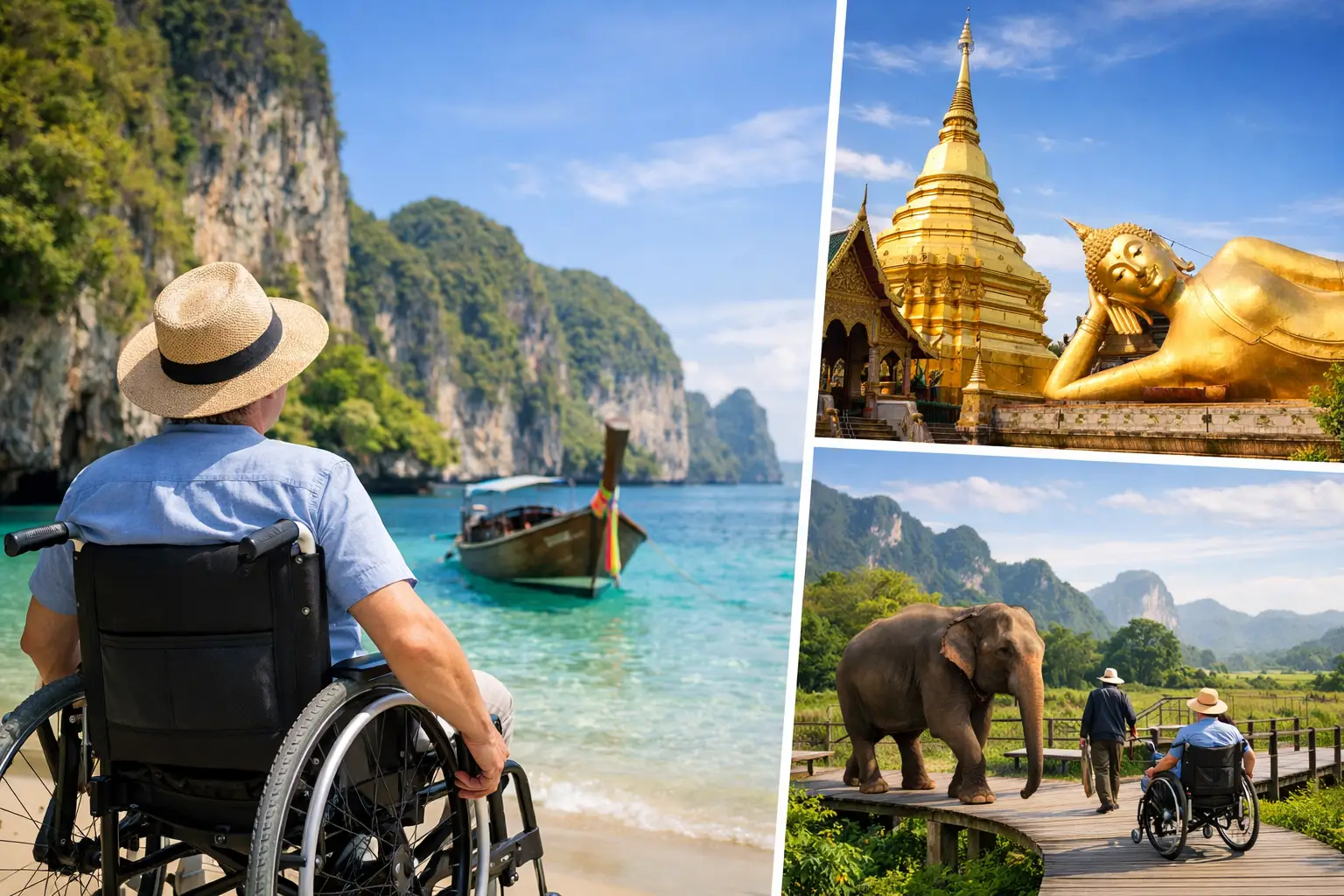
Thailand can be brilliant for disabled travellers, but it is not a country where you can rely on guesswork. If you are searching for the best accessible destinations in Thailand, the difference between a relaxed trip and a stressful one usually comes down to street surfaces, transport options, hotel layout and how much daily planning a place demands. Some areas are far better suited to mobility scooter users than others, and that is what matters most.
This is not about glossy brochures calling somewhere “accessible” because it has one ramp at reception. It is about places where you have a realistic chance of getting around, enjoying yourself and keeping your independence. Thailand still comes with challenges - broken pavements, steep kerbs, patchy step-free access and transport that can be hit and miss - but there are destinations that are much easier to manage than others.
What makes a destination accessible in Thailand?
In Thailand, accessibility is rarely perfect across an entire town or island. A destination can still work well if the essentials are in place: reasonably smooth promenades or roads, accessible hotel stock, attractions with lifts or level access, and transport that does not force you into constant lifting or awkward transfers.
For mobility scooter users, the real test is whether you can leave the hotel and actually do something without turning every short outing into an obstacle course. Beach towns often look promising but can be let down by rough pavements. Cities can offer better shopping centres, hotels and hospitals, but poor crossings and crowded streets may slow you down. So the best choice depends on how much independence you want versus how much support you are willing to arrange in advance.
1. Bangkok
Bangkok is chaotic, busy and tiring, but it is still one of the best accessible destinations in Thailand if you want facilities, medical backup and a decent choice of modern hotels. The key is to avoid treating the whole city as equally manageable. It is not. Some areas are extremely awkward at street level, while others are far more practical because they are centred around large malls, newer pavements and hotels used to international guests.
The strongest point in Bangkok is infrastructure inside major buildings. Big shopping centres, international hotels and many modern attractions usually have lifts, accessible toilets and level entrances. You can build a very good trip here around accessible hotels, river cruises, rooftop dining, malls and selected cultural sights without needing to cover huge distances on foot or scooter.
The weak point is pavement quality and crossing roads. Even when a route looks short on the map, it may include cracked paving, missing dropped kerbs or motorbikes cutting through pedestrian space. Public transport is improving in places, but it is not something I would call stress-free across the board for larger mobility equipment. Bangkok works best if you choose your area carefully and use accessible taxis or pre-arranged transport for longer hops.
2. Pattaya
Pattaya is one of the easiest coastal options for travellers with mobility issues, especially if you want a destination where daily life can be simpler. It is not perfect, and some streets remain rough, but compared with many Thai beach destinations it has a more practical layout and a decent amount of tourist infrastructure close together.
The main advantage is convenience. Hotels, shopping centres, restaurants and entertainment are often within manageable distances, and seafront areas can be easier to navigate than older inland streets. If your priority is being able to get out each day without complicated transport planning, Pattaya has a lot going for it.
You still need to be selective. Not every stretch of pavement is smooth, and beach access itself can vary a lot depending on the entrance point and how much sand you need to cross. But if you choose a hotel in the right part of town, this is one of the most realistic places in Thailand for maintaining independence with a scooter.
3. Hua Hin
Hua Hin often gets overlooked, but for many travellers it is a smarter choice than the busier resort areas. It has a calmer feel, a strong mix of hotels and amenities, and a pace that suits people who do not want to fight crowds every time they go out.
Accessibility here is not uniform, yet the destination benefits from being more relaxed and less frantic than Bangkok or some island hotspots. Good resort hotels can make a big difference, especially if they provide level pool access, step-free entrances and enough space to move around comfortably. Around the town, modern shopping areas and hotel zones are usually easier than traditional local streets.
Hua Hin is best for travellers who want a quieter base and are happy to plan around key accessible venues rather than expecting full freedom everywhere. It may not offer the sheer volume of attractions that Bangkok does, but it can be far less exhausting.
4. Phuket
Phuket is a mixed bag. Some parts are hard work, particularly where steep roads, uneven surfaces and busy beachfront areas come into play. But as a wider destination, it remains one of the better options because it has a large tourism industry, plenty of resort accommodation and private transport that can be arranged without too much trouble.
For accessible travel, Phuket works best when treated as a resort destination rather than a place to roam freely from beach to beach. A good hotel in the right area can give you accessible facilities, pool access, adapted rooms in some cases and enough nearby dining to avoid constant travel. Larger resorts are often far more manageable than smaller guesthouses with steps and tight layouts.
Patong can be busy and awkward, while other areas may offer more space and a calmer environment. The trade-off is that quieter areas can leave you more dependent on transport. Phuket can absolutely work, but it rewards careful hotel selection more than almost anywhere else on this list.
5. Chiang Mai
Chiang Mai offers a different type of trip. It is not about beaches or promenades. It is about culture, food, markets and a slower pace than Bangkok. For some disabled travellers, that makes it more appealing. For others, the old city layout and patchy pavements can make it less straightforward than expected.
What helps is the concentration of accessible-style amenities in modern hotels, shopping centres and newer cafés. You can piece together a good stay here if you focus on practical areas and avoid assuming every temple or historic site will be easy to enter. Many heritage attractions involve steps, uneven ground or older access arrangements.
Chiang Mai suits travellers who want atmosphere and are comfortable balancing easier modern venues with more limited access at some cultural sites. It is not the simplest destination in Thailand, but it is often more manageable than people fear if expectations are realistic.
6. Koh Samui
If you want an island experience without making life harder than it needs to be, Koh Samui is one of the more workable choices. Like Phuket, it depends heavily on where you stay. The island has enough established tourism infrastructure to offer good resorts and transport options, but road conditions and local pavements can still be inconsistent.
The biggest accessibility wins are usually inside resort hotels. If your holiday is based around sea views, a pool, on-site dining and a few planned excursions, Koh Samui can be a strong choice. If you expect smooth independent travel across the island every day, you may find it more frustrating.
This is a good example of where your travel style matters. For a relaxed resort holiday with selected outings, it can be excellent. For full day-to-day freedom on local streets, less so.
7. Krabi
Krabi is often chosen for scenery, and rightly so, but accessibility is more limited than the views suggest. Even so, parts of the mainland tourist areas can work reasonably well if you keep your plans grounded in what is actually possible.
Ao Nang, for example, has tourist facilities, hotels and restaurants clustered together, which can reduce the need for long journeys. The problem is that beautiful island-hopping trips and boat excursions are not always easy to board or enjoy with mobility equipment. That means Krabi is better for travellers who are happy to enjoy the setting, local restaurants and hotel facilities rather than trying to do every classic excursion.
Done that way, it can still be a very worthwhile stop. It simply needs more compromise than places like Bangkok or Pattaya.
How to choose the right accessible destination in Thailand
The best accessible destinations in Thailand are not automatically the most famous ones. They are the places that match how you travel. If you use a larger mobility scooter and want minimal hassle, prioritise cities and resort areas with modern hotels, shopping centres and reliable road transport. If you are happy with a more hotel-based holiday, islands become more realistic.
Always check room access beyond the front door. You need to know about bathroom layout, lift size, doorway width, step-free pool areas and whether the route from the street to reception is genuinely level. Transport matters just as much. A destination may look good until you realise every outing requires lifting equipment into a vehicle.
It also pays to build your days around clusters. In Thailand, one accessible hotel next to a mall, accessible restaurant and smooth promenade can be far more valuable than staying somewhere picturesque with poor access all around it.
Thailand is absolutely worth doing as a disabled traveller, but it rewards realism. Choose places that give you room to move, not just places that look good in photos, and you will give yourself a much better chance of having the kind of trip that feels independent rather than managed.
0 Comments
Leave a Comment